Titley Heather K, Brunel Nicolas, Hansel Christian
Department of Neurobiology, University of Chicago, Chicago, IL 60637, USA.
Department of Neurobiology, University of Chicago, Chicago, IL 60637, USA; Department of Statistics, University of Chicago, Chicago, IL 60637, USA.
Neuron. 2017 Jul 5;95(1):19-32. doi: 10.1016/j.neuron.2017.05.021.
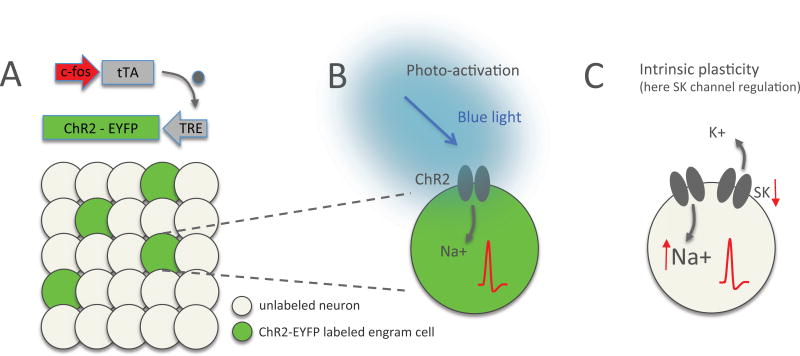
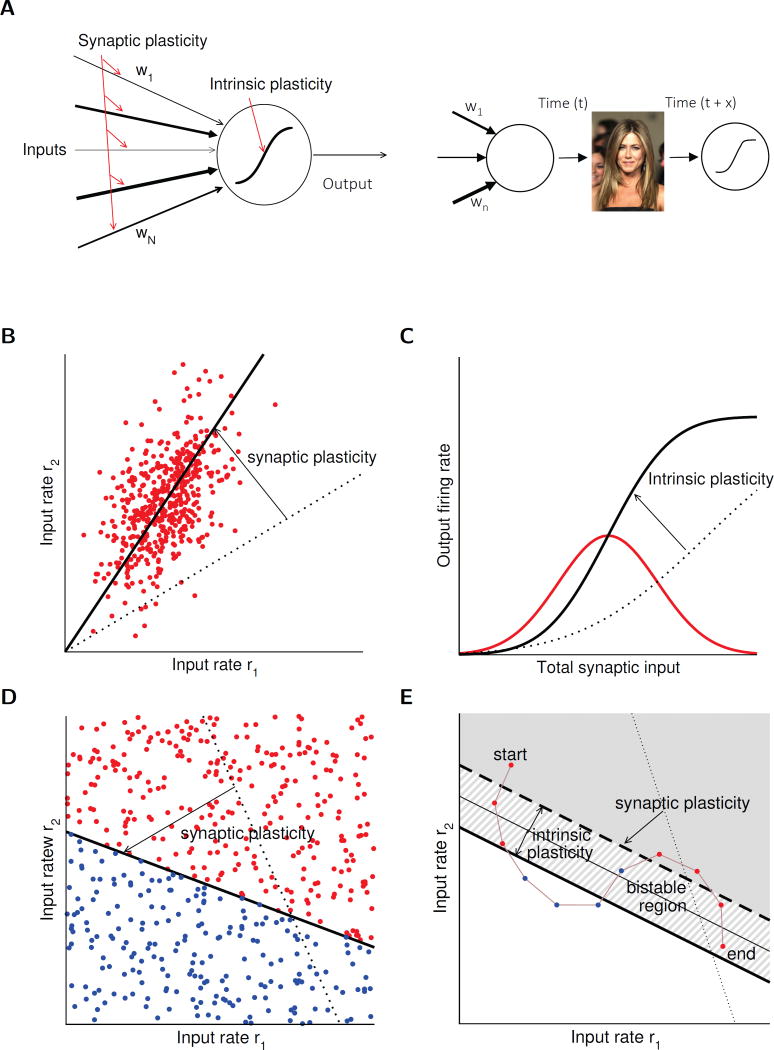
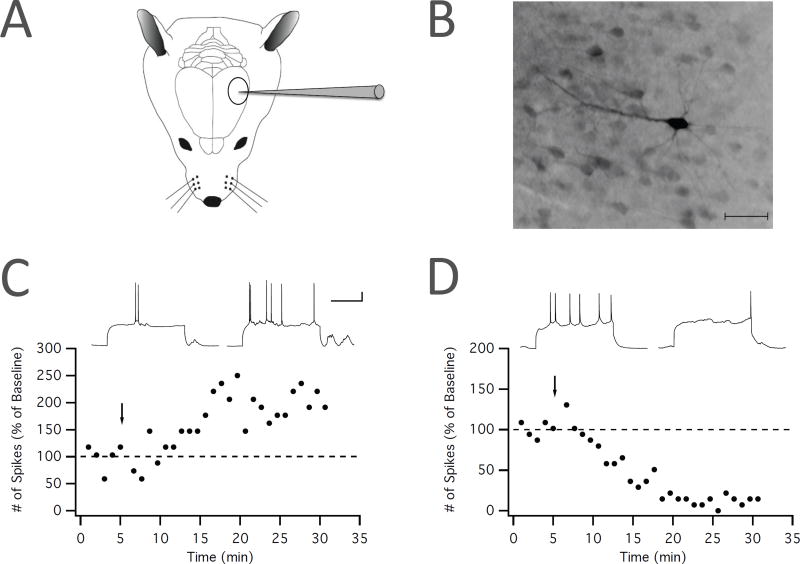
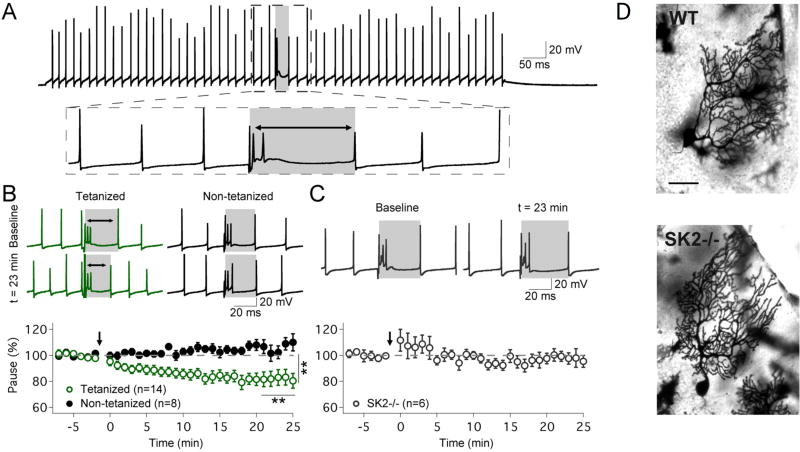
Synaptic plasticity (e.g., long-term potentiation [LTP]) is considered the cellular correlate of learning. Recent optogenetic studies on memory engram formation assign a critical role in learning to suprathreshold activation of neurons and their integration into active engrams ("engram cells"). Here we review evidence that ensemble integration may result from LTP but also from cell-autonomous changes in membrane excitability. We propose that synaptic plasticity determines synaptic connectivity maps, whereas intrinsic plasticity-possibly separated in time-amplifies neuronal responsiveness and acutely drives engram integration. Our proposal marks a move away from an exclusively synaptocentric toward a non-exclusive, neurocentric view of learning.
突触可塑性(例如,长时程增强[LTP])被认为是学习的细胞关联机制。最近关于记忆印迹形成的光遗传学研究表明,神经元的阈上激活及其整合到活跃的记忆印迹(“印迹细胞”)中在学习过程中起着关键作用。在这里,我们回顾了相关证据,即整体整合可能源于LTP,但也可能源于膜兴奋性的细胞自主变化。我们提出,突触可塑性决定突触连接图谱,而内在可塑性(可能在时间上是分开的)增强神经元反应性并急性驱动记忆印迹整合。我们的提议标志着从完全以突触为中心的观点转向对学习的非排他性、以神经元为中心的观点。