López-Hermoso Clara, de la Haba Rafael R, Sánchez-Porro Cristina, Papke R Thane, Ventosa Antonio
Department of Microbiology and Parasitology, Faculty of Pharmacy, University of SevillaSevilla, Spain.
Department of Molecular and Cell Biology, University of Connecticut, StorrsCT, United States.
Front Microbiol. 2017 Jun 22;8:1107. doi: 10.3389/fmicb.2017.01107. eCollection 2017.
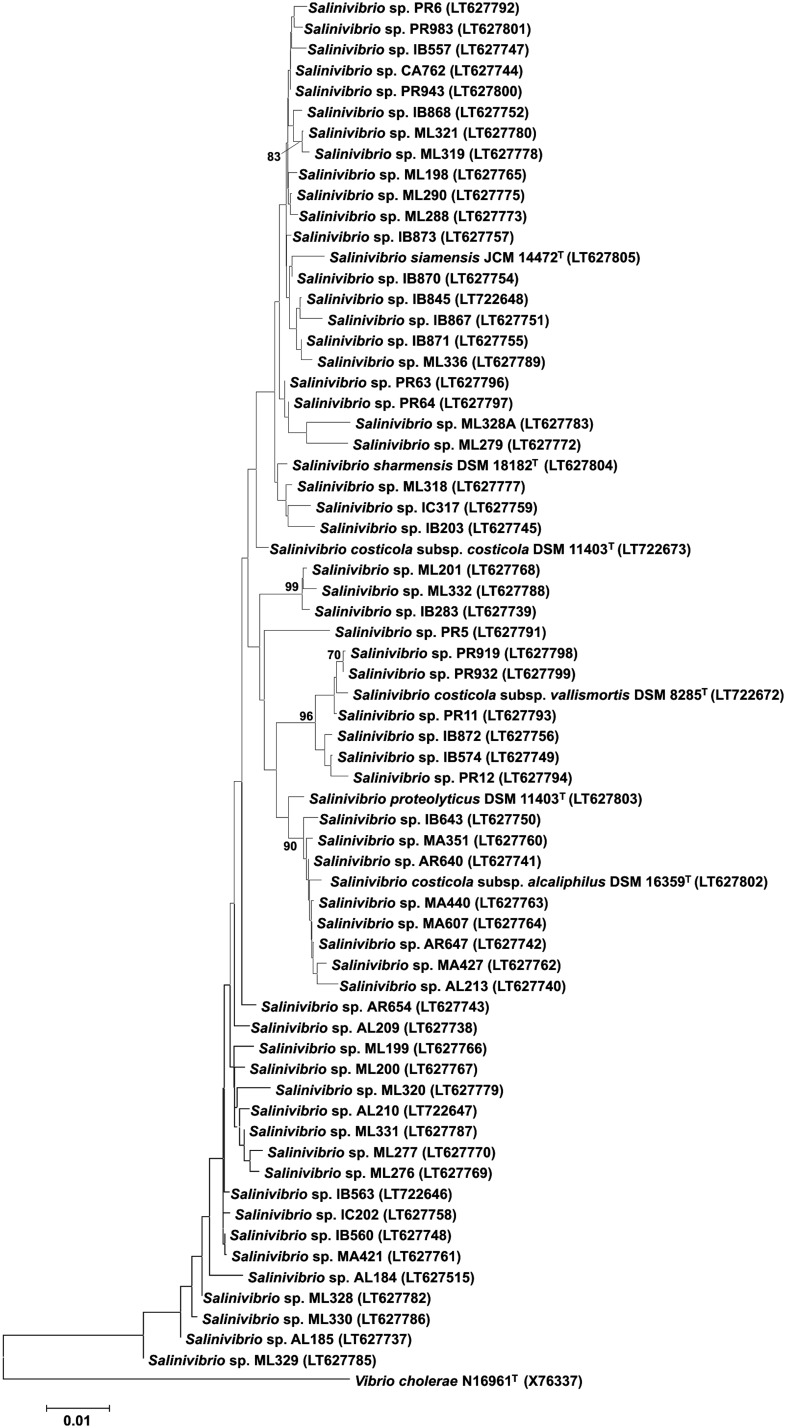
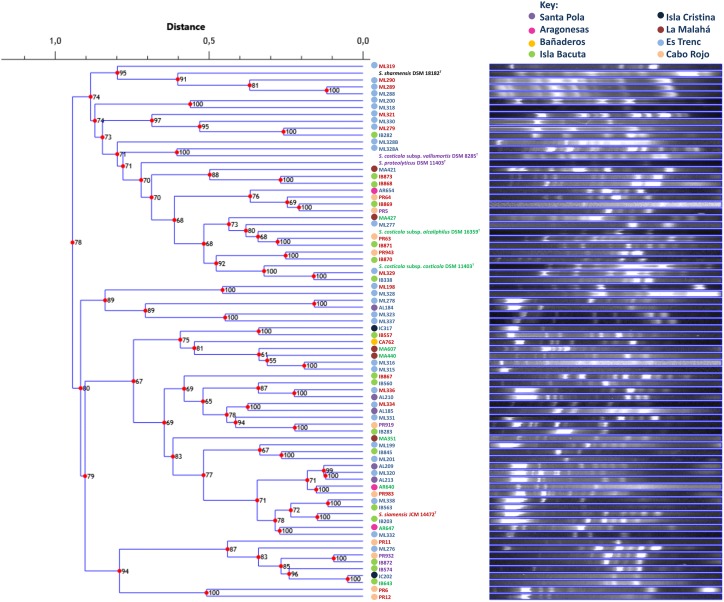
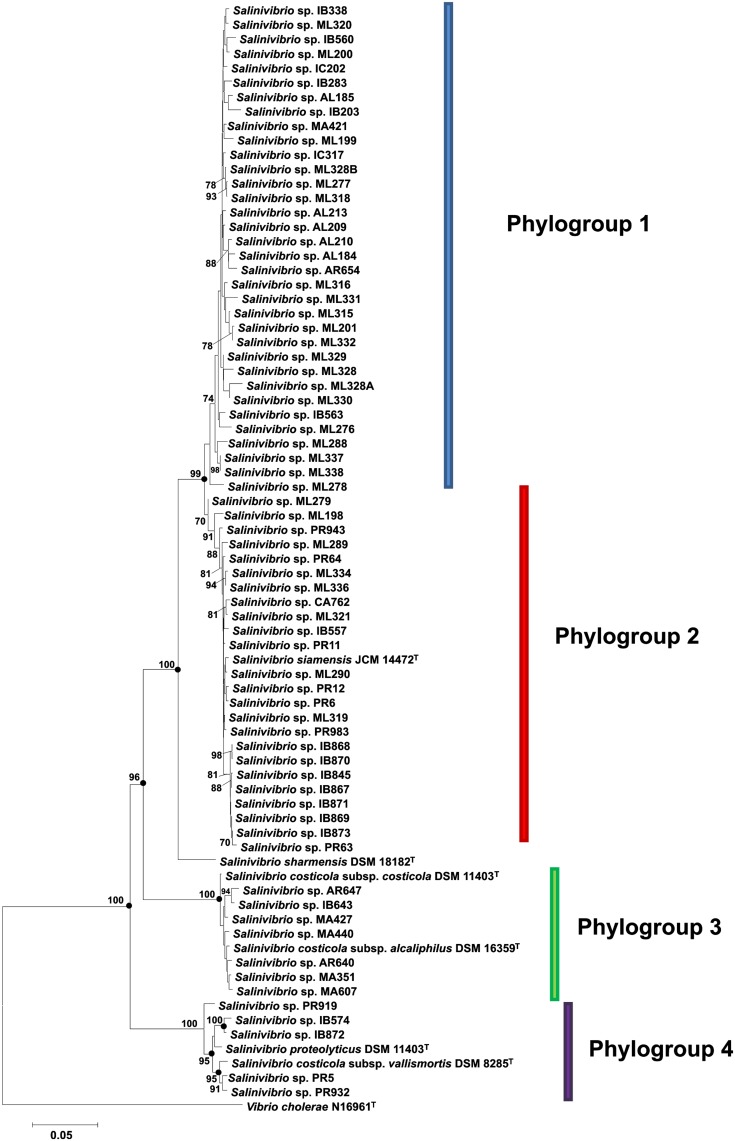
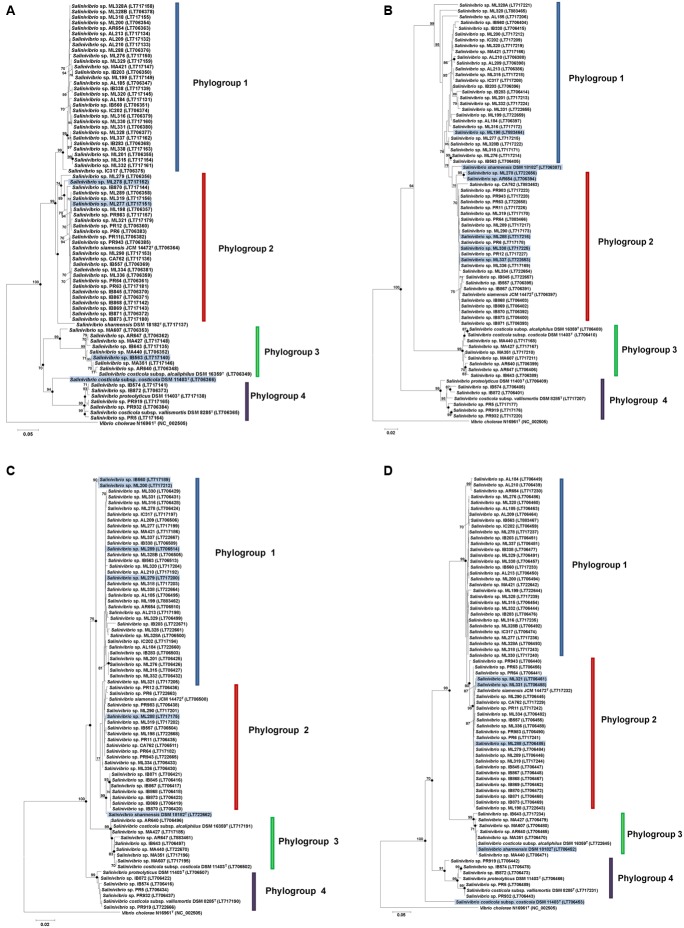
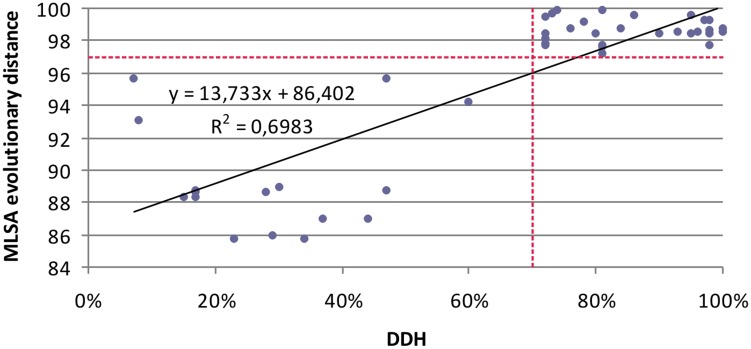
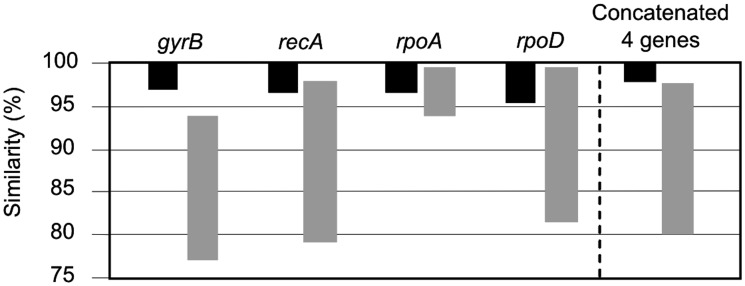
The genus includes obligatory halophilic bacteria and is commonly isolated from hypersaline habitats and salted food products. They grow optimally between 7.5 and 10% salts and are facultative anaerobes. Currently, this genus comprises four species, one of them, , with three subspecies. In this study we isolated and characterized an additional 70 strains from solar salterns located in different locations. Comparative 16S rRNA gene sequence analysis identified these strains as belonging to the genus but could not differentiate strains into species-like groups. To achieve finer phylogenetic resolution, we carried out a MultiLocus Sequence Analysis (MLSA) of the new isolates and the type strains of the species of based on the individual as well as concatenated sequences of four housekeeping genes: , , , and . The strains formed four clearly differentiated species-like clusters called phylogroups. All of the known type and subspecies strains were associated with one of these clusters except . One phylogroup had no previously described species coupled to it. Further DNA-DNA hybridization (DDH) experiments with selected representative strains from these phylogroups permitted us to validate the MLSA study, correlating the species level defined by the DDH (70%) with a 97% cut-off for the concatenated MLSA gene sequences. Based on these criteria, the novel strains forming phylogroup 1 could constitute a new species while strains constructing the other three phylogroups are members of previously recognized species. subsp. co-occurs with in phylogroup 4, and separately from other strains, indicating its need for reclassification. On the other hand, genome fingerprinting analysis showed that the environmental strains do not form clonal populations and did not cluster according to their site of cultivation. In future studies regarding the classification and identification of new strains we recommend the following strategy: (i) initial partial sequencing of the 16S rRNA gene for genus-level identification; (ii) sequencing and concatenation of the four before mentioned housekeeping genes for species-level discrimination; (iii) DDH experiments, only required when the concatenated MLSA similarity values among a new isolate and other strains are above the 97% cut-off.
该属包括 obligatory 嗜盐菌,通常从高盐生境和腌制食品中分离得到。它们在 7.5%至 10%的盐浓度下生长最佳,是兼性厌氧菌。目前,该属包含四个物种,其中一个物种有三个亚种。在本研究中,我们从位于不同地点的太阳能盐场中分离并鉴定了另外 70 株菌株。比较 16S rRNA 基因序列分析确定这些菌株属于该属,但无法将菌株区分成类似物种的组。为了实现更精细的系统发育分辨率,我们基于四个管家基因(、、、和)的单个序列以及串联序列,对新分离株和该属物种的模式菌株进行了多位点序列分析(MLSA)。这些菌株形成了四个明显分化的类似物种的簇,称为系统发育组。除了之外,所有已知的模式和亚种菌株都与这些簇之一相关联。有一个系统发育组之前没有与之相关的已描述物种。对这些系统发育组中选定的代表性菌株进行进一步的 DNA-DNA 杂交(DDH)实验,使我们能够验证 MLSA 研究,将 DDH 定义的物种水平(70%)与串联 MLSA 基因序列的 97%截止值相关联。基于这些标准,形成系统发育组 1 的新菌株可能构成一个新物种,而构成其他三个系统发育组的菌株是先前认可的物种的成员。亚种在系统发育组 4 中与共存,且与其他菌株分开,表明其需要重新分类。另一方面,基因组指纹分析表明,环境菌株不形成克隆群体,也不根据其培养地点聚类。在未来关于新菌株分类和鉴定的研究中,我们建议采用以下策略:(i)对 16S rRNA 基因进行初始部分测序以进行属水平鉴定;(ii)对上述四个管家基因进行测序和串联以进行物种水平区分;(iii)仅当新分离株与其他菌株之间的串联 MLSA 相似性值高于 97%截止值时才需要进行 DDH 实验。