Li Mingjie, Yang Yanhui, Feng Fajie, Zhang Bao, Chen Shuqiang, Yang Chuyun, Gu Li, Wang Fengqing, Zhang Junyi, Chen Aiguo, Lin Wenxiong, Chen Xinjian, Zhang Zhongyi
College of Crop Sciences, Fujian Agriculture and Forestry University, Fuzhou, China.
College of Bioengineering, Henan University of Technology, Zhengzhou, China.
BMC Plant Biol. 2017 Jul 10;17(1):116. doi: 10.1186/s12870-017-1060-0.
The normal growth of Rehmannia glutinosa, a widely used medicinal plant in China, is severely disturbed by replant disease. The formation of replant disease commonly involves interactions among plants, allelochemicals and microbes; however, these relationships remain largely unclear. As a result, no effective measures are currently available to treat replant disease.
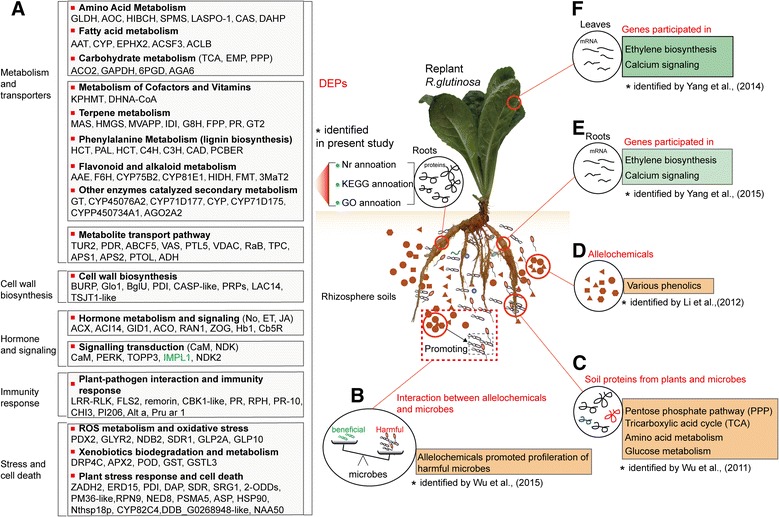
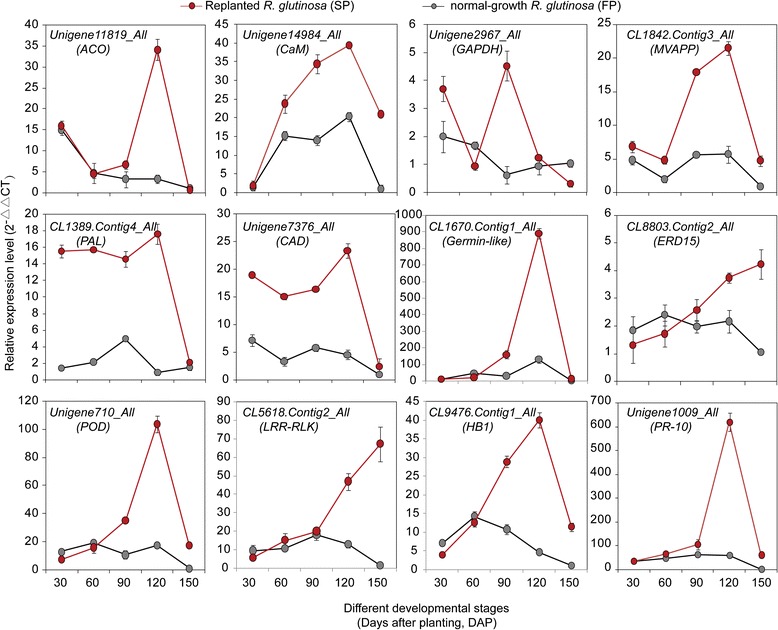
In this study, an integrated R. glutinosa transcriptome was constructed, from which an R. glutinosa protein library was obtained. iTRAQ technology was then used to investigate changes in the proteins in replanted R. glutinosa roots, and the proteins that were expressed in response to replant disease were identified. An integrated R. glutinosa transcriptome from different developmental stages of replanted and normal-growth R. glutinosa produced 65,659 transcripts, which were accurately translated into 47,818 proteins. Using this resource, a set of 189 proteins was found to be significantly differentially expressed between normal-growth and replanted R. glutinosa. Of the proteins that were significantly upregulated in replanted R. glutinosa, most were related to metabolism, immune responses, ROS generation, programmed cell death, ER stress, and lignin synthesis.
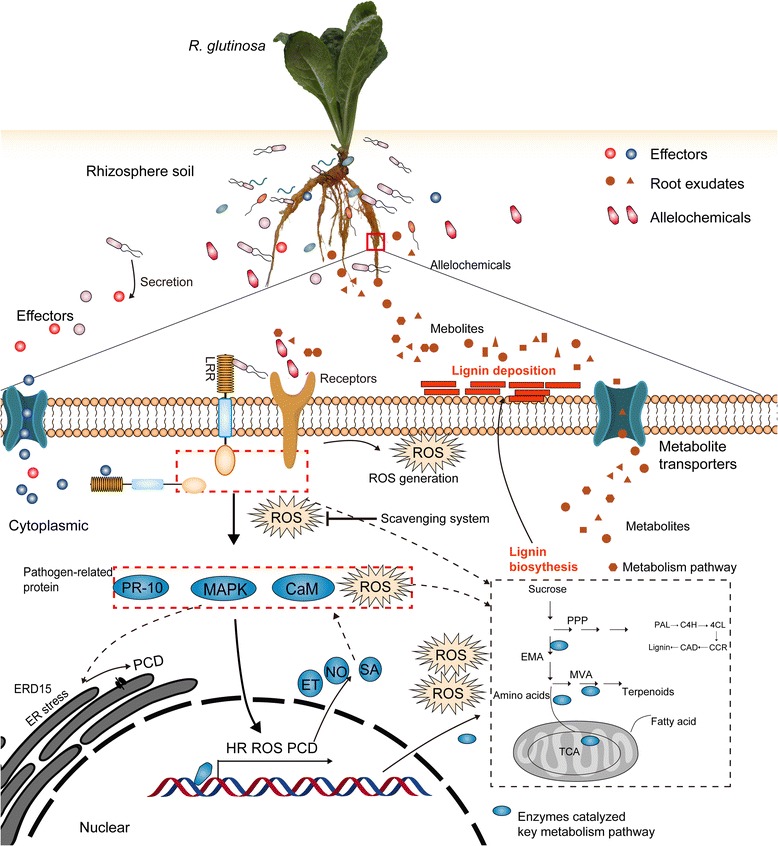
By integrating these key events and the results of previous studies on replant disease formation, a new picture of the damaging mechanisms that cause replant disease stress emerged. Replant disease altered the metabolic balance of R. glutinosa, activated immune defence systems, increased levels of ROS and antioxidant enzymes, and initiated the processes of cell death and senescence in replanted R. glutinosa. Additionally, lignin deposition in R. glutinosa roots that was caused by replanting significantly inhibited tuberous root formation. These key processes provide important insights into the underlying mechanisms leading to the formation of replant disease and also for the subsequent development of new control measures to improve production and quality of replanted plants.
地黄是中国广泛使用的药用植物,其正常生长受到连作障碍的严重干扰。连作障碍的形成通常涉及植物、化感物质和微生物之间的相互作用;然而,这些关系在很大程度上仍不清楚。因此,目前尚无有效的措施来治疗连作障碍。
在本研究中,构建了一个综合的地黄转录组,并从中获得了一个地黄蛋白质文库。然后使用iTRAQ技术研究连作地黄根中蛋白质的变化,并鉴定了响应连作障碍而表达的蛋白质。来自连作和正常生长地黄不同发育阶段的综合地黄转录组产生了65,659个转录本,这些转录本被准确翻译成47,818个蛋白质。利用这一资源,发现一组189种蛋白质在正常生长和连作地黄之间存在显著差异表达。在连作地黄中显著上调的蛋白质中,大多数与代谢、免疫反应、活性氧生成、程序性细胞死亡、内质网应激和木质素合成有关。
通过整合这些关键事件以及先前关于连作障碍形成的研究结果,出现了一幅导致连作障碍胁迫的破坏机制的新图景。连作障碍改变了地黄的代谢平衡,激活了免疫防御系统,增加了活性氧和抗氧化酶的水平,并启动了连作地黄中的细胞死亡和衰老过程。此外,连作导致的地黄根中木质素沉积显著抑制了块根的形成。这些关键过程为深入了解连作障碍形成的潜在机制以及随后开发新的控制措施以提高连作植物的产量和质量提供了重要的见解。