Institute of Nanoengineering and Microsystems, National Tsing Hua University, Hsinchu, 300, Taiwan, R.O.C.
Department of Electrical engineering, National Central University, Jhongli City, Taoyuan County, 320, Taiwan, R.O.C.
Sci Rep. 2017 Jul 12;7(1):5256. doi: 10.1038/s41598-017-05426-6.
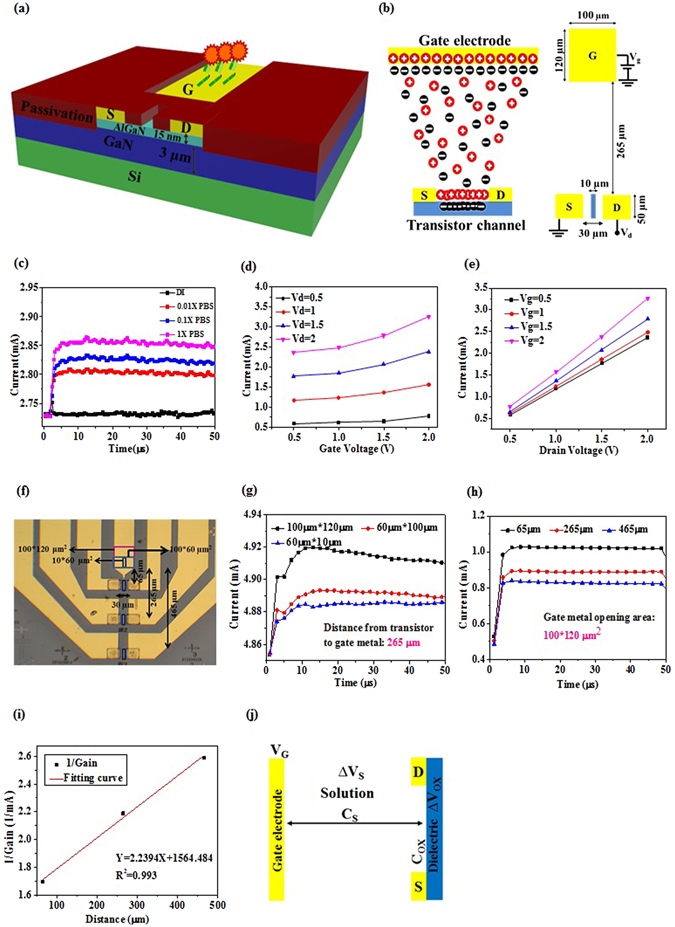
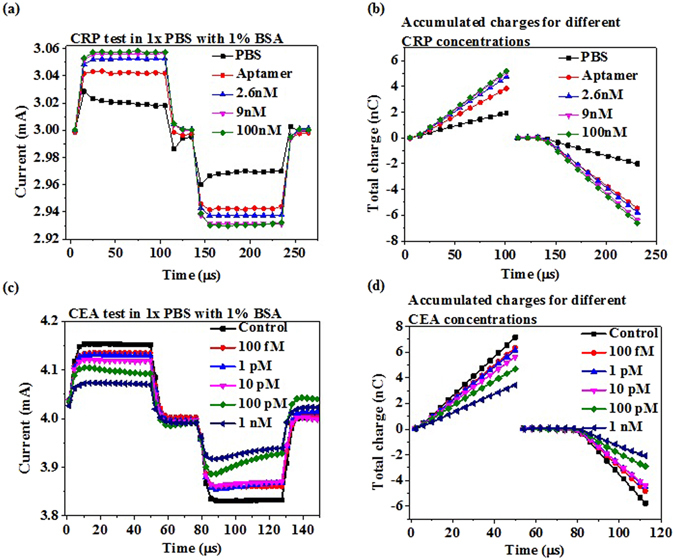
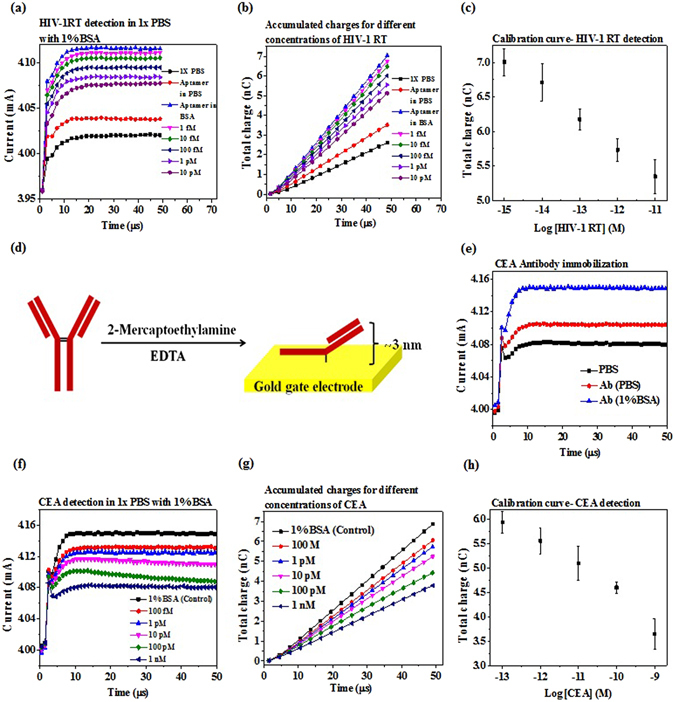
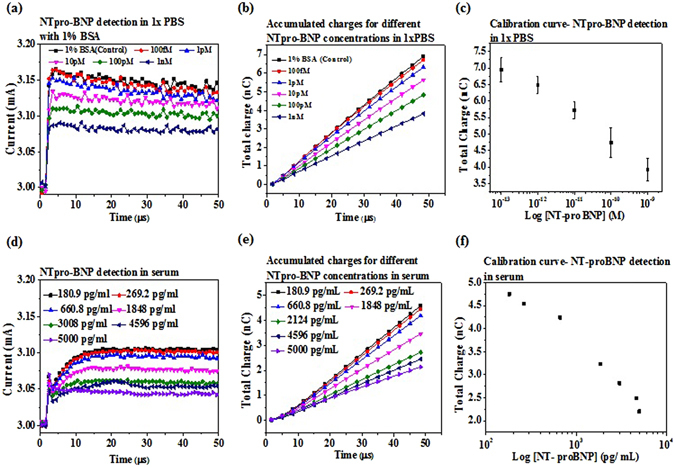
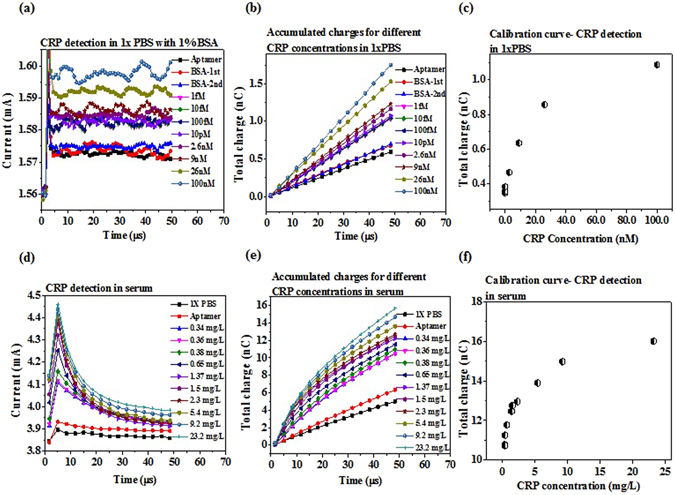
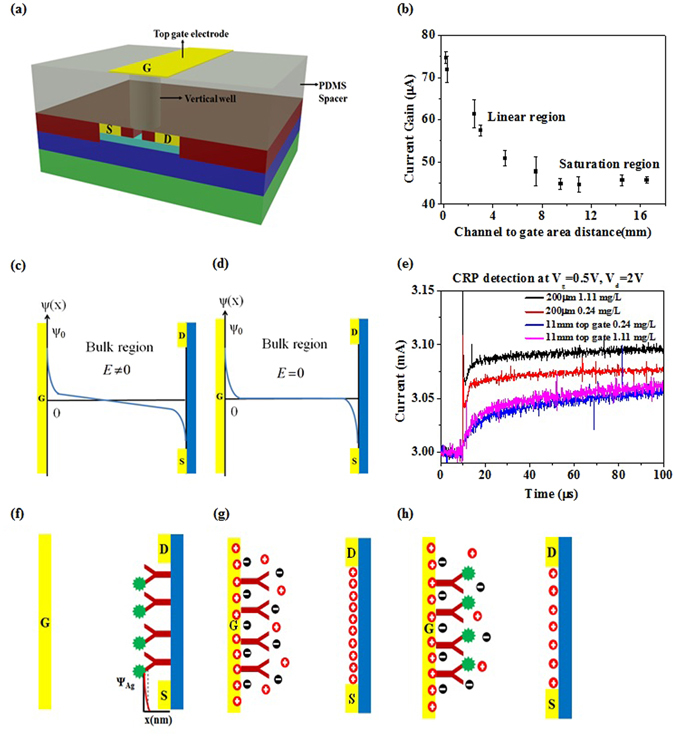
In this study, a new type of field-effect transistor (FET)-based biosensor is demonstrated to be able to overcome the problem of severe charge-screening effect caused by high ionic strength in solution and detect proteins in physiological environment. Antibody or aptamer-immobilized AlGaN/GaN high electron mobility transistors (HEMTs) are used to directly detect proteins, including HIV-1 RT, CEA, NT-proBNP and CRP, in 1X PBS (with 1%BSA) or human sera. The samples do not need any dilution or washing process to reduce the ionic strength. The sensor shows high sensitivity and the detection takes only 5 minutes. The designs of the sensor, the methodology of the measurement, and the working mechanism of the sensor are discussed and investigated. A theoretical model is proposed based on the finding of the experiments. This sensor is promising for point-of-care, home healthcare, and mobile diagnostic device.
在这项研究中,展示了一种新型场效应晶体管(FET)生物传感器,该传感器能够克服溶液中高离子强度引起的严重电荷屏蔽效应,并在生理环境中检测蛋白质。抗体或适体固定化的 AlGaN/GaN 高电子迁移率晶体管(HEMT)用于直接检测蛋白质,包括 HIV-1 RT、CEA、NT-proBNP 和 CRP,在 1X PBS(含 1%BSA)或人血清中。该传感器不需要任何稀释或洗涤过程来降低离子强度。传感器具有高灵敏度,检测仅需 5 分钟。讨论和研究了传感器的设计、测量方法和传感器的工作机制。基于实验结果提出了一个理论模型。该传感器有望用于即时检测、家庭医疗保健和移动诊断设备。