Hartenstein Volker, Omoto Jaison J, Ngo Kathy T, Wong Darren, Kuert Philipp A, Reichert Heinrich, Lovick Jennifer K, Younossi-Hartenstein Amelia
Department of Molecular Cell and Developmental Biology, University of California Los Angeles, Los Angeles, California.
Biozentrum, University of Basel, Basel, Switzerland.
J Comp Neurol. 2018 Jan 1;526(1):6-32. doi: 10.1002/cne.24287. Epub 2017 Aug 10.
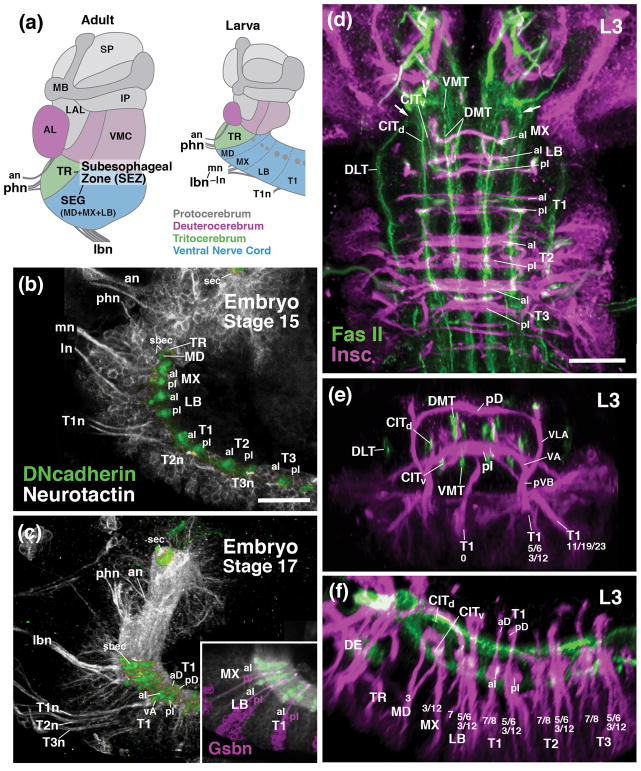
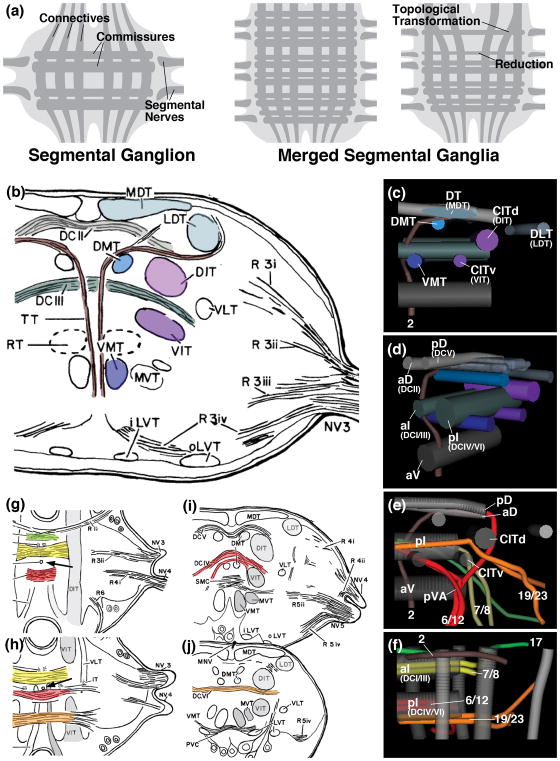
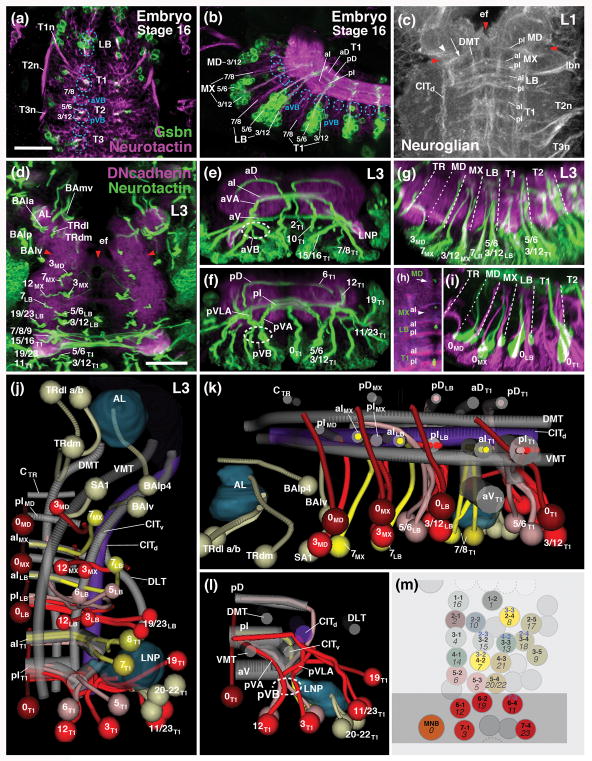
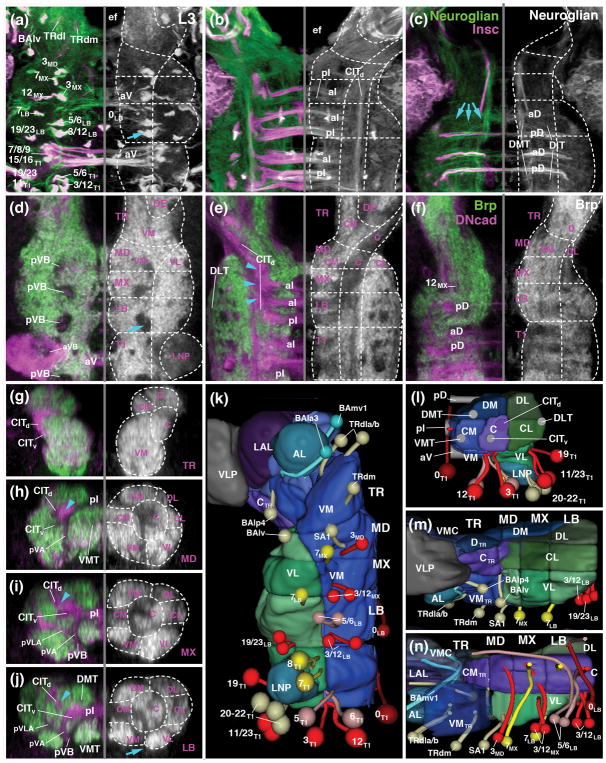
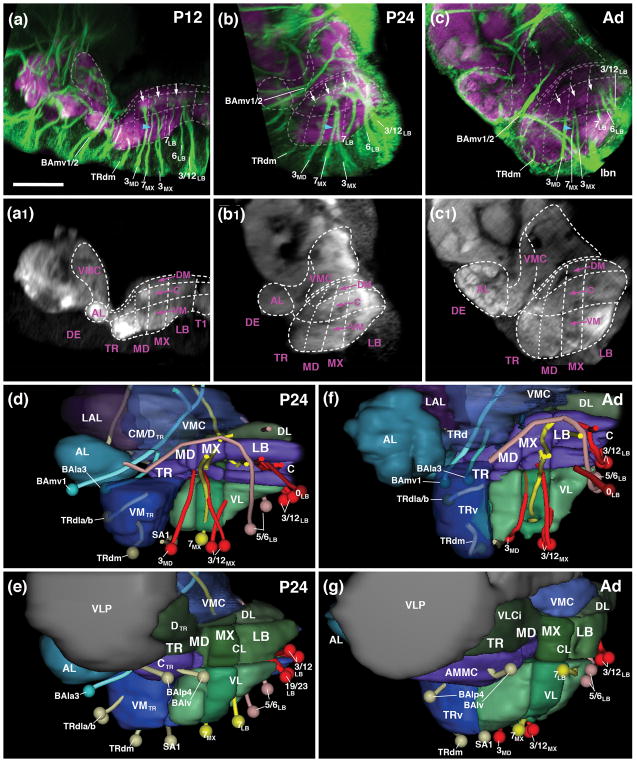
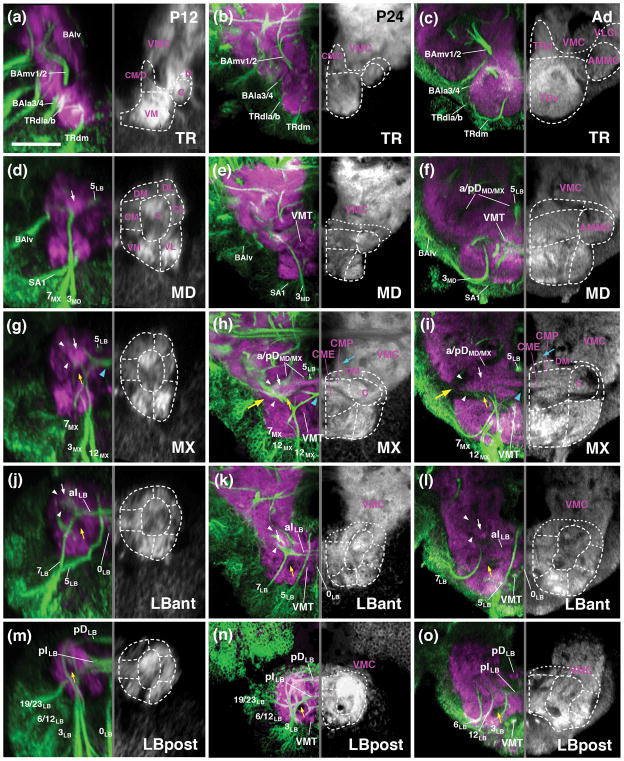
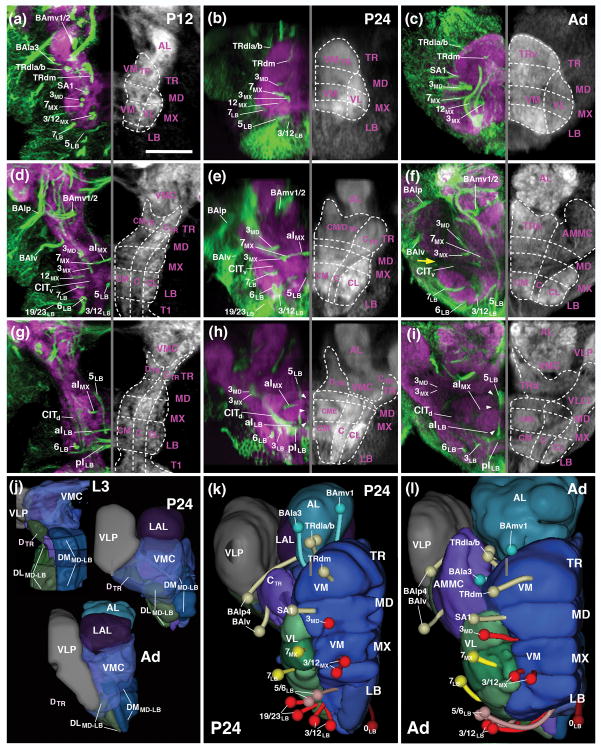
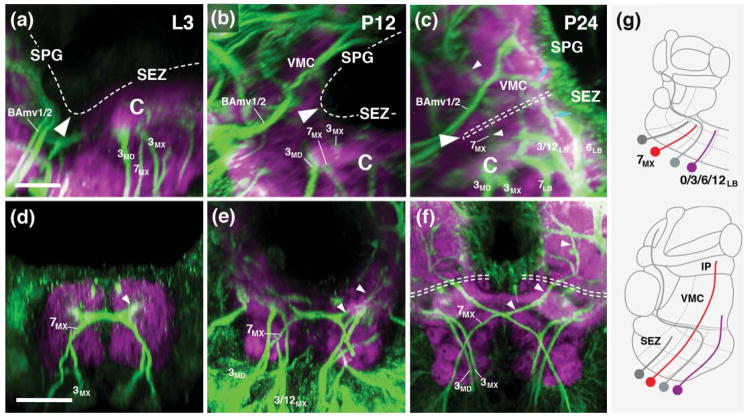
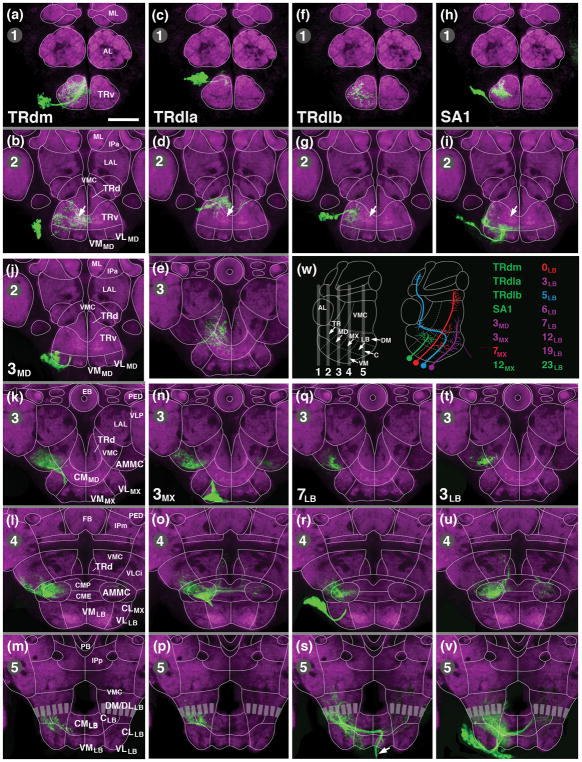
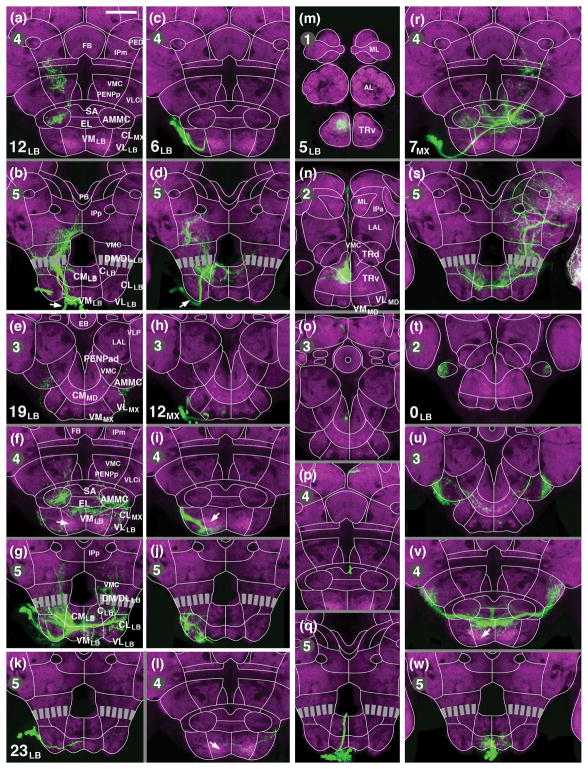
The subesophageal zone (SEZ) of the Drosophila brain houses the circuitry underlying feeding behavior and is involved in many other aspects of sensory processing and locomotor control. Formed by the merging of four neuromeres, the internal architecture of the SEZ can be best understood by identifying segmentally reiterated landmarks emerging in the embryo and larva, and following the gradual changes by which these landmarks become integrated into the mature SEZ during metamorphosis. In previous works, the system of longitudinal fibers (connectives) and transverse axons (commissures) has been used as a scaffold that provides internal landmarks for the neuromeres of the larval ventral nerve cord. We have extended the analysis of this scaffold to the SEZ and, in addition, reconstructed the tracts formed by lineages and nerves in relationship to the connectives and commissures. As a result, we establish reliable criteria that define boundaries between the four neuromeres (tritocerebrum, mandibular neuromere, maxillary neuromere, labial neuromere) of the SEZ at all stages of development. Fascicles and lineage tracts also demarcate seven columnar neuropil domains (ventromedial, ventro-lateral, centromedial, central, centrolateral, dorsomedial, dorsolateral) identifiable throughout development. These anatomical subdivisions, presented in the form of an atlas including confocal sections and 3D digital models for the larval, pupal and adult stage, allowed us to describe the morphogenetic changes shaping the adult SEZ. Finally, we mapped MARCM-labeled clones of all secondary lineages of the SEZ to the newly established neuropil subdivisions. Our work will facilitate future studies of function and comparative anatomy of the SEZ.
果蝇大脑的咽下神经节(SEZ)包含控制进食行为的神经回路,并且参与感觉处理和运动控制的许多其他方面。SEZ由四个神经节融合形成,通过识别胚胎和幼虫中出现的节段性重复标志,并追踪这些标志在变态过程中逐渐整合到成熟SEZ的变化,能够最好地理解其内部结构。在先前的研究中,纵向纤维(连接体)和横向轴突(连合纤维)系统已被用作一种支架,为幼虫腹神经索的神经节提供内部标志。我们将对该支架的分析扩展到了SEZ,此外,还重建了与连接体和连合纤维相关的谱系和神经形成的神经束。结果,我们建立了可靠的标准,以定义SEZ的四个神经节(后脑、下颌神经节、上颌神经节、唇神经节)在所有发育阶段的边界。神经束和谱系神经束还划分出七个柱状神经毡区域(腹内侧、腹外侧、中央内侧、中央、中央外侧、背内侧、背外侧),这些区域在整个发育过程中都可识别。这些以图谱形式呈现的解剖学细分,包括幼虫、蛹和成虫阶段的共聚焦切片和3D数字模型,使我们能够描述塑造成年SEZ的形态发生变化。最后,我们将SEZ所有二级谱系的MARCM标记克隆映射到新建立的神经毡细分区域。我们的工作将促进未来对SEZ功能和比较解剖学的研究。