Markhoff Jana, Krogull Martin, Schulze Christian, Rotsch Christian, Hunger Sandra, Bader Rainer
Biomechanics and Implant Technology Laboratory, Department of Orthopaedics, University Medicine Rostock, Doberaner Strasse 142, 18057 Rostock, Germany.
Department Medical Engineering, Fraunhofer Institute for Machine Tools and Forming Technology IWU, Nöthnitzer Strasse 44, 01187 Dresden, Germany.
Materials (Basel). 2017 Jan 10;10(1):52. doi: 10.3390/ma10010052.
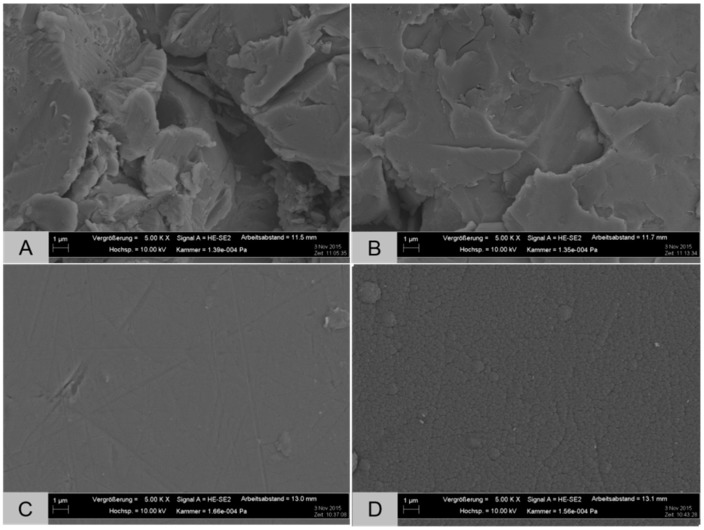
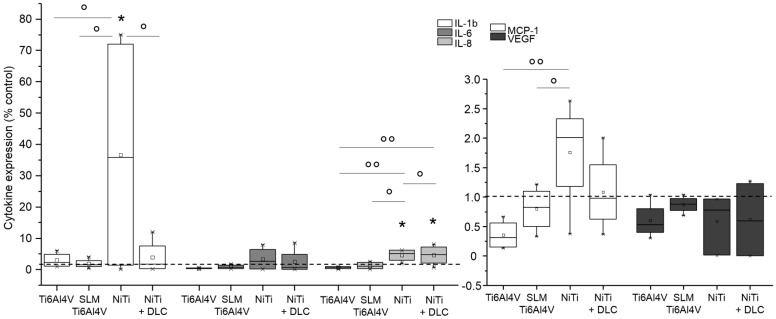
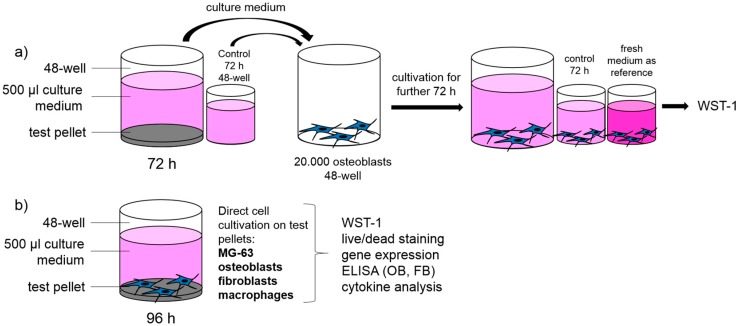
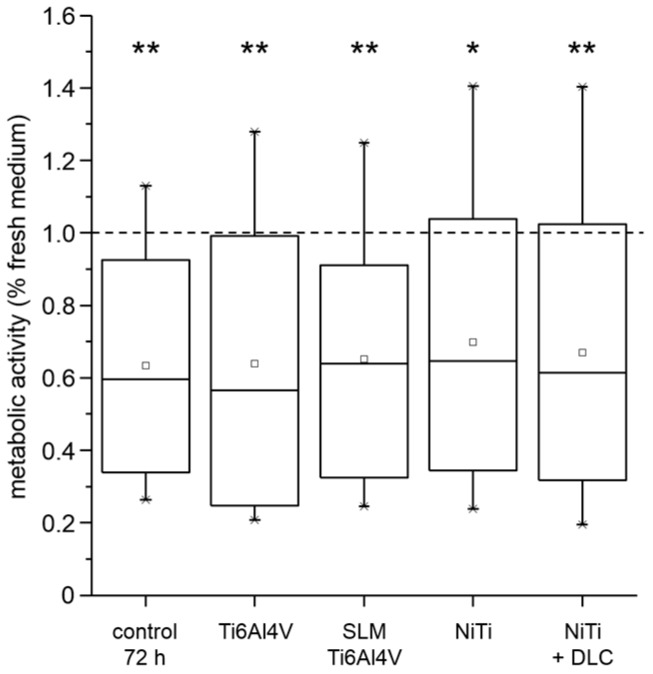
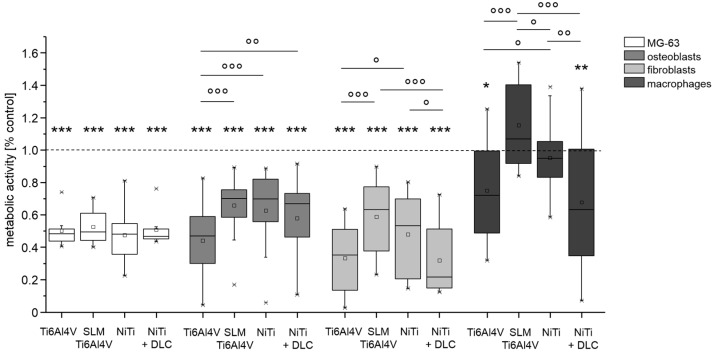
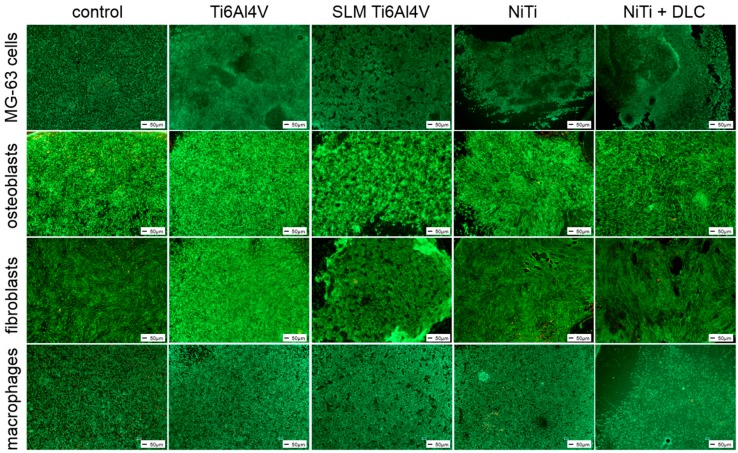
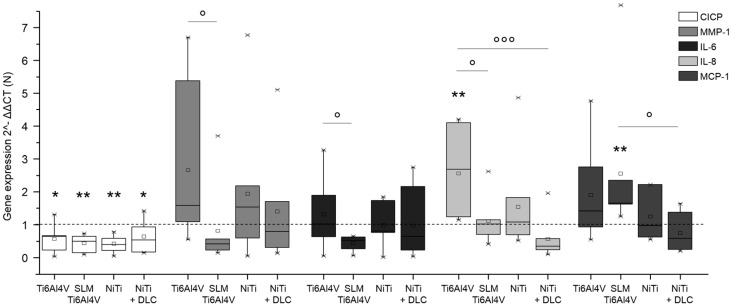
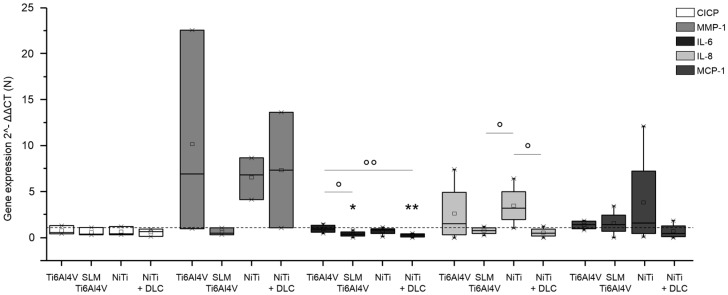
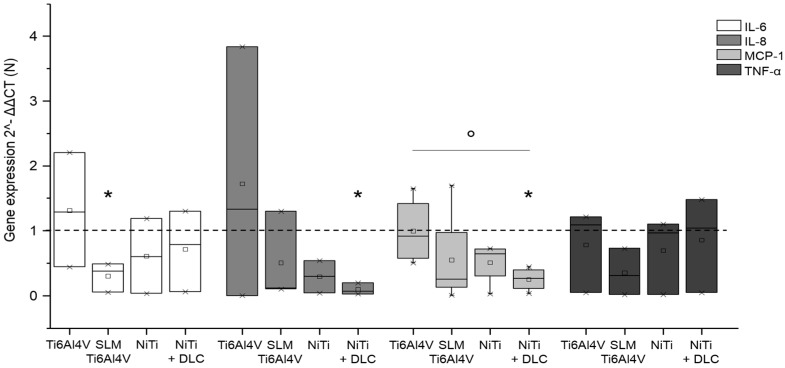
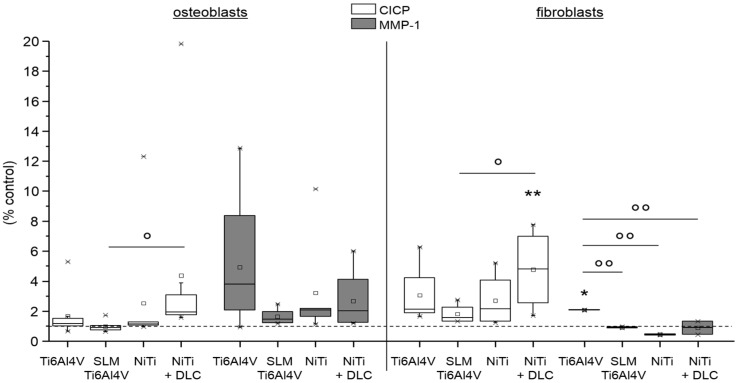
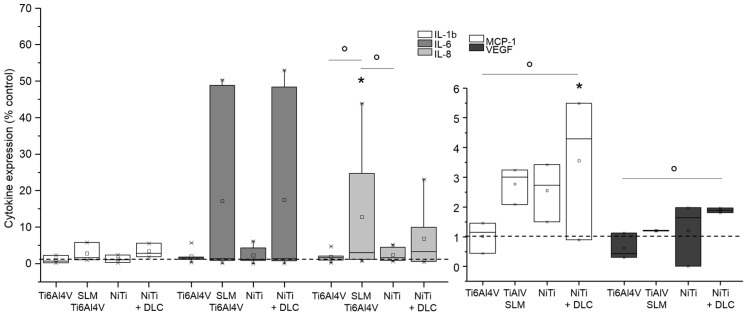
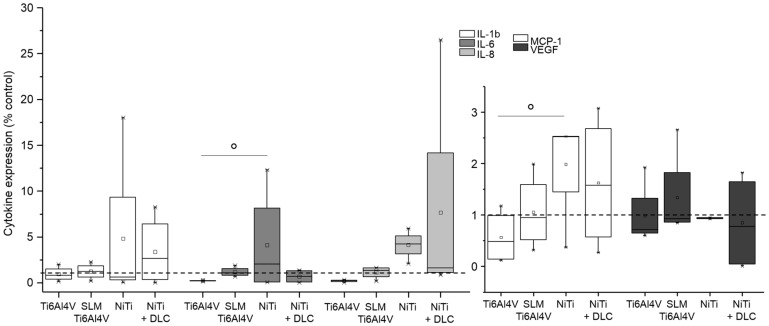
The biomaterials used to maintain or replace functions in the human body consist mainly of metals, ceramics or polymers. In orthopedic surgery, metallic materials, especially titanium and its alloys, are the most common, due to their excellent mechanical properties, corrosion resistance, and biocompatibility. Aside from the established Ti6Al4V alloy, shape memory materials such as nickel-titanium (NiTi) have risen in importance, but are also discussed because of the adverse effects of nickel ions. These might be reduced by specific surface modifications. In the present in vitro study, the osteoblastic cell line MG-63 as well as primary human osteoblasts, fibroblasts, and macrophages were cultured on titanium alloys (forged Ti6Al4V, additive manufactured Ti6Al4V, NiTi, and Diamond-Like-Carbon (DLC)-coated NiTi) to verify their specific biocompatibility and inflammatory potential. Additive manufactured Ti6Al4V and NiTi revealed the highest levels of metabolic cell activity. DLC-coated NiTi appeared as a suitable surface for cell growth, showing the highest collagen production. None of the implant materials caused a strong inflammatory response. In general, no distinct cell-specific response could be observed for the materials and surface coating used. In summary, all tested titanium alloys seem to be biologically appropriate for application in orthopedic surgery.
用于维持或替代人体功能的生物材料主要由金属、陶瓷或聚合物组成。在骨科手术中,金属材料,尤其是钛及其合金,最为常见,这是因为它们具有出色的机械性能、耐腐蚀性和生物相容性。除了已有的Ti6Al4V合金,镍钛(NiTi)等形状记忆材料的重要性日益凸显,但由于镍离子的不良影响也受到了讨论。这些不良影响可能通过特定的表面改性来降低。在本体外研究中,将成骨细胞系MG-63以及原代人成骨细胞、成纤维细胞和巨噬细胞培养在钛合金(锻造Ti6Al4V、增材制造Ti6Al4V、NiTi和类金刚石碳(DLC)涂层NiTi)上,以验证它们的特定生物相容性和炎症潜能。增材制造的Ti6Al4V和NiTi表现出最高水平的细胞代谢活性。DLC涂层NiTi似乎是适合细胞生长的表面,胶原蛋白生成量最高。没有一种植入材料引起强烈的炎症反应。总体而言,对于所使用的材料和表面涂层,未观察到明显的细胞特异性反应。综上所述,所有测试的钛合金似乎在生物学上都适合用于骨科手术。