Cardoso Biatriz Araújo, Fonseca Fabio de Oliveira, Moraes Antonio Henrique Almeida de, Martins Ana Caroline Guedes Souza, Oliveira Nissa Vilhena da Silva, Lima Luana Nepomuceno Gondim Costa, Dias George Alberto da Silva, Saad Maria Helena Féres
Fundação Oswaldo Cruz, Instituto Oswaldo Cruz, Laboratório de Microbiologia Celular, Rio de Janeiro, Rio de Janeiro, Brazil.
Fundação Oswaldo Cruz, Instituto Oswaldo Cruz, Laboratório de Inovações em Terapias, Ensino e Bioprodutos, Rio de Janeiro , Rio de Janeiro, Brazil.
Rev Inst Med Trop Sao Paulo. 2017 Aug 7;59:e57. doi: 10.1590/S1678-9946201759057.
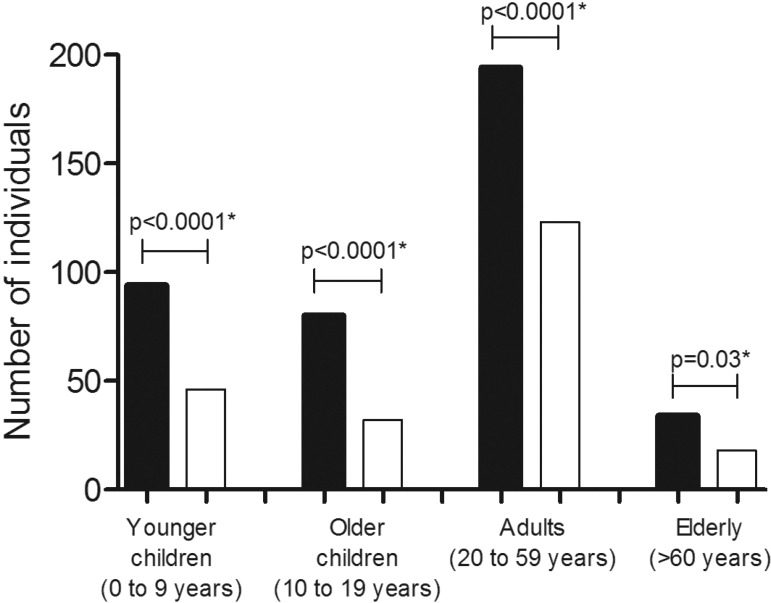
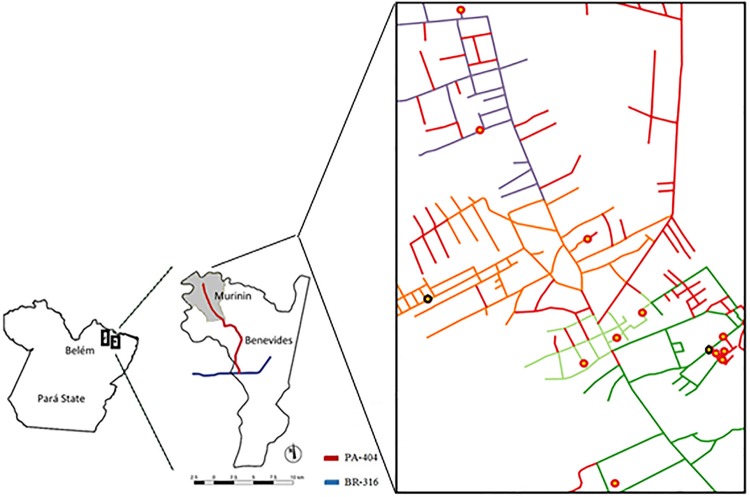
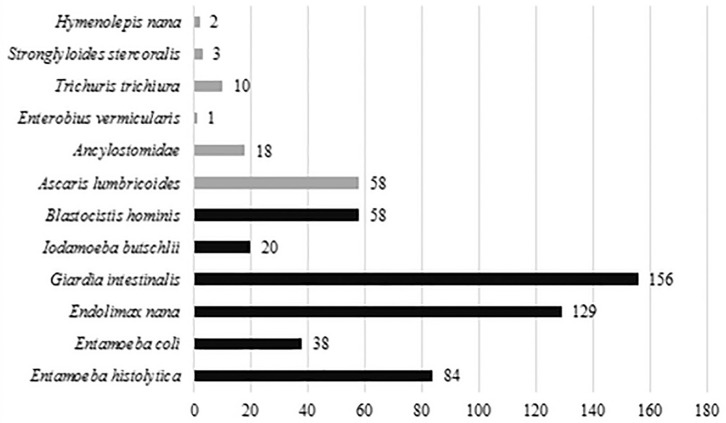
We carried out a cross-sectional study from January to December 2015 on 1,425 inhabitants from a floating population in the Brazilian Amazon (Murinin district, Pará State) to describe the population-based prevalence of tuberculosis (TB) from 2011 to 2014, recent TB contacts (rCts) latently infected with Mycobacterium tuberculosis (LTBI) , the coverage of the local health network, socio-environmental factors, and frequency of intestinal parasitic infection (IPI). We found that the sanitary structure was inadequate, with latrines being shared with other rooms within the same accommodation; well water was the main source of water, and 48% of families had low incomes. The average rate of TB was 105/100, 000 inhabitants per year; one third of TB patients had been household contacts of infected individuals in the past, and 23% of rCts were LTBI. More than half (65%) of 44% of the stools examined (representing 76% of the housing) had IPIs; the highest prevalence was of fecal-oral transmitted protozoa (40%, Giardia intestinalis ), followed by soil-transmitted helminths (23%). TB transmission may be related to insufficient disease control of rCts, frequent relocation, and underreporting. Education, adopting hygienic habits, improving sanitation, provision of a treated water supply and efficient sewage system, further comprehensive epidemiological surveillance of those who enter and leave the community and resources for basic treatment of IPIs are crucial in combating the transmission of these neglected diseases.
2015年1月至12月,我们对巴西亚马逊地区(帕拉州穆里宁区)的1425名流动人口进行了一项横断面研究,以描述2011年至2014年基于人群的结核病(TB)患病率、近期结核分枝杆菌潜伏感染(LTBI)的结核病接触者(rCts)、当地卫生网络的覆盖情况、社会环境因素以及肠道寄生虫感染(IPI)的频率。我们发现卫生结构不完善,厕所与同一住所内的其他房间共用;井水是主要水源,48%的家庭收入较低。结核病的平均发病率为每年105/10万居民;三分之一的结核病患者过去曾是受感染个体的家庭接触者,23%的rCts为LTBI。在接受检查的粪便样本中,超过一半(65%)的样本(占住房的76%)存在IPIs;患病率最高的是粪口传播的原生动物(40%,肠道贾第虫),其次是土壤传播的蠕虫(23%)。结核病传播可能与rCts疾病控制不足、频繁搬迁和报告不足有关。教育、养成卫生习惯、改善卫生条件、提供经过处理的供水和高效的污水系统、对进出社区的人员进行进一步全面的流行病学监测以及提供IPIs基本治疗资源对于抗击这些被忽视疾病的传播至关重要。