Zhu Yingying, Shi Xuebin, Lin Xisha, Ye Keping, Xu Xinglian, Li Chunbao, Zhou Guanghong
Key Laboratory of Meat Processing and Quality Control, MOE, Key Laboratory of Meat Processing, MOA, Jiangsu Collaborative Innovation Center of Meat Production, Processing and Quality Control, Nanjing Agricultural UniversityNanjing, China.
Front Microbiol. 2017 Jul 27;8:1395. doi: 10.3389/fmicb.2017.01395. eCollection 2017.
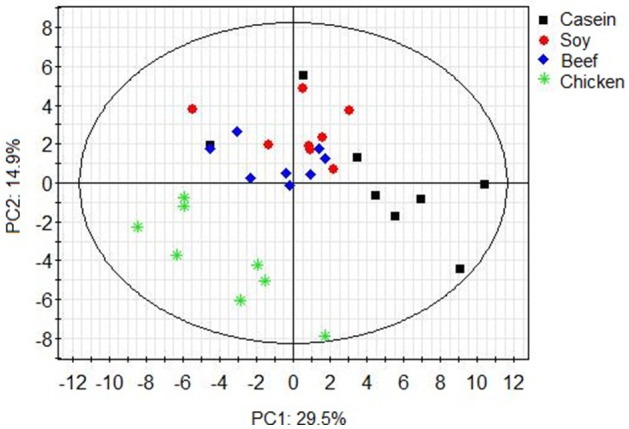
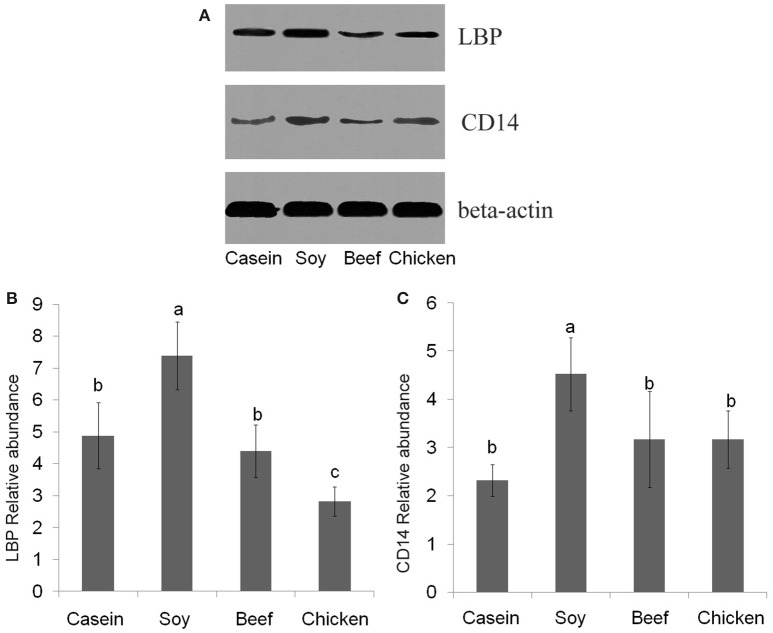
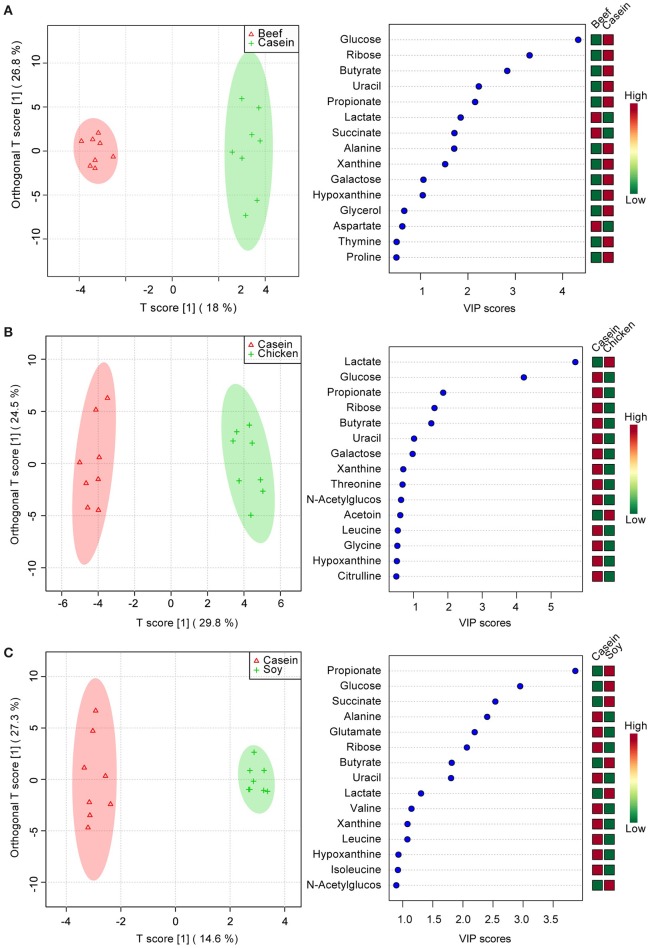
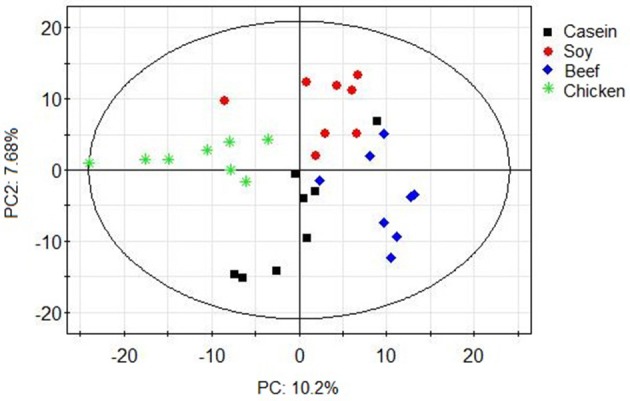
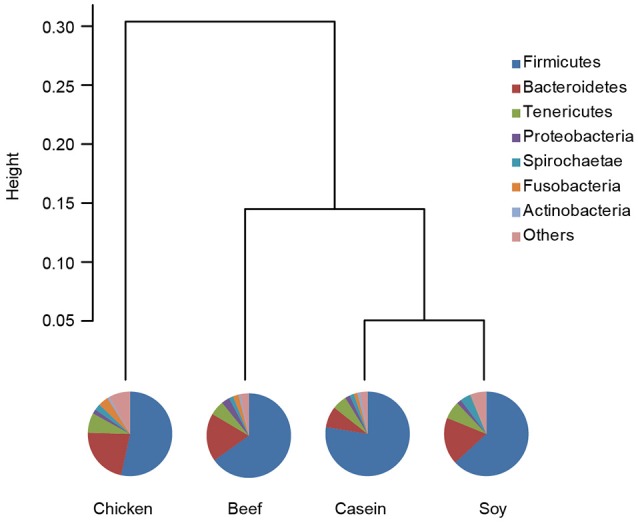
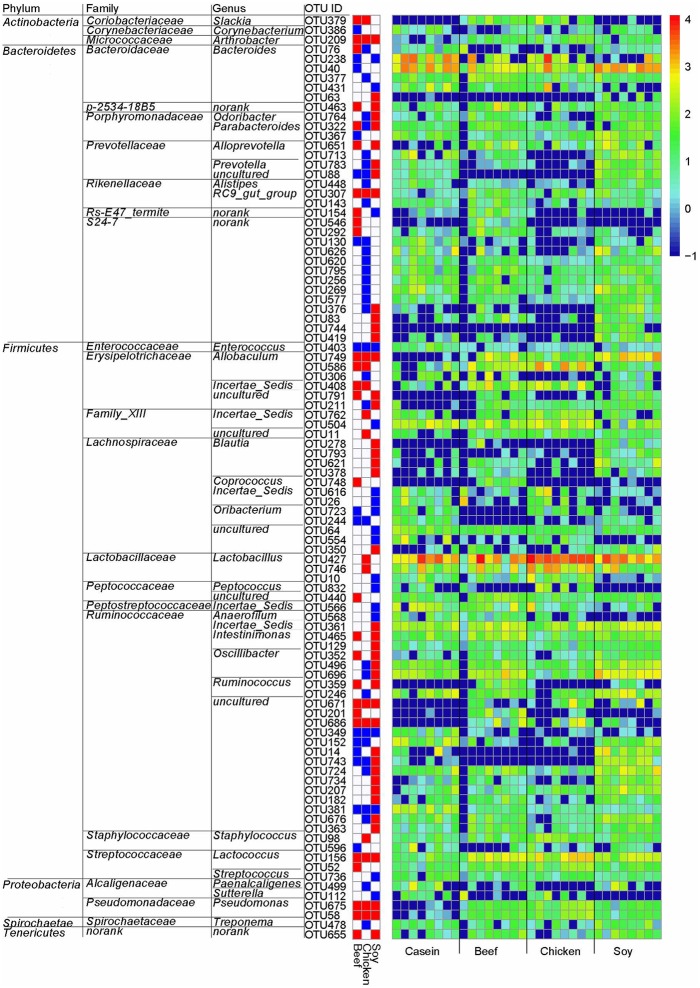
Previous studies have paid much attention to the associations between high intake of meat and host health. Our previous study showed that the intake of meat proteins can maintain a more balanced composition of gut bacteria as compared to soy protein diet. However, the associations between dietary protein source, gut bacteria, and host health were still unclear. In this study, we collected colonic contents from the growing rats fed with casein, beef, chicken or soy proteins for 90 days, and analyzed the compositions of gut microbiota and metabolites. Compared to the casein group (control), the chicken protein group showed the highest relative abundance of and the highest levels of organic acids, including lactate, which can in turn promote the growth of . The soy protein group had the highest relative abundance of but the lowest relative abundance of . Long-term intake of soy protein led to the up-regulation of transcription factor CD14 receptor and lipopolysaccharide-binding protein (LBP) in liver, an indicator for elevated bacterial endotoxins. In addition, the intake of soy protein also increased the levels of glutathione S-transferases in liver, which implicates elevated defense and stress responses. These results confirmed that meat protein intake may maintain a more balanced composition of gut bacteria and reduce the antigen load and inflammatory response from gut bacteria to the host.
以往的研究十分关注肉类高摄入量与宿主健康之间的关联。我们之前的研究表明,与大豆蛋白饮食相比,肉类蛋白的摄入可以维持更均衡的肠道细菌组成。然而,膳食蛋白质来源、肠道细菌和宿主健康之间的关联仍不明确。在本研究中,我们收集了用酪蛋白、牛肉、鸡肉或大豆蛋白喂养90天的生长大鼠的结肠内容物,并分析了肠道微生物群和代谢物的组成。与酪蛋白组(对照组)相比,鸡肉蛋白组显示出[具体细菌名称未给出]的相对丰度最高,以及包括乳酸在内的有机酸水平最高,而乳酸又可以促进[具体细菌名称未给出]的生长。大豆蛋白组具有[具体细菌名称未给出]的最高相对丰度,但[另一种具体细菌名称未给出]的相对丰度最低。长期摄入大豆蛋白导致肝脏中转录因子CD14受体和脂多糖结合蛋白(LBP)上调,这是细菌内毒素升高的一个指标。此外,大豆蛋白的摄入还增加了肝脏中谷胱甘肽S-转移酶的水平,这意味着防御和应激反应增强。这些结果证实,肉类蛋白的摄入可能维持更均衡的肠道细菌组成,并减少肠道细菌对宿主的抗原负荷和炎症反应。