Ngouateu Teufack Sergine Errole, NMbogning Tayo Gertrude, Ngangout Alidou Marc, Yondo Jeannette, Djiomene Amely Frankline, Wabo Poné Josué, Mbida Faùily Mpoame
Research Unit of Biology and Applied Ecology, Department of Animal Biology, Faculty of Science, University of Dschang, P.O. Box 067, Dschang, Cameroon.
BMC Complement Altern Med. 2017 Aug 11;17(1):400. doi: 10.1186/s12906-017-1908-8.
The resistance of some medico-veterinary parasite strains as well as the unavailability and toxicity of synthetic anthelminthics on humans, animals and the impacts of their residues in the environment have pushed scientists to turn to plants with anthelminthic properties. Hence, the aim of this work was to contribute to the fight against helminths of medical and veterinary importance in general, and also to clear the environment of their free living stages.
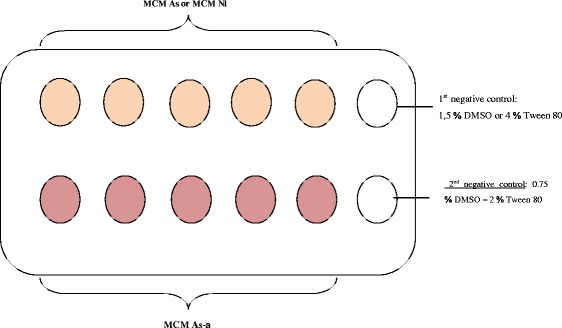
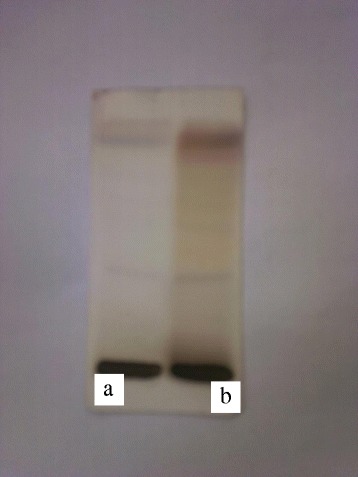
Fresh eggs of Heligmosomoides bakeri were obtained from the faeces of experimentally infected mice. L and L larval stages were obtained after 48 and 72 h of coproculture respectively. Methylene Chloride-Methanol (1:1) extracts of Annona senegalensis and Nauclea latifolia were diluted in DMSO or Tween 80 to prepare the following concentrations: 625, 1250, 2500, 3750 and 5000 μg/ml. The effects of extract solutions were evaluated on the embryonation of eggs, egg hatching and on L and L survival after 48, 10 and 24 h of incubation. Negative controls were 1.5% DMSO, 4% Tween 80 and a mixture of these solvents. The TLC was carried out and the profiles of secondary metabolites were made.
Negative controls had no effect on the embryonation, eggs hatching and on larval mortality. However, it was found that, the extracts affected the free living stages of H. bakeri in a concentration-dependant manner. At the highest concentration (5000 μg/ml), the rate of inhibition of embryonation obtained were 20.80%, 38.15% and 84.83% for Methylene Chloride-Methanol of Annona senegalensis (MCM As), Nauclea latifolia (MCM Nl) extracts and mixture of Annona senegalensis and Nauclea latifolia (MCM As-Nl) extract respectively. For egg hatch, the inhibition rate was 16.10%, 46.24% and 87.07% for the above three extracts respectively at the same concentration of 5000 μg/ml. On L and L larval stages after 24 h of exposure to extracts, the mortality rates of 100%, 54.76% and 96.77% against 98%, 51.44% and 100% were obtained for MCM As, MCM Nl and MCM As-Nl respectively at the highest concentration. The Methylene Chloride-Methanol of A.senegalensis, N. latifolia extracts showed the presence of alkaloids except in N. latifolia extract, flavonoids, sterols, triterpens, tanins, polyphenols, anthraquinons, saponins and terpenoids.
These findings suggest that, the mixture of the two plant extracts showed an additive (synergetic effect) ovicidal effect and a slight larval mortality on L as compared to the effect of MCM As extract alone. These effects were due to the presence ao secondary metabolites identifies in the plant extracts. Thus, they may be used as possible «disinfectants» for soil transmitted nematodes.
一些医学 - 兽医学寄生虫菌株产生抗药性,以及合成驱虫药对人类、动物的不可用性和毒性及其在环境中的残留影响,促使科学家转向具有驱虫特性的植物。因此,这项工作的目的是总体上为对抗具有医学和兽医学重要性的蠕虫做出贡献,并清除其自由生活阶段的环境。
从实验感染小鼠的粪便中获取巴氏类圆线虫的新鲜虫卵。分别在共培养48小时和72小时后获得L1和L2幼虫阶段。将塞内加尔番荔枝和阔叶乌檀的二氯甲烷 - 甲醇(1:1)提取物用二甲基亚砜(DMSO)或吐温80稀释,以制备以下浓度:625、1250、2500、3750和5000μg/ml。在孵育48、10和24小时后,评估提取物溶液对虫卵胚胎发育、虫卵孵化以及L1和L2存活的影响。阴性对照为1.5% DMSO、4%吐温80以及这些溶剂的混合物。进行了薄层层析(TLC)并绘制了次生代谢产物图谱。
阴性对照对胚胎发育、虫卵孵化和幼虫死亡率没有影响。然而,发现提取物以浓度依赖的方式影响巴氏类圆线虫的自由生活阶段。在最高浓度(5000μg/ml)下,塞内加尔番荔枝二氯甲烷 - 甲醇提取物(MCM As)、阔叶乌檀二氯甲烷 - 甲醇提取物(MCM Nl)和塞内加尔番荔枝与阔叶乌檀混合提取物(MCM As - Nl)对胚胎发育的抑制率分别为20.80%、38.15%和84.83%。对于虫卵孵化,在相同浓度5000μg/ml下,上述三种提取物的抑制率分别为16.10%、46.24%和87.07%。在暴露于提取物24小时后,对于L1和L2幼虫阶段,在最高浓度下,MCM As、MCM Nl和MCM As - Nl的死亡率分别为100%、54.76%和96.77%,而对照分别为98%、51.44%和100%。塞内加尔番荔枝、阔叶乌檀的二氯甲烷 - 甲醇提取物显示除阔叶乌檀提取物外存在生物碱、黄酮类、甾醇、三萜类、单宁、多酚、蒽醌、皂苷和萜类化合物。
这些发现表明,与单独的MCM As提取物相比,两种植物提取物的混合物显示出相加(协同效应)杀卵作用以及对L1幼虫的轻微致死作用。这些作用归因于植物提取物中鉴定出的次生代谢产物的存在。因此,它们可能用作土壤传播线虫的潜在“消毒剂”。