Department of Radiology, The University of Michigan, Ann Arbor, Michigan, 48109, United States.
Department of Urology, Comprehensive Cancer Center, The University of Michigan, Ann Arbor, Michigan, 48109, United States.
Sci Rep. 2017 Aug 18;7(1):8738. doi: 10.1038/s41598-017-09315-w.
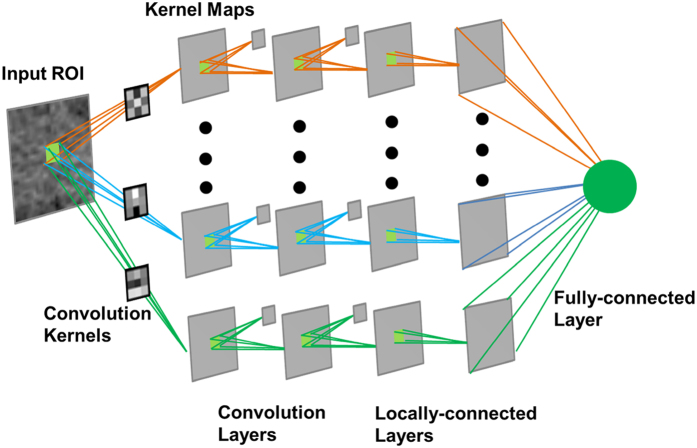
Cross-sectional X-ray imaging has become the standard for staging most solid organ malignancies. However, for some malignancies such as urinary bladder cancer, the ability to accurately assess local extent of the disease and understand response to systemic chemotherapy is limited with current imaging approaches. In this study, we explored the feasibility that radiomics-based predictive models using pre- and post-treatment computed tomography (CT) images might be able to distinguish between bladder cancers with and without complete chemotherapy responses. We assessed three unique radiomics-based predictive models, each of which employed different fundamental design principles ranging from a pattern recognition method via deep-learning convolution neural network (DL-CNN), to a more deterministic radiomics feature-based approach and then a bridging method between the two, utilizing a system which extracts radiomics features from the image patterns. Our study indicates that the computerized assessment using radiomics information from the pre- and post-treatment CT of bladder cancer patients has the potential to assist in assessment of treatment response.
X 射线断层成像已成为大多数实体恶性肿瘤分期的标准。然而,对于某些恶性肿瘤,如膀胱癌,目前的成像方法在准确评估疾病的局部范围和了解对全身化疗的反应方面能力有限。在这项研究中,我们探讨了基于放射组学的预测模型使用治疗前后 CT 图像是否能够区分有无完全化疗反应的膀胱癌的可行性。我们评估了三种独特的基于放射组学的预测模型,每种模型都采用不同的基本设计原则,从基于模式识别的深度学习卷积神经网络(DL-CNN)方法,到更确定性的基于放射组学特征的方法,再到两者之间的桥接方法,利用从图像模式中提取放射组学特征的系统。我们的研究表明,使用膀胱癌患者治疗前后 CT 的放射组学信息进行计算机评估有可能有助于评估治疗反应。