Mathews Neilson M
Lehigh Valley Health Network, Allentown, Pennsylvania.
Sports Health. 2018 Jan/Feb;10(1):19-30. doi: 10.1177/1941738117727736. Epub 2017 Aug 29.
With the increasing use of unregulated dietary supplements, athletes are at continued risk from adverse medical events and inadvertent doping.
A review of Clinical Key, MEDLINE, and PubMed databases from 2012 to 2017 was performed using search terms, including dietary supplement, contamination, doping in athletes, inadvertent doping, and prohibited substances. The references of pertinent articles were reviewed for other relevant sources.
Clinical review.
Level 3.
Poor manufacturing processes and intentional contamination with many banned substances continue to occur in dietary supplements sold in the United States. Certain sectors, such as weight loss and muscle-building supplements, pose a greater threat because they are more likely to be contaminated.
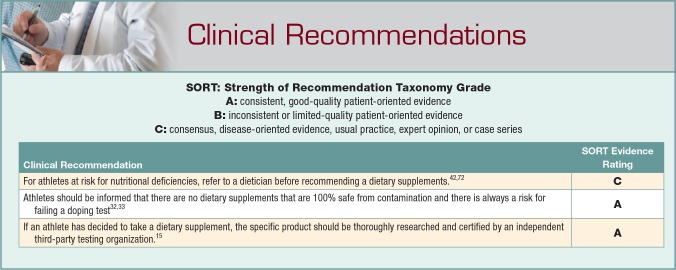
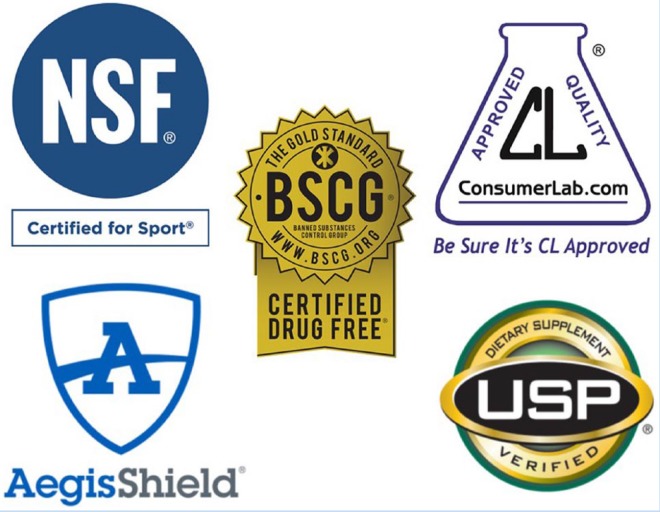
Athletes will continue to be at risk for adverse events and failed doping tests due to contaminated dietary supplements until legislation changes how they are regulated. In the interim, there are several steps that can be taken to mitigate this risk, including improved education of medical staff and athletes and use of third party-certified products.
随着未受监管的膳食补充剂使用日益增加,运动员持续面临不良医疗事件和意外兴奋剂违规的风险。
使用包括膳食补充剂、污染、运动员兴奋剂违规、意外兴奋剂违规和违禁物质等检索词,对2012年至2017年的Clinical Key、MEDLINE和PubMed数据库进行了综述。对相关文章的参考文献进行了审查以查找其他相关来源。
临床综述。
3级。
在美国销售的膳食补充剂中,不良生产工艺以及故意被多种违禁物质污染的情况仍在发生。某些领域,如减肥和增肌补充剂,构成的威胁更大,因为它们更有可能被污染。
在立法改变膳食补充剂的监管方式之前,运动员将继续因受污染的膳食补充剂而面临不良事件和兴奋剂检测失败的风险。在此过渡期间,可以采取若干措施来降低这种风险,包括加强对医务人员和运动员的教育以及使用第三方认证产品。