Billah Mustain, Waheed Sajjad, Rahman Mohammad Motiur
Department of Information and Communication Technology, Mawlana Bhashani Science and Technology University, Tangail, Bangladesh.
Department of Computer Science and Engineering, Mawlana Bhashani Science and Technology University, Tangail, Bangladesh.
Int J Biomed Imaging. 2017;2017:9545920. doi: 10.1155/2017/9545920. Epub 2017 Aug 14.
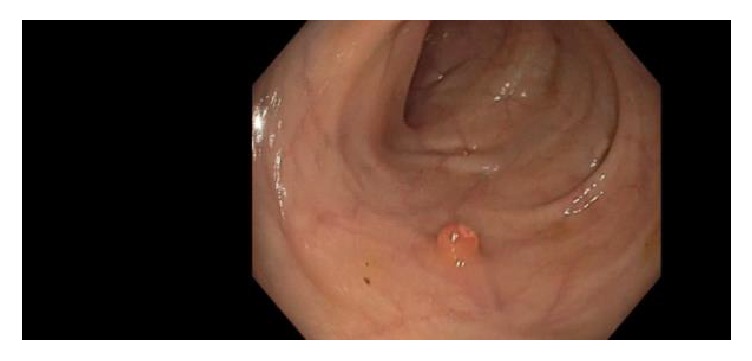
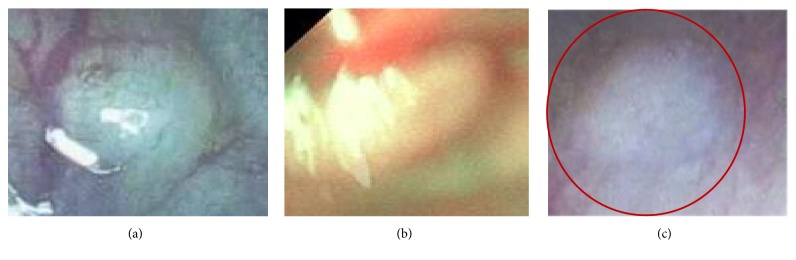
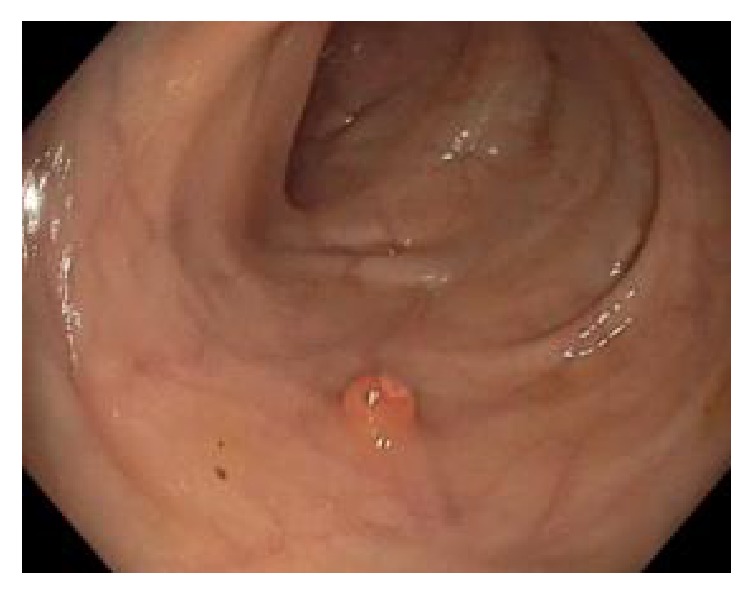
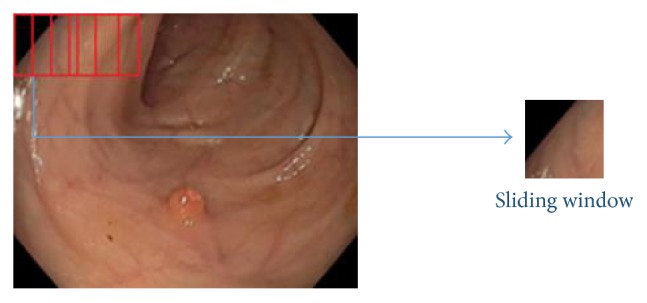
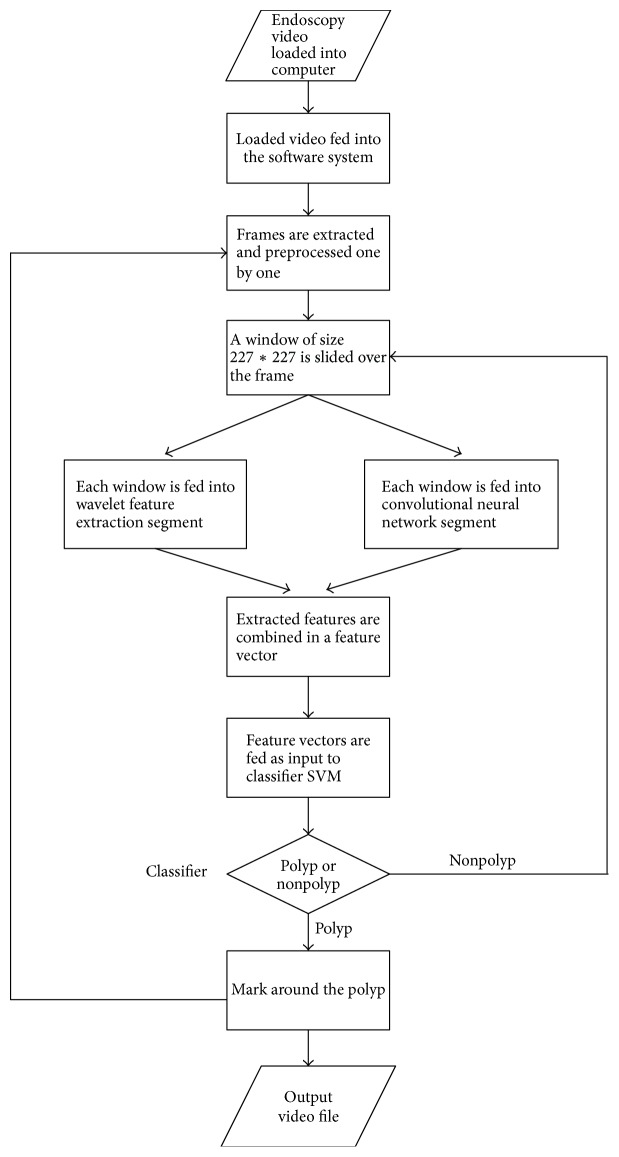
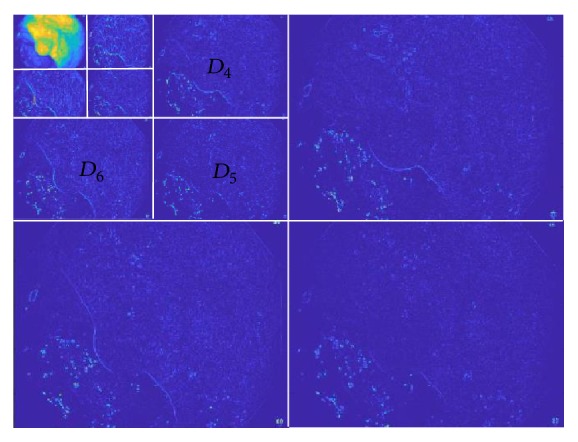
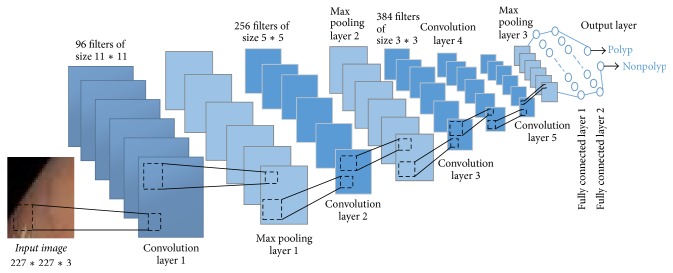
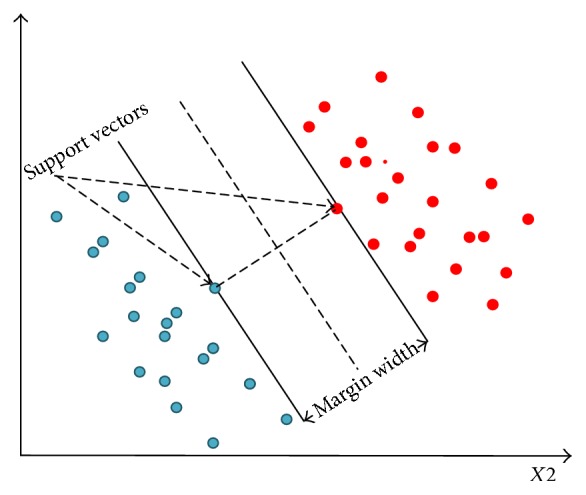
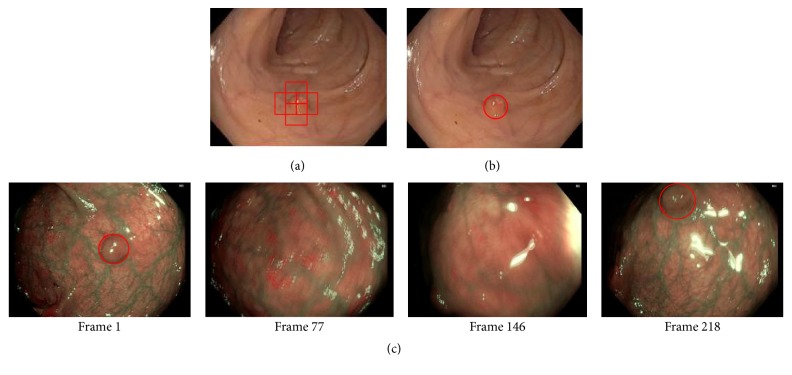
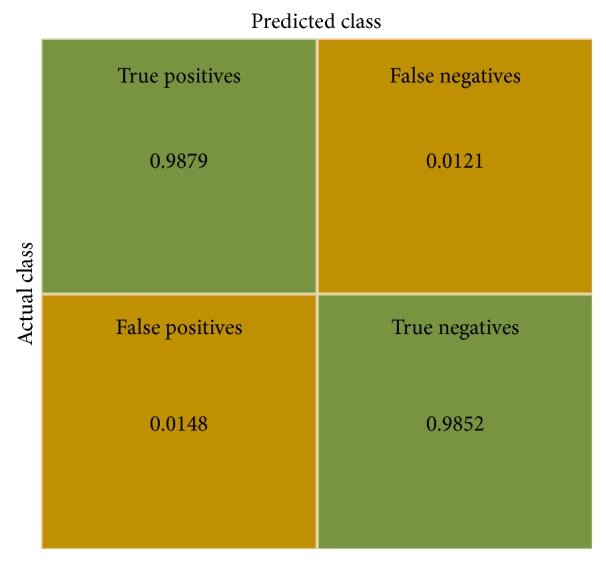
Gastrointestinal polyps are considered to be the precursors of cancer development in most of the cases. Therefore, early detection and removal of polyps can reduce the possibility of cancer. Video endoscopy is the most used diagnostic modality for gastrointestinal polyps. But, because it is an operator dependent procedure, several human factors can lead to misdetection of polyps. Computer aided polyp detection can reduce polyp miss detection rate and assists doctors in finding the most important regions to pay attention to. In this paper, an automatic system has been proposed as a support to gastrointestinal polyp detection. This system captures the video streams from endoscopic video and, in the output, it shows the identified polyps. Color wavelet (CW) features and convolutional neural network (CNN) features of video frames are extracted and combined together which are used to train a linear support vector machine (SVM). Evaluations on standard public databases show that the proposed system outperforms the state-of-the-art methods, gaining accuracy of 98.65%, sensitivity of 98.79%, and specificity of 98.52%.
在大多数情况下,胃肠道息肉被认为是癌症发展的先兆。因此,早期发现并切除息肉可降低患癌可能性。视频内窥镜检查是检测胃肠道息肉最常用的诊断方式。但是,由于这是一个依赖操作人员的程序,一些人为因素可能导致息肉漏检。计算机辅助息肉检测可以降低息肉漏检率,并帮助医生找到需要重点关注的区域。本文提出了一种自动系统,以辅助胃肠道息肉检测。该系统从内窥镜视频中捕获视频流,输出结果为识别出的息肉。提取视频帧的彩色小波(CW)特征和卷积神经网络(CNN)特征并将其组合起来,用于训练线性支持向量机(SVM)。在标准公共数据库上的评估表明,所提出的系统优于现有方法,准确率达到98.65%,灵敏度达到98.79%,特异性达到98.52%。