Zhu Yong, Deng Guoying, Ji Anqi, Yao Jiayi, Meng Xiaoxiao, Wang Jinfeng, Wang Qian, Wang Qiugen, Wang Ruilan
Department of Critical Care Medicine, Shanghai General Hospital, Shanghai Jiaotong University, School of Medicine.
Trauma Center, Shanghai General Hospital, Shanghai Jiaotong University, School of Medicine, Shanghai, China.
Int J Nanomedicine. 2017 Sep 27;12:7143-7152. doi: 10.2147/IJN.S143192. eCollection 2017.
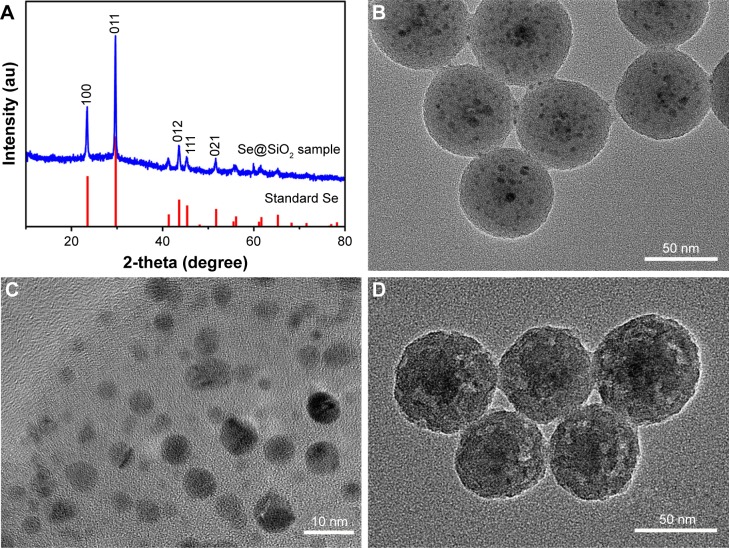
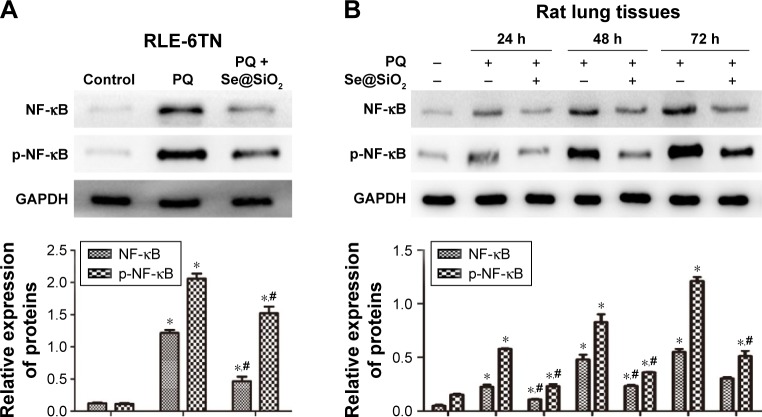
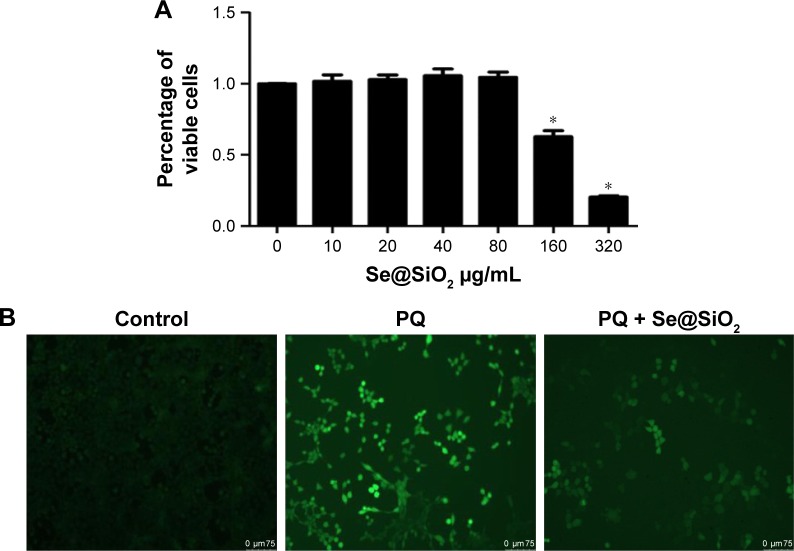
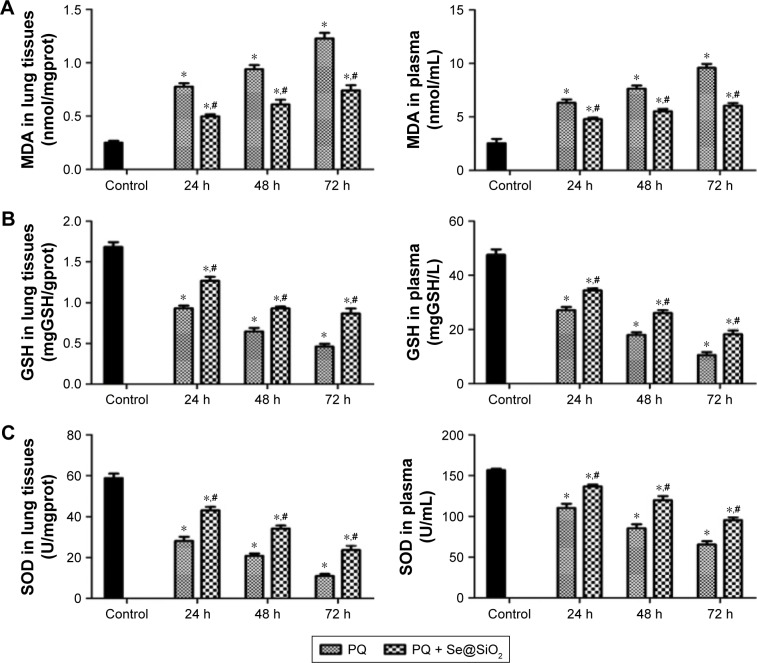
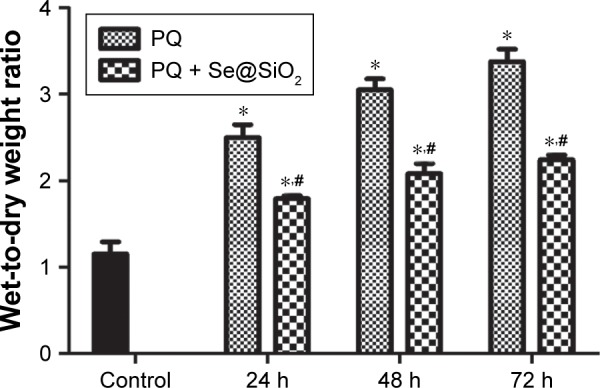
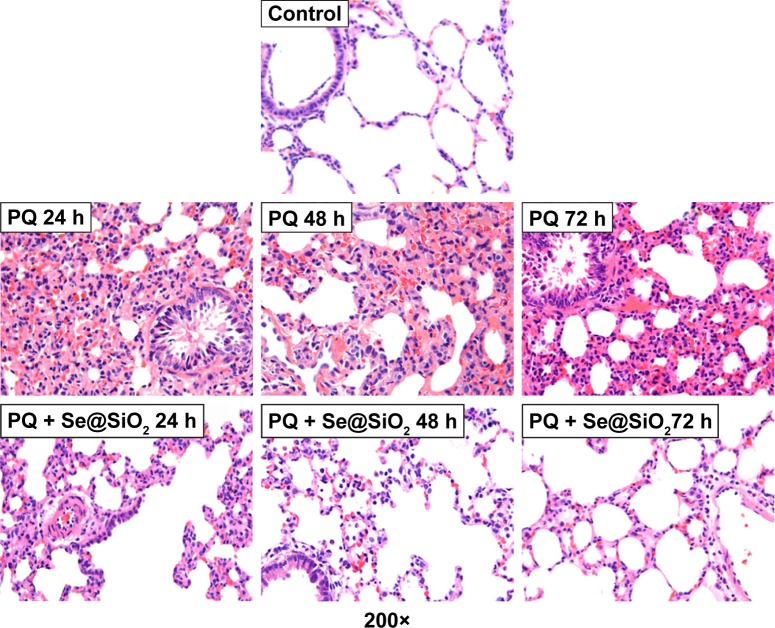
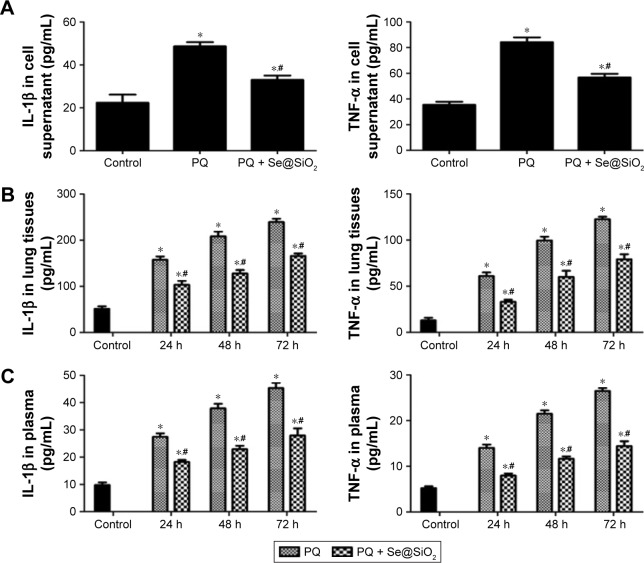
Acute paraquat (PQ) poisoning is one of the most common forms of pesticide poisoning. Oxidative stress and inflammation are thought to be important mechanisms in PQ-induced acute lung injury (ALI). Selenium (Se) can scavenge intracellular free radicals directly or indirectly. In this study, we investigated whether porous Se@SiO nanospheres could alleviate oxidative stress and inflammation in PQ-induced ALI. Male Sprague Dawley rats and RLE-6TN cells were used in this study. Rats were categorized into 3 groups: control (n=6), PQ (n=18), and PQ + Se@SiO (n=18). The PQ and PQ + Se@SiO groups were randomly and evenly divided into 3 sub-groups according to different time points (24, 48 and 72 h) after PQ treatment. Porous Se@SiO nanospheres 1 mg/kg (in the PQ + Se@SiO group) were administered via intraperitoneal injection every 24 h. Expression levels of reduced glutathione, malondialdehyde, superoxide dismutase, reactive oxygen species (ROS), nuclear factor-κB (NF-κB), phosphorylated NF-κB (p-NF-κB), tumor necrosis factor-α and interleukin-1β were detected, and a histological analysis of rat lung tissues was performed. The results showed that the levels of ROS, malondialdehyde, NF-κB, p-NF-κB, tumor necrosis factor-α and interleukin-1β were markedly increased after PQ treatment. Glutathione and superoxide dismutase levels were reduced. However, treatment with porous Se@SiO nanospheres markedly alleviated PQ-induced oxidative stress and inflammation. Additionally, the results from histological examinations and wet-to-dry weight ratios of rat lung tissues showed that lung damage was reduced after porous Se@SiO nanosphere treatment. These data indicate that porous Se@SiO nanospheres may reduce NF-κB, p-NF-κB and inflammatory cytokine levels by inhibiting ROS in PQ-induced ALI. This study demonstrates that porous Se@SiO nanospheres may be a therapeutic method for use in the future for PQ poisoning.
急性百草枯(PQ)中毒是最常见的农药中毒形式之一。氧化应激和炎症被认为是PQ诱导急性肺损伤(ALI)的重要机制。硒(Se)可以直接或间接清除细胞内自由基。在本研究中,我们调查了多孔硒@二氧化硅纳米球是否能减轻PQ诱导的ALI中的氧化应激和炎症。本研究使用雄性Sprague Dawley大鼠和RLE-6TN细胞。大鼠分为3组:对照组(n = 6)、PQ组(n = 18)和PQ + Se@SiO组(n = 18)。PQ组和PQ + Se@SiO组根据PQ处理后的不同时间点(24、48和72小时)随机且均匀地分为3个亚组。每24小时通过腹腔注射给予多孔硒@二氧化硅纳米球1 mg/kg(在PQ + Se@SiO组中)。检测还原型谷胱甘肽、丙二醛、超氧化物歧化酶、活性氧(ROS)、核因子-κB(NF-κB)、磷酸化NF-κB(p-NF-κB)、肿瘤坏死因子-α和白细胞介素-1β的表达水平,并对大鼠肺组织进行组织学分析。结果表明,PQ处理后ROS、丙二醛、NF-κB、p-NF-κB、肿瘤坏死因子-α和白细胞介素-1β水平显著升高。谷胱甘肽和超氧化物歧化酶水平降低。然而,多孔硒@二氧化硅纳米球处理显著减轻了PQ诱导的氧化应激和炎症。此外,大鼠肺组织的组织学检查结果和湿干重比表明,多孔硒@二氧化硅纳米球处理后肺损伤减轻。这些数据表明,多孔硒@二氧化硅纳米球可能通过抑制PQ诱导的ALI中的ROS来降低NF-κB、p-NF-κB和炎性细胞因子水平。本研究表明,多孔硒@二氧化硅纳米球可能是未来用于PQ中毒的一种治疗方法。