Slipski Carmine J, Zhanel George G, Bay Denice C
Department of Medical Microbiology and Infectious Diseases, University of Manitoba, Rm 514C Basic Medical Sciences Bldg., 745 Bannatyne Avenue, Winnipeg, MB, R3E 0J9, Canada.
J Membr Biol. 2018 Feb;251(1):15-33. doi: 10.1007/s00232-017-9992-8. Epub 2017 Oct 23.
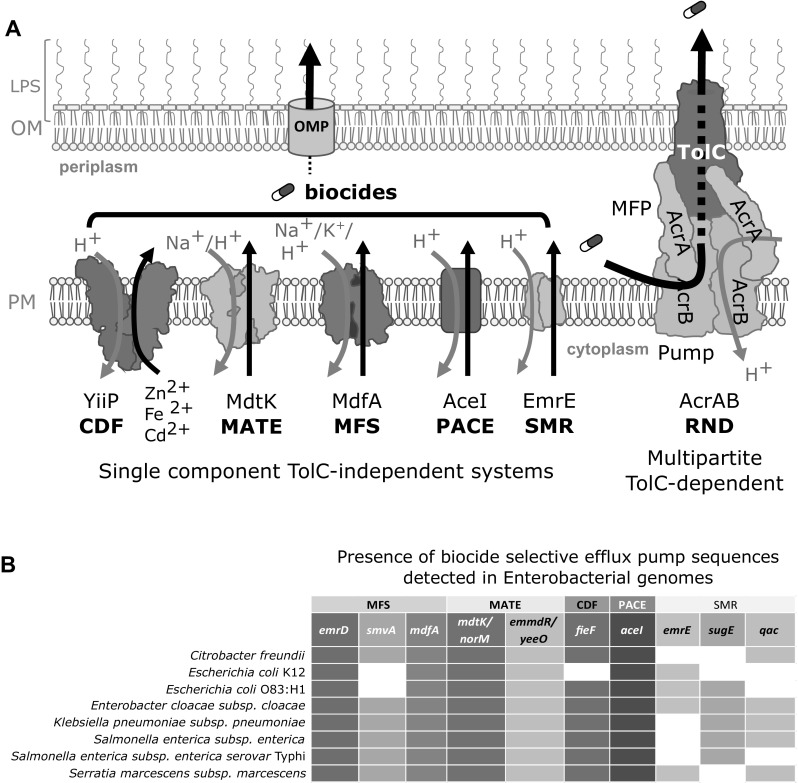
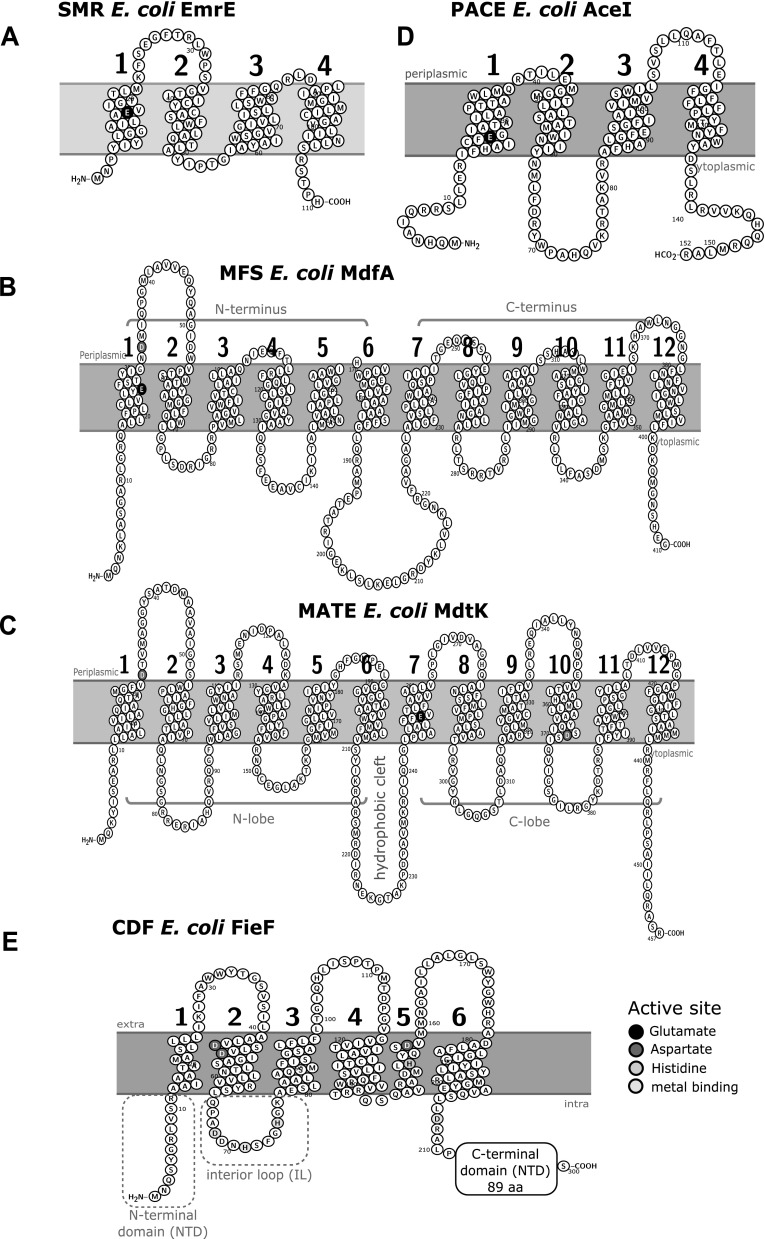
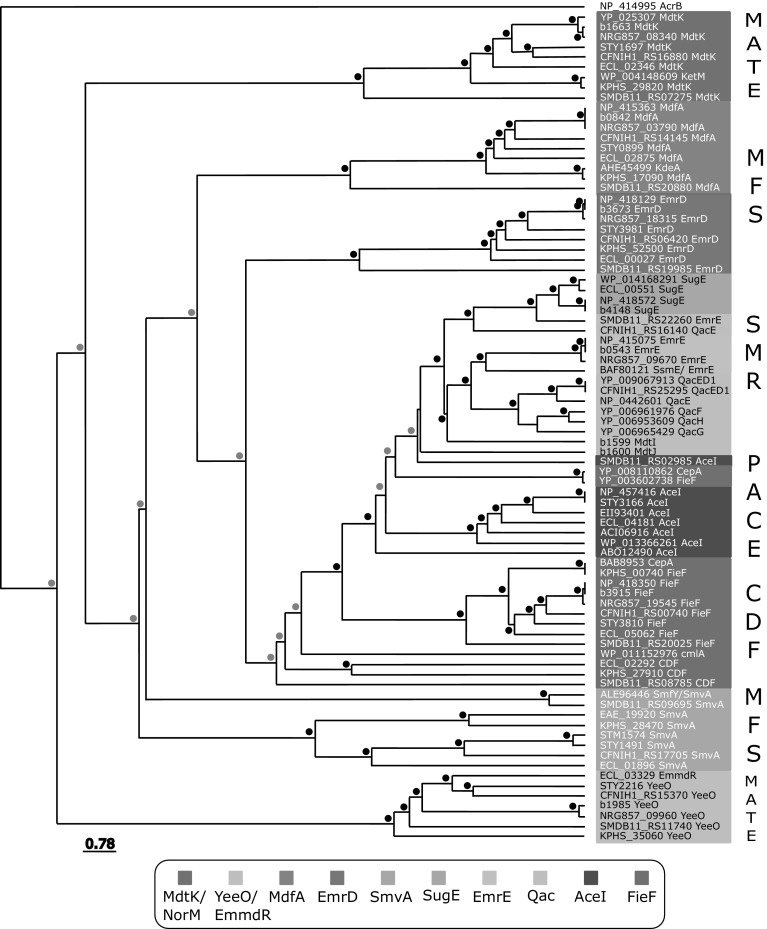
Bacterial resistance to biocides used as antiseptics, dyes, and disinfectants is a growing concern in food preparation, agricultural, consumer manufacturing, and health care industries, particularly among Gram-negative Enterobacteriaceae, some of the most common community and healthcare-acquired bacterial pathogens. Biocide resistance is frequently associated with antimicrobial cross-resistance leading to reduced activity and efficacy of both antimicrobials and antiseptics. Multidrug resistant efflux pumps represent an important biocide resistance mechanism in Enterobacteriaceae. An assortment of structurally diverse efflux pumps frequently co-exist in these species and confer both unique and overlapping biocide and antimicrobial selectivity. TolC-dependent multicomponent systems that span both the plasma and outer membranes have been shown to confer clinically significant resistance to most antimicrobials including many biocides, however, a growing number of single component TolC-independent multidrug resistant efflux pumps are specifically associated with biocide resistance: small multidrug resistance (SMR), major facilitator superfamily (MFS), multidrug and toxin extruder (MATE), cation diffusion facilitator (CDF), and proteobacterial antimicrobial compound efflux (PACE) families. These efflux systems are a growing concern as they are rapidly spread between members of Enterobacteriaceae on conjugative plasmids and mobile genetic elements, emphasizing their importance to antimicrobial resistance. In this review, we will summarize the known biocide substrates of these efflux pumps, compare their structural relatedness, Enterobacteriaceae distribution, and significance. Knowledge gaps will be highlighted in an effort to unravel the role that these apparent "lone wolves" of the efflux-mediated resistome may offer.
细菌对用作防腐剂、染料和消毒剂的杀生剂产生耐药性,这在食品制备、农业、消费品制造和医疗保健行业中日益受到关注,尤其是在革兰氏阴性肠杆菌科细菌中,这些细菌是一些最常见的社区获得性和医疗保健相关的病原菌。杀生剂耐药性通常与抗菌交叉耐药性相关,导致抗菌剂和防腐剂的活性和功效降低。多药耐药外排泵是肠杆菌科细菌中一种重要的杀生剂耐药机制。在这些菌种中,多种结构不同的外排泵常常共存,并赋予独特且重叠的杀生剂和抗菌剂选择性。已证明跨越质膜和外膜的依赖于 TolC 的多组分系统可赋予对包括许多杀生剂在内的大多数抗菌剂临床上显著的耐药性,然而,越来越多的不依赖 TolC 的单组分多药耐药外排泵与杀生剂耐药性特别相关:小多药耐药(SMR)、主要易化子超家族(MFS)、多药和毒素外排(MATE)、阳离子扩散易化子(CDF)以及变形菌抗菌化合物外排(PACE)家族。这些外排系统令人日益担忧,因为它们通过接合质粒和移动遗传元件在肠杆菌科成员之间迅速传播,凸显了它们在抗菌耐药性方面的重要性。在本综述中,我们将总结这些外排泵已知的杀生剂底物,比较它们的结构相关性、在肠杆菌科中的分布及重要性。将突出知识空白,以努力阐明这些外排介导的耐药组中明显的“孤狼”可能发挥的作用。