Johansen Jeffrey R, Mareš Jan, Pietrasiak Nicole, Bohunická Markéta, Zima Jan, Štenclová Lenka, Hauer Tomáš
Department of Biology, John Carroll University, University Heights, Ohio, United States of America.
Department of Botany, Faculty of Science, University of South Bohemia, České Budějovice, Czech Republic.
PLoS One. 2017 Oct 26;12(10):e0186393. doi: 10.1371/journal.pone.0186393. eCollection 2017.
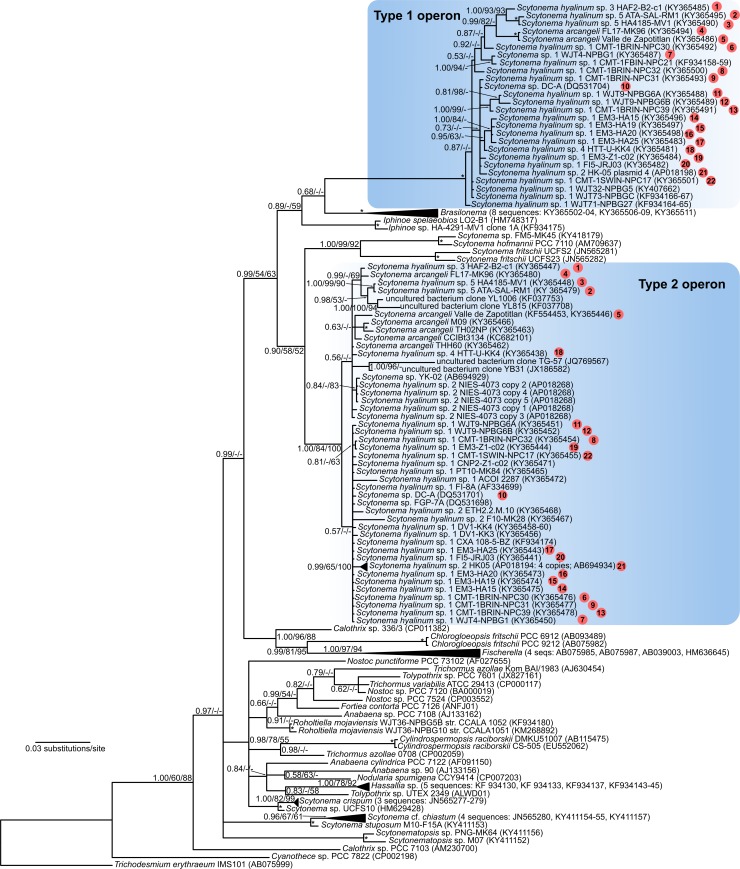
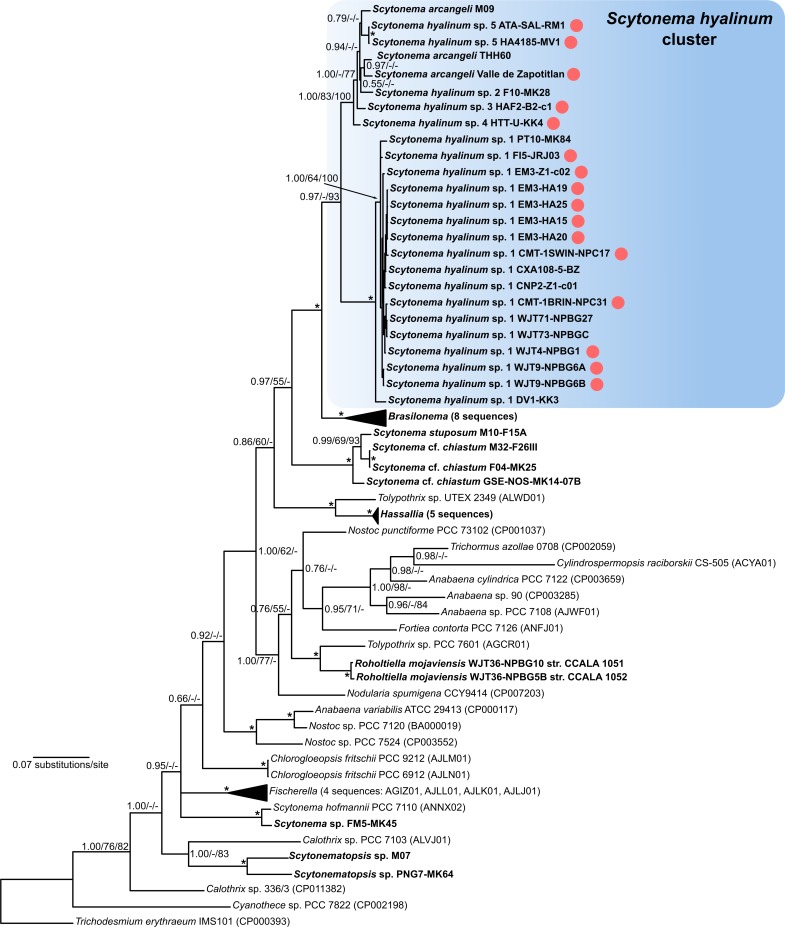
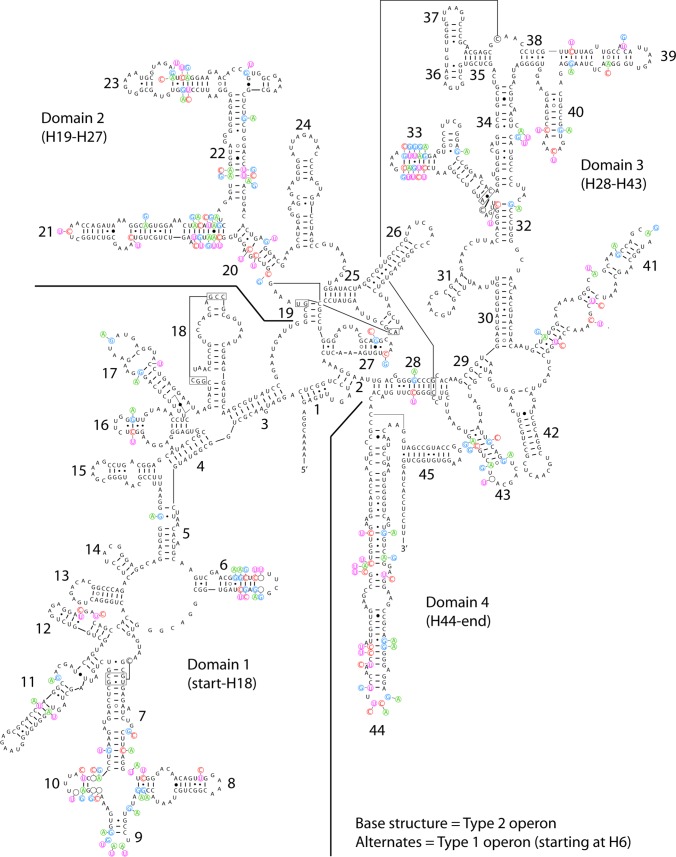
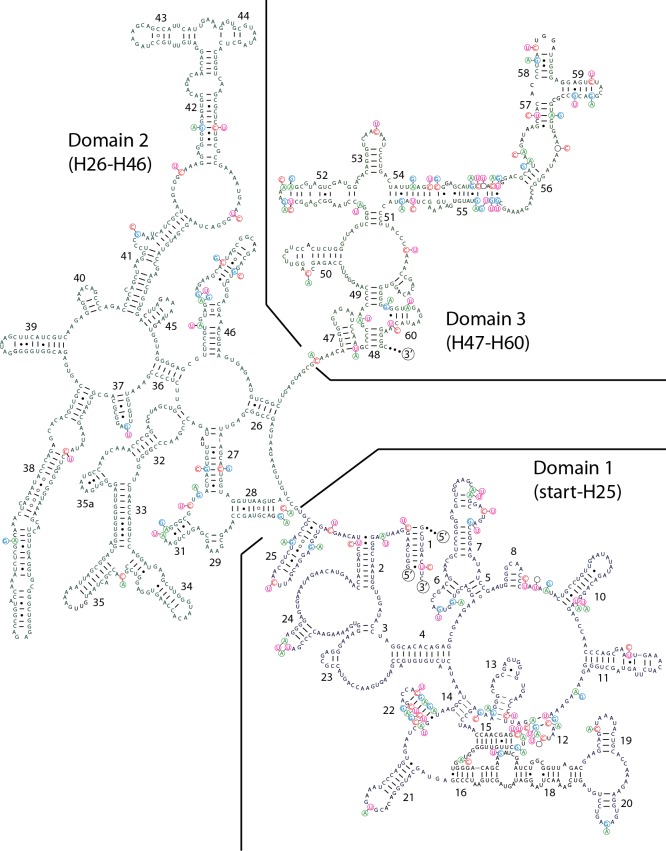
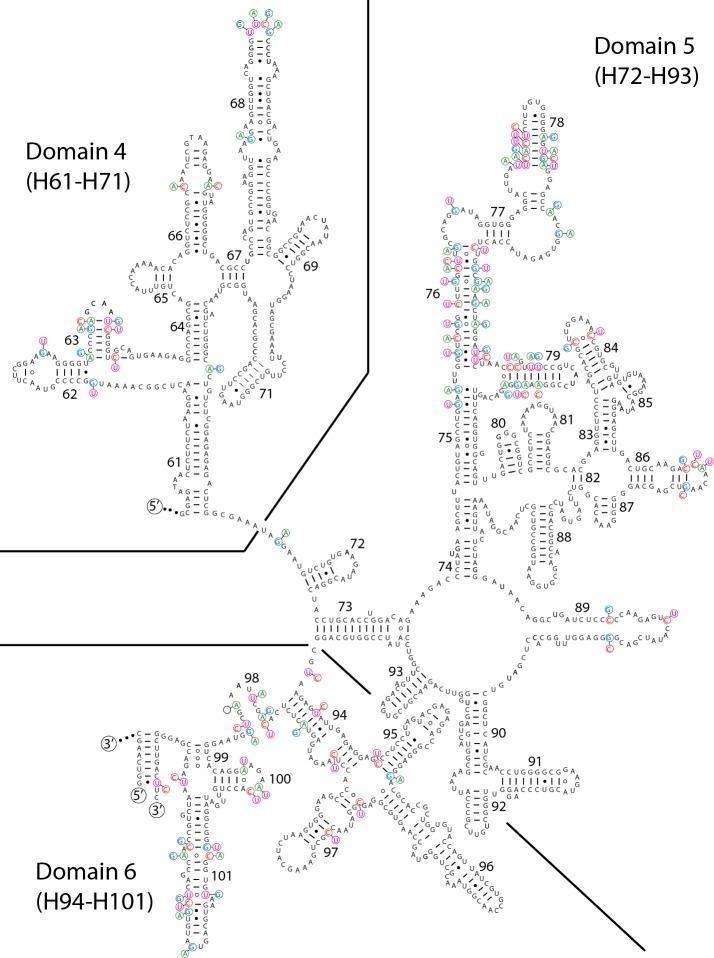
A highly divergent 16S rRNA gene was found in one of the five ribosomal operons present in a species complex currently circumscribed as Scytonema hyalinum (Nostocales, Cyanobacteria) using clone libraries. If 16S rRNA sequence macroheterogeneity among ribosomal operons due to insertions, deletions or truncation is excluded, the sequence heterogeneity observed in S. hyalinum was the highest observed in any prokaryotic species thus far (7.3-9.0%). The secondary structure of the 16S rRNA molecules encoded by the two divergent operons was nearly identical, indicating possible functionality. The 23S rRNA gene was examined for a few strains in this complex, and it was also found to be highly divergent from the gene in Type 2 operons (8.7%), and likewise had nearly identical secondary structure between the Type 1 and Type 2 operons. Furthermore, the 16S-23S ITS showed marked differences consistent between operons among numerous strains. Both operons have promoter sequences that satisfy consensus requirements for functional prokaryotic transcription initiation. Horizontal gene transfer from another unknown heterocytous cyanobacterium is considered the most likely explanation for the origin of this molecule, but does not explain the ultimate origin of this sequence, which is very divergent from all 16S rRNA sequences found thus far in cyanobacteria. The divergent sequence is highly conserved among numerous strains of S. hyalinum, suggesting adaptive advantage and selective constraint of the divergent sequence.
利用克隆文库,在一个目前被界定为透明鞘丝藻(念珠藻目,蓝细菌)的物种复合体所具有的5个核糖体操纵子中的一个里,发现了一个高度分化的16S rRNA基因。如果排除由于插入、缺失或截短导致的核糖体操纵子间16S rRNA序列的宏观异质性,那么在透明鞘丝藻中观察到的序列异质性是迄今为止在任何原核生物物种中观察到的最高值(7.3 - 9.0%)。由两个分化的操纵子编码的16S rRNA分子的二级结构几乎相同,表明其可能具有功能。对该复合体中的几个菌株检测了23S rRNA基因,发现它也与2型操纵子中的基因高度分化(8.7%),并且1型和2型操纵子之间同样具有几乎相同的二级结构。此外,16S - 23S ITS在众多菌株的操纵子之间显示出一致的显著差异。两个操纵子都具有满足原核生物功能性转录起始的共有序列要求的启动子序列。来自另一种未知的异形胞蓝细菌的水平基因转移被认为是该分子起源的最可能解释,但无法解释该序列的最终起源,它与迄今为止在蓝细菌中发现的所有16S rRNA序列都非常不同。这个分化的序列在众多透明鞘丝藻菌株中高度保守,表明该分化序列具有适应性优势和选择性限制。