Marzano Valeria, Mancinelli Livia, Bracaglia Giorgia, Del Chierico Federica, Vernocchi Pamela, Di Girolamo Francesco, Garrone Stefano, Tchidjou Kuekou Hyppolite, D'Argenio Patrizia, Dallapiccola Bruno, Urbani Andrea, Putignani Lorenza
Human Microbiome Unit, Bambino Gesù Children's Hospital IRCCS, Rome, Italy.
Laboratory Medicine, Bambino Gesù Children's Hospital IRCCS, Rome, Italy.
PLoS Negl Trop Dis. 2017 Nov 2;11(11):e0005916. doi: 10.1371/journal.pntd.0005916. eCollection 2017 Nov.
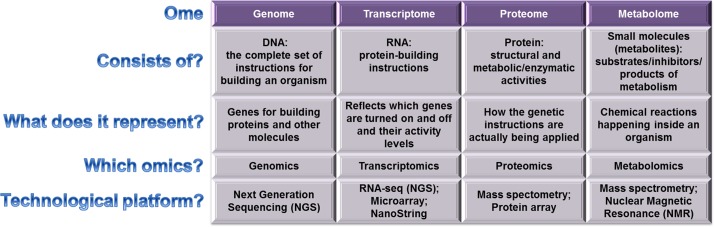
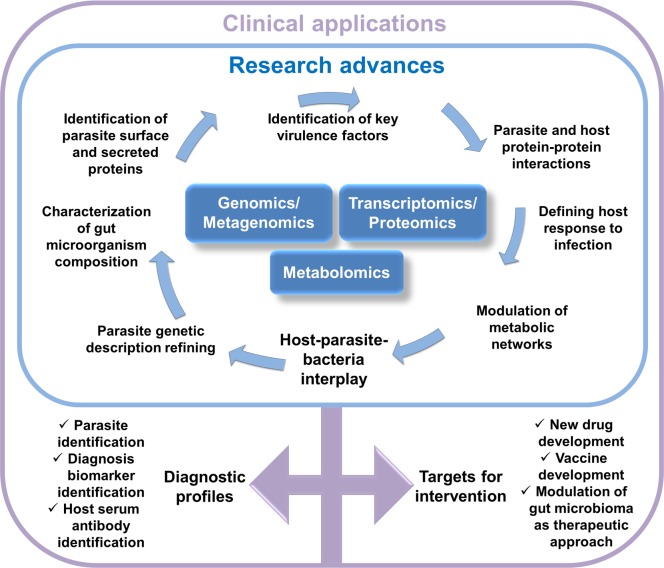
The human gut has been continuously exposed to a broad spectrum of intestinal organisms, including viruses, bacteria, fungi, and parasites (protozoa and worms), over millions of years of coevolution, and plays a central role in human health. The modern lifestyles of Western countries, such as the adoption of highly hygienic habits, the extensive use of antimicrobial drugs, and increasing globalisation, have dramatically altered the composition of the gut milieu, especially in terms of its eukaryotic "citizens." In the past few decades, numerous studies have highlighted the composition and role of human intestinal bacteria in physiological and pathological conditions, while few investigations exist on gut parasites and particularly on their coexistence and interaction with the intestinal microbiota. Studies of the gut "parasitome" through "omic" technologies, such as (meta)genomics, transcriptomics, proteomics, and metabolomics, are herein reviewed to better understand their role in the relationships between intestinal parasites, host, and resident prokaryotes, whether pathogens or commensals. Systems biology-based profiles of the gut "parasitome" under physiological and severe disease conditions can indeed contribute to the control of infectious diseases and offer a new perspective of omics-assisted tropical medicine.
在数百万年的共同进化过程中,人类肠道持续接触各种各样的肠道生物,包括病毒、细菌、真菌和寄生虫(原生动物和蠕虫),并在人类健康中发挥着核心作用。西方国家的现代生活方式,如养成高度卫生的习惯、广泛使用抗菌药物以及日益全球化,极大地改变了肠道环境的组成,尤其是在其真核“居民”方面。在过去几十年中,众多研究突出了人类肠道细菌在生理和病理状况下的组成及作用,而关于肠道寄生虫,特别是关于它们与肠道微生物群的共存及相互作用的研究却很少。本文综述了通过(元)基因组学、转录组学、蛋白质组学和代谢组学等“组学”技术对肠道“寄生虫组”的研究,以更好地理解它们在肠道寄生虫、宿主和常驻原核生物(无论是病原体还是共生菌)之间关系中的作用。基于系统生物学的肠道“寄生虫组”在生理和严重疾病状况下的概况确实有助于控制传染病,并为组学辅助热带医学提供新的视角。