Department of Biology, Texas A&M University, College Station, TX, USA.
Department of Molecular Biology & Microbiology, Tufts University School of Medicine, Boston, MA, USA.
Sci Rep. 2017 Nov 7;7(1):14672. doi: 10.1038/s41598-017-15236-5.
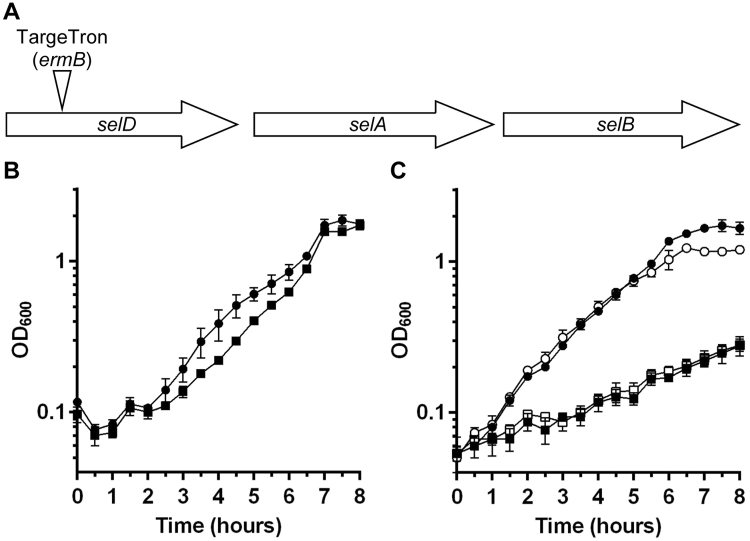
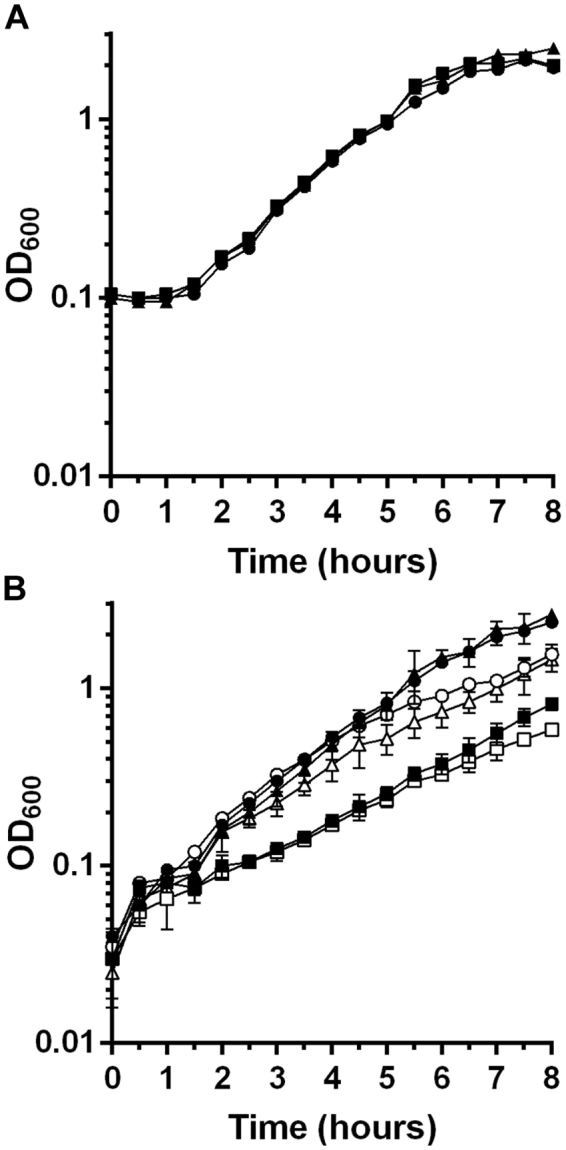
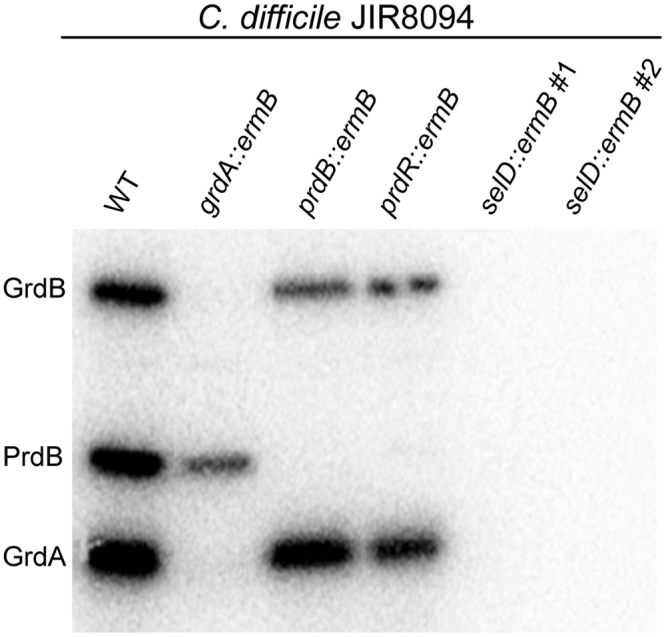
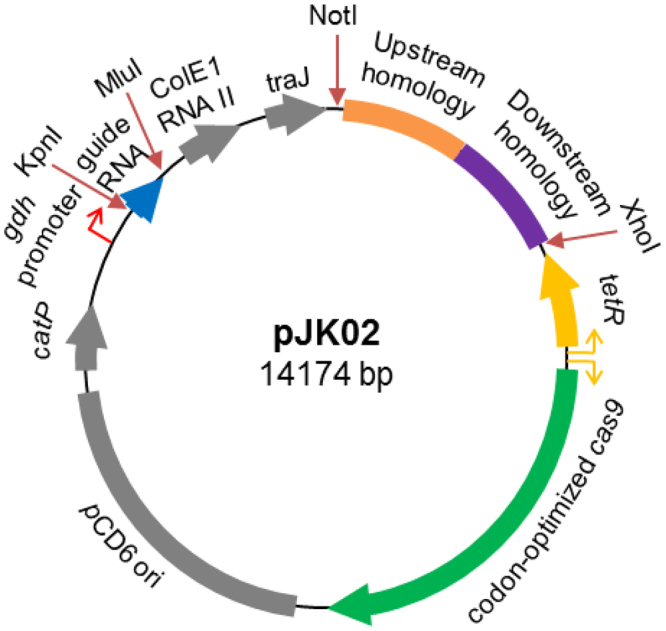
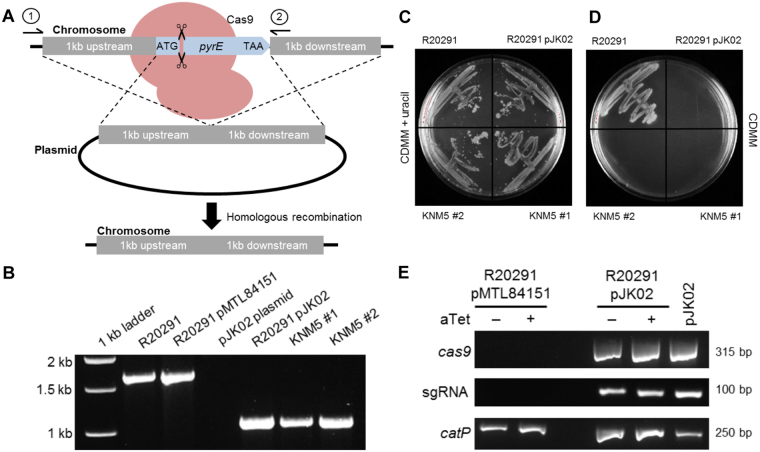
Clostridium difficile is a significant concern as a nosocomial pathogen, and genetic tools are important when analyzing the physiology of such organisms so that the underlying physiology/pathogenesis of the organisms can be studied. Here, we used TargeTron to investigate the role of selenoproteins in C. difficile Stickland metabolism and found that a TargeTron insertion into selD, encoding the selenophosphate synthetase that is essential for the specific incorporation of selenium into selenoproteins, results in a significant growth defect and a global loss of selenium incorporation. However, because of potential polar effects of the TargeTron insertion, we developed a CRISPR-Cas9 mutagenesis system for C. difficile. This system rapidly and efficiently introduces site-specific mutations into the C. difficile genome (20-50% mutation frequency). The selD CRISPR deletion mutant had a growth defect in protein-rich medium and mimicked the phenotype of a generated TargeTron selD mutation. Our findings suggest that Stickland metabolism could be a target for future antibiotic therapies and that the CRISPR-Cas9 system can introduce rapid and efficient modifications into the C. difficile genome.
艰难梭菌是一种重要的医院病原体,当分析此类生物体的生理学时,遗传工具是很重要的,以便研究生物体的潜在生理学/发病机制。在这里,我们使用 TargeTron 研究了硒蛋白在艰难梭菌 Stickland 代谢中的作用,发现 TargeTron 插入到编码硒代磷酸合成酶的 selD 中,该酶对于将硒特异性掺入硒蛋白至关重要,导致严重的生长缺陷和硒掺入的全面丧失。然而,由于 TargeTron 插入的潜在极性效应,我们为艰难梭菌开发了一种 CRISPR-Cas9 诱变系统。该系统可快速有效地将特异性突变引入艰难梭菌基因组(突变频率为 20-50%)。selD CRISPR 缺失突变体在富含蛋白质的培养基中生长缺陷,模拟了生成的 TargeTron selD 突变的表型。我们的研究结果表明,Stickland 代谢可能是未来抗生素治疗的目标,并且 CRISPR-Cas9 系统可以快速有效地对艰难梭菌基因组进行修饰。