Saqib Imad-Ud-Din, Iqbal Mobeen, Rana Atif, Hassan Saira
Department of Plastic Surgery, Shifa International Hospital, Islamabad, Pakistan.
Department of Pulmonology & Critical Care, Shifa International Hospital, Islamabad, Pakistan.
Cureus. 2017 Sep 1;9(9):e1636. doi: 10.7759/cureus.1636.
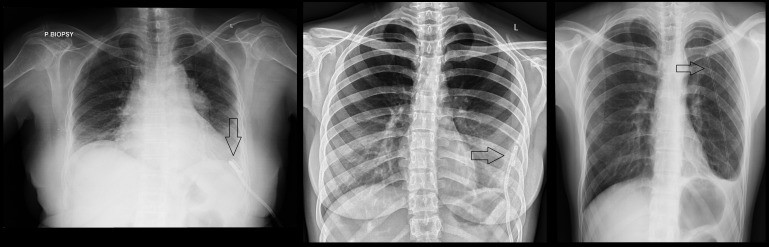
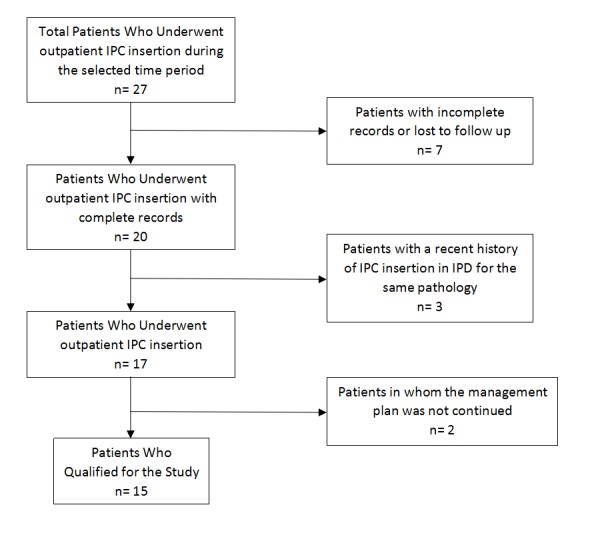
Introduction Pleural effusion is the excess fluid that accumulates in the pleural space. Pneumothorax is the collection of free air in the pleural cavity, while empyema is the collection of pus in the pleural cavity. Such pleural pathologies pose a great challenge to patients and health care professionals alike. While multiple management options exist, the major portion of it is carried out in the inpatient setting. We sought to evaluate the ambulatory use of indwelling pleural catheters for pleural pathologies, including malignant pleural effusion, empyema, and primary spontaneous pneumothorax. Methods We conducted a prospective case series analysis of 15 patients with various pleural pathologies in which an indwelling pleural catheter was placed by interventional radiologists on an outpatient basis and subsequently followed-up in a pulmonary clinic. Results were analyzed on the basis of clinical, as well as radiological progress with parameters being complete, partial, or no resolution. We also obtained prospective data on the quality of life of these patients. Results Six out of seven patients with malignant pleural effusion reported clinical (complete or partial) resolution, while three reported radiological (complete or partial) resolution. Two of the three patients with nonmalignant pleural effusions reported complete clinical as well as radiological resolution. All three patients with empyema reported complete clinical resolution and partial radiological resolution, while both patients with primary spontaneous pneumothorax reported complete clinical and radiological resolution. Patients reported preserved or improved quality of life with the whole process managed on an outpatient basis. Conclusion We report a high rate of clinical and radiological resolution in various pleural pathologies in our study, which is first of its kind from this part of the world. It demonstrates the feasibility of ambulatory management of pleural pathologies with a multidisciplinary approach.
引言 胸腔积液是积聚在胸膜腔内的过多液体。气胸是胸膜腔内的游离气体积聚,而脓胸是胸膜腔内的脓液积聚。此类胸膜疾病对患者和医护人员均构成巨大挑战。虽然存在多种治疗选择,但大部分治疗是在住院环境中进行的。我们旨在评估留置胸膜导管在胸膜疾病(包括恶性胸腔积液、脓胸和原发性自发性气胸)中的门诊应用情况。
方法 我们对15例患有各种胸膜疾病的患者进行了前瞻性病例系列分析,介入放射科医生在门诊为这些患者放置了留置胸膜导管,随后在肺部诊所进行随访。根据临床情况以及影像学进展分析结果,参数包括完全缓解、部分缓解或无缓解。我们还获取了这些患者生活质量的前瞻性数据。
结果 7例恶性胸腔积液患者中有6例报告临床(完全或部分)缓解,3例报告影像学(完全或部分)缓解。3例非恶性胸腔积液患者中有2例报告临床和影像学均完全缓解。3例脓胸患者均报告临床完全缓解和影像学部分缓解,2例原发性自发性气胸患者均报告临床和影像学完全缓解。患者报告在门诊进行全程管理的情况下生活质量得以维持或改善。
结论 在我们的研究中,各种胸膜疾病的临床和影像学缓解率较高,这在世界该地区尚属首次。它证明了采用多学科方法对胸膜疾病进行门诊管理的可行性。