Kim Junhyung, An Jae-Uk, Kim Woohyun, Lee Soomin, Cho Seongbeom
BK21 PLUS Program for Creative Veterinary Science Research, Research Institute for Veterinary Science and College of Veterinary Medicine, Seoul National University, Bldg 85, Suite #731, 1 Gwanak-ro, Gwanak-gu, Seoul, 08826 Republic of Korea.
Gut Pathog. 2017 Nov 21;9:68. doi: 10.1186/s13099-017-0218-5. eCollection 2017.
Recent advances in next-generation sequencing technologies have enabled comprehensive analysis of the gut microbiota, which is closely linked to the health of the host. Consequently, several studies have explored the factors affecting gut microbiota composition. In recent years, increasing number of dog owners are feeding their pets a natural diet i.e., one consisting of bones, raw meat (such as chicken and beef), and vegetables, instead of commercial feed. However, the effect of these diets on the microbiota of dogs () is unclear.
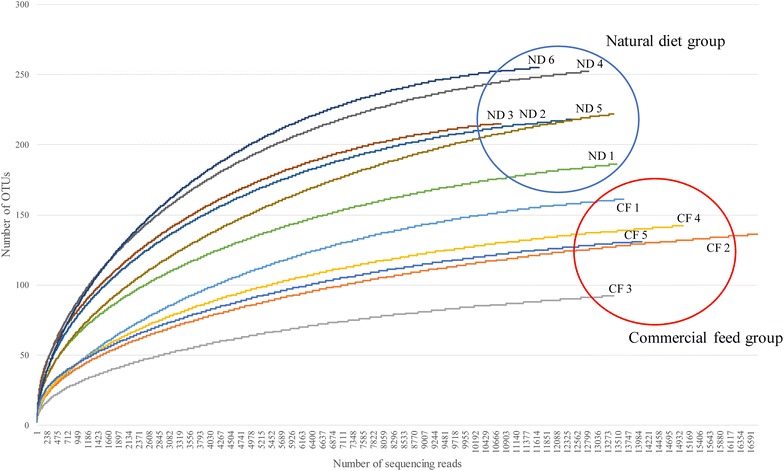
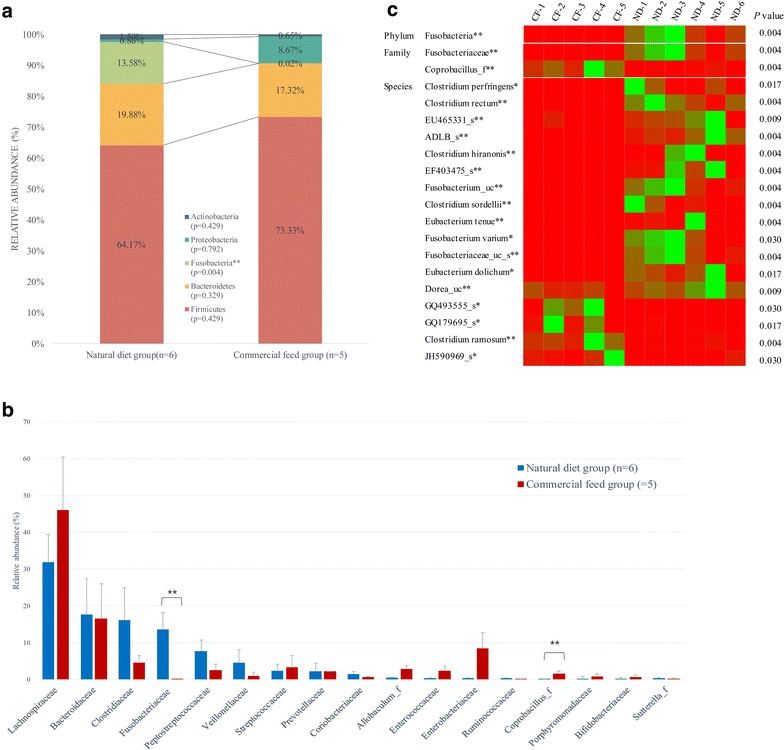
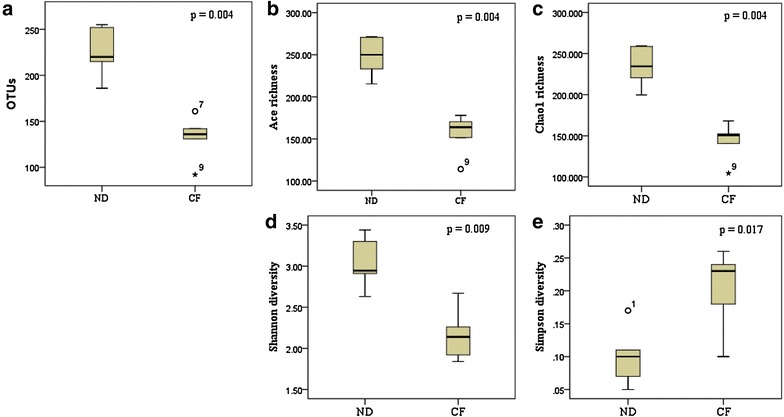
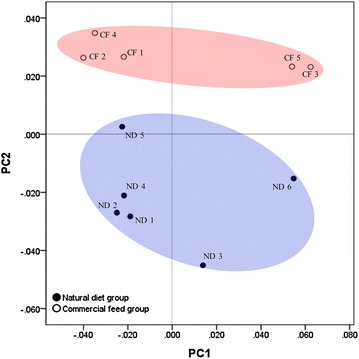
Six dogs fed a natural diet and five dogs fed a commercial feed were selected; dog fecal metagenomic DNA samples were analyzed using the Illumina MiSeq platform. Pronounced differences in alpha and beta diversities, and taxonomic composition of the core gut microbiota were observed between the two groups. According to alpha diversity, the number of operational taxonomic units, the richness estimates, and diversity indices of microbiota were significantly higher ( < 0.05) in the natural diet group than in the commercial feed group. Based on beta diversity, most samples clustered together according to the diet type ( = 0.004). Additionally, the core microbiota between the two groups was different at the phylum, family, and species levels. Marked differences in the taxonomic composition of the core microbiota of the two groups were observed at the species level; ( = 0.017) and ( = 0.030) were more abundant in the natural diet group.
The gut microbiota of dogs is significantly influenced by diet type (i.e., natural diet and commercial feed). Specifically, dogs fed a natural diet have more diverse and abundant microbial composition in the gut microbiota than dogs fed a commercial feed. In addition, this study suggests that in dogs fed a natural diet, the potential risk of opportunistic infection could be higher, than in dogs fed a commercial feed. The type of diet might therefore play a key role in animal health by affecting the gut microbiota. This study could be the basis for future gut microbiota research in dogs.
新一代测序技术的最新进展使得对肠道微生物群进行全面分析成为可能,而肠道微生物群与宿主健康密切相关。因此,多项研究探讨了影响肠道微生物群组成的因素。近年来,越来越多的狗主人给宠物喂食天然食物,即由骨头、生肉(如鸡肉和牛肉)和蔬菜组成的食物,而非商业饲料。然而,这些食物对狗的微生物群的影响尚不清楚。
选取6只喂食天然食物的狗和5只喂食商业饲料的狗;使用Illumina MiSeq平台分析狗粪便宏基因组DNA样本。观察到两组之间在α多样性、β多样性以及核心肠道微生物群的分类组成上存在显著差异。根据α多样性,天然食物组中微生物群的操作分类单元数量、丰富度估计值和多样性指数显著高于(P<0.05)商业饲料组。基于β多样性,大多数样本根据食物类型聚集在一起(P=0.004)。此外,两组之间的核心微生物群在门、科和种水平上存在差异。在种水平上观察到两组核心微生物群的分类组成存在明显差异;天然食物组中[具体物种1](P=0.017)和[具体物种2](P=0.030)更为丰富。
狗的肠道微生物群受到食物类型(即天然食物和商业饲料)的显著影响。具体而言,喂食天然食物的狗的肠道微生物群中的微生物组成比喂食商业饲料的狗更加多样和丰富。此外,本研究表明,喂食天然食物的狗发生机会性感染的潜在风险可能高于喂食商业饲料的狗。因此,食物类型可能通过影响肠道微生物群在动物健康中发挥关键作用。本研究可为未来狗的肠道微生物群研究奠定基础。