School of Biological Sciences, University of Kent, Canterbury CT2 7NH, UK.
Department of Veterinary Medicine, University of Cambridge, Cambridge CB3 0ES, UK.
Nucleic Acids Res. 2018 Feb 16;46(3):1256-1265. doi: 10.1093/nar/gkx1244.
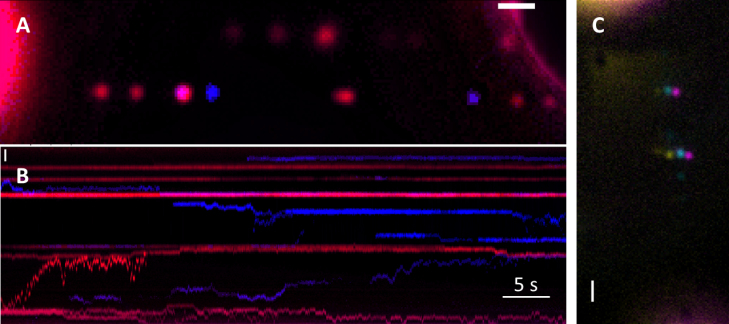
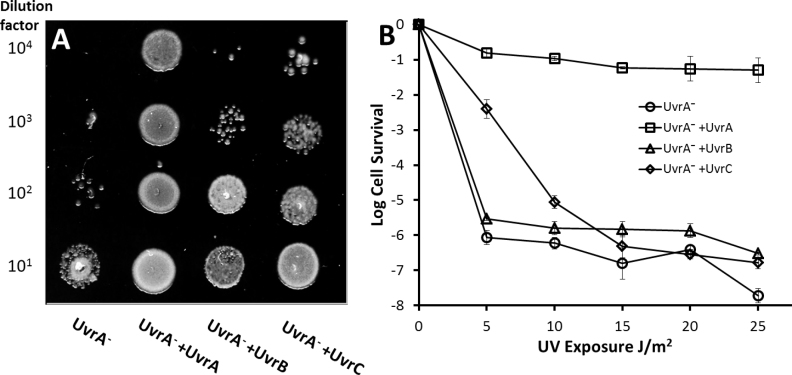
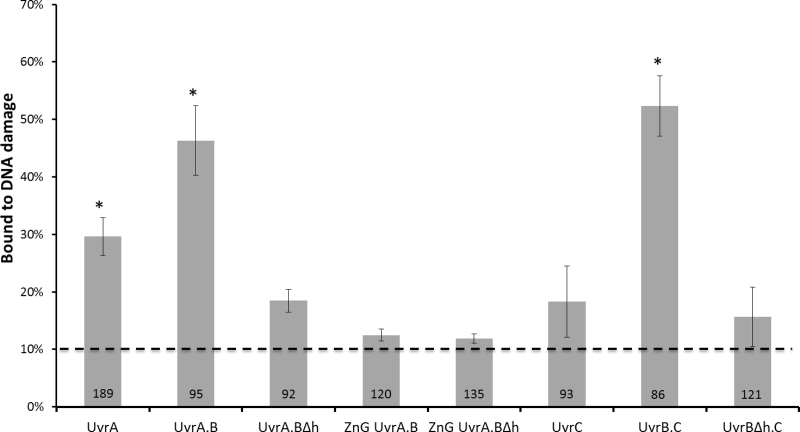
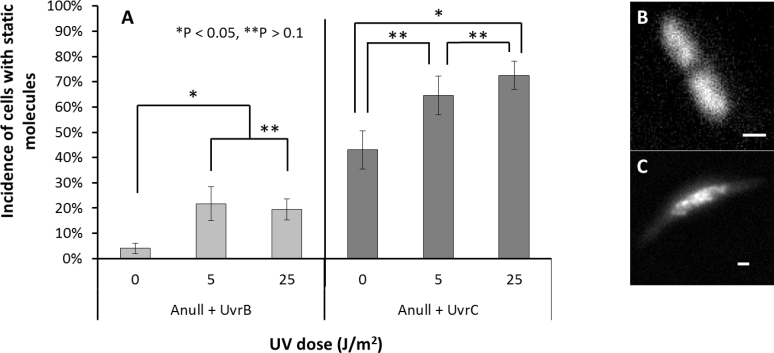
Nucleotide excision repair (NER) is the primary mechanism for removal of ultraviolet light (UV)-induced DNA photoproducts and is mechanistically conserved across all kingdoms of life. Bacterial NER involves damage recognition by UvrA2 and UvrB, followed by UvrC-mediated incision either side of the lesion. Here, using a combination of in vitro and in vivo single-molecule studies we show that a UvrBC complex is capable of lesion identification in the absence of UvrA. Single-molecule analysis of eGFP-labelled UvrB and UvrC in living cells showed that UV damage caused these proteins to switch from cytoplasmic diffusion to stable complexes on DNA. Surprisingly, ectopic expression of UvrC in a uvrA deleted strain increased UV survival. These data provide evidence for a previously unrealized mechanism of survival that can occur through direct lesion recognition by a UvrBC complex.
核苷酸切除修复(NER)是清除紫外线(UV)诱导的 DNA 光产物的主要机制,在所有生命领域中具有保守的机制。细菌 NER 涉及 UvrA2 和 UvrB 的损伤识别,然后由 UvrC 介导在损伤两侧进行切割。在这里,我们使用体外和体内单分子研究的组合,表明 UvrBC 复合物在没有 UvrA 的情况下能够识别损伤。在活细胞中用 eGFP 标记的 UvrB 和 UvrC 的单分子分析表明,UV 损伤导致这些蛋白从细胞质扩散转变为 DNA 上的稳定复合物。令人惊讶的是,在 uvrA 缺失菌株中外源表达 UvrC 增加了 UV 的存活率。这些数据为一种以前未被认识到的生存机制提供了证据,该机制可以通过 UvrBC 复合物直接识别损伤来实现。