Khorvash Farzin, Yazdani Mohammadreza, Shabani Shiva, Soudi Aliasghar
Department of Infectious Diseases, Nosocomial Infection Research Center, Isfahan University of Medical Sciences, Isfahan, Iran.
Department of Infectious Diseases, School of Medicine, Isfahan University of Medical Sciences, Isfahan, Iran.
Adv Biomed Res. 2017 Nov 30;6:147. doi: 10.4103/2277-9175.219412. eCollection 2017.
is a severe challenge for antimicrobial therapy, due to the chromosomal mutations or exhibition of intrinsic resistance to various antimicrobial agents such as most β-lactams. We undertook this study to evaluate the existence of SME, IMP, AIM, and VIM metallo-β-lactamases (MBL) encoding genes among strains isolated from Intensive Care Unit (ICU) patients in Al-Zahra Hospital in Isfahan, Iran.
In a retrospective cross-sectional study that was conducted between March 2012 and April 2013, a total of 48 strains of were collected from clinical specimens of bedridden patients in ICU wards. Susceptibility test was performed by disc diffusion method. All of the meropenem-resistant strains were subjected to modified Hodge test for detection of carbapenemases. Multiplex polymerase chain reaction was performed for detection of blaVIM, blaIMP, blaAIM, and blaSME genes.
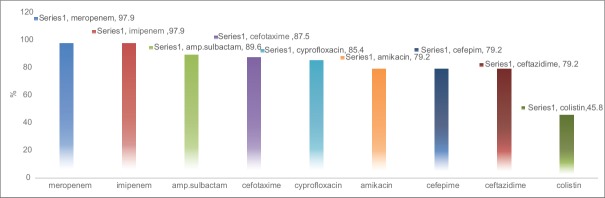
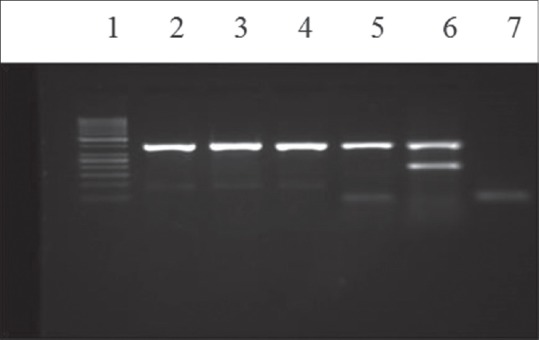
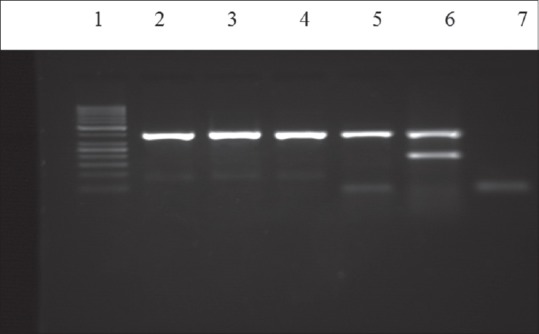
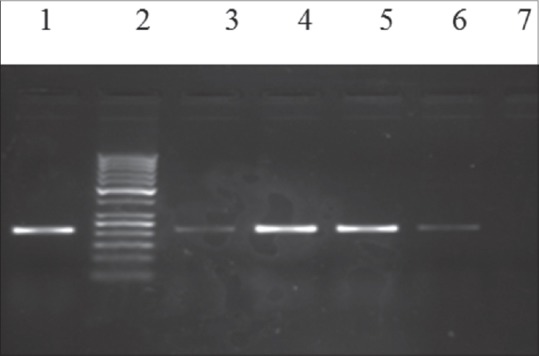
In disk diffusion method, imipenem and meropenem showed the most and colistin the least resistant antimicrobial agents against strains. Of the 48 isolates, 36 (75%) were multidrug resistant (MDR). Amplification of β-lactamase genes showed the presence of blaVIM genes in 7 (%14.6) strains and blaIMP genes in 15 (31.3%) strains. All of the isolates were negative for blaSME and blaAIM genes. We could not find any statistically significant difference among the presence of this gene and MDR positive, age, or source of the specimen.
As patients with infections caused by MBL-producing bacteria are at an intensified risk of treatment failure, fast determination of these organisms is necessary. Our findings may provide useful insights in replace of the appropriate antibiotics and may also prevent MBLs mediated resistance problem.
由于染色体突变或对多种抗菌药物(如大多数β-内酰胺类药物)表现出固有耐药性,这对抗菌治疗来说是一项严峻挑战。我们开展这项研究,以评估在伊朗伊斯法罕的扎赫拉医院重症监护病房(ICU)患者分离出的菌株中,SME、IMP、AIM和VIM金属β-内酰胺酶(MBL)编码基因的存在情况。
在2012年3月至2013年4月进行的一项回顾性横断面研究中,从ICU病房卧床患者的临床标本中总共收集了48株[具体细菌名称未给出]菌株。采用纸片扩散法进行药敏试验。所有对美罗培南耐药的菌株都进行改良Hodge试验以检测碳青霉烯酶。采用多重聚合酶链反应检测blaVIM、blaIMP、blaAIM和blaSME基因。
在纸片扩散法中,亚胺培南和美罗培南对[具体细菌名称未给出]菌株显示出最高的耐药率,而黏菌素显示出最低的耐药率。在48株分离株中,36株(75%)为多重耐药(MDR)。β-内酰胺酶基因扩增显示,7株(14.6%)菌株存在blaVIM基因,15株(31.3%)菌株存在blaIMP基因。所有分离株的blaSME和blaAIM基因均为阴性。我们未发现该基因的存在与MDR阳性、年龄或标本来源之间存在任何统计学上的显著差异。
由于产MBL细菌引起感染的患者治疗失败风险增加,快速鉴定这些微生物很有必要。我们的研究结果可能为替代合适的抗生素提供有用的见解,也可能预防MBL介导的耐药问题。