Davis Heart and Lung Research Institute, The Ohio State University Wexner Medical Center, Columbus, OH 43210, USA.
Department of Surgery, Division of Cardiac Surgery, The Ohio State University Wexner Medical Center, Columbus, OH 43210, USA.
Nutrients. 2017 Dec 24;10(1):16. doi: 10.3390/nu10010016.
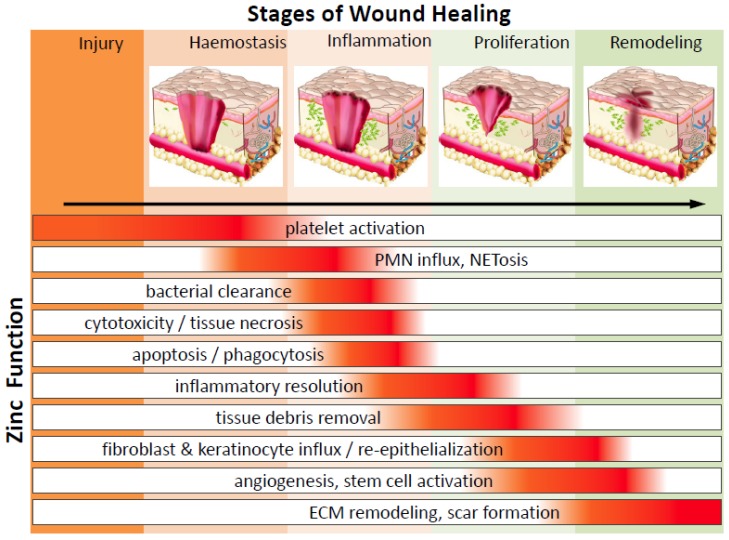
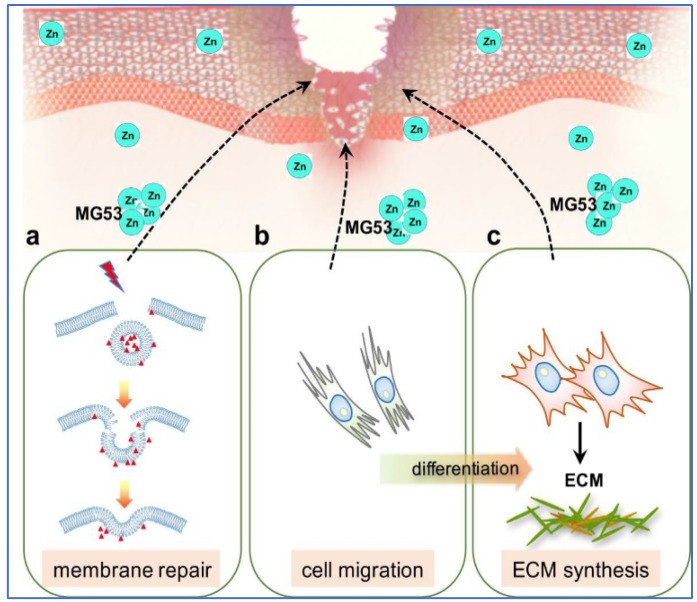
Wound care is a major healthcare expenditure. Treatment of burns, surgical and trauma wounds, diabetic lower limb ulcers and skin wounds is a major medical challenge with current therapies largely focused on supportive care measures. Successful wound repair requires a series of tightly coordinated steps including coagulation, inflammation, angiogenesis, new tissue formation and extracellular matrix remodelling. Zinc is an essential trace element (micronutrient) which plays important roles in human physiology. Zinc is a cofactor for many metalloenzymes required for cell membrane repair, cell proliferation, growth and immune system function. The pathological effects of zinc deficiency include the occurrence of skin lesions, growth retardation, impaired immune function and compromised would healing. Here, we discuss investigations on the cellular and molecular mechanisms of zinc in modulating the wound healing process. Knowledge gained from this body of research will help to translate these findings into future clinical management of wound healing.
伤口护理是医疗保健的一项重大开支。目前的治疗方法主要集中在支持性护理措施上,因此,烧伤、手术和创伤伤口、糖尿病下肢溃疡和皮肤伤口的治疗是一个重大的医疗挑战。成功的伤口修复需要一系列紧密协调的步骤,包括凝血、炎症、血管生成、新组织形成和细胞外基质重塑。锌是一种必需的微量元素(微量营养素),在人体生理学中发挥着重要作用。锌是许多金属酶的辅助因子,这些酶对于细胞膜修复、细胞增殖、生长和免疫系统功能是必需的。锌缺乏的病理影响包括皮肤损伤、生长迟缓、免疫功能受损和伤口愈合受损。在这里,我们讨论了锌在调节伤口愈合过程中的细胞和分子机制的研究。从这些研究中获得的知识将有助于将这些发现转化为未来伤口愈合的临床管理。