Garcia-Mazcorro Jose F, Ivanov Ivan, Mills David A, Noratto Giuliana
Faculty of Veterinary Medicine, Universidad Autónoma de Nuevo León, General Escobedo, Nuevo Leon, Mexico; Research Group Medical Eco-Biology, Universidad Autónoma de Nuevo León, General Escobedo, Nuevo Leon, Mexico.
Veterinary Physiology and Pharmacology, Texas A&M University , College Station, Texas , United States.
PeerJ. 2016 Feb 15;4:e1702. doi: 10.7717/peerj.1702. eCollection 2016.
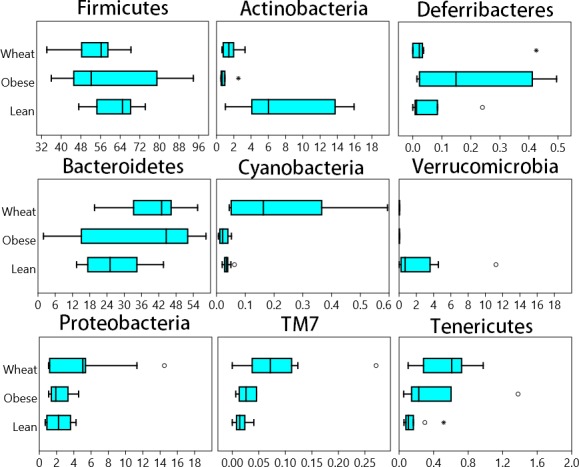
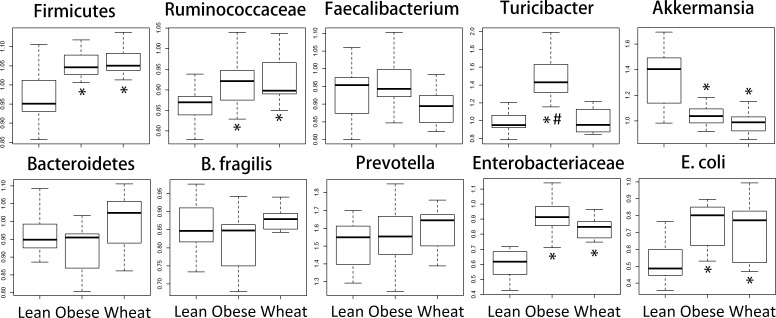
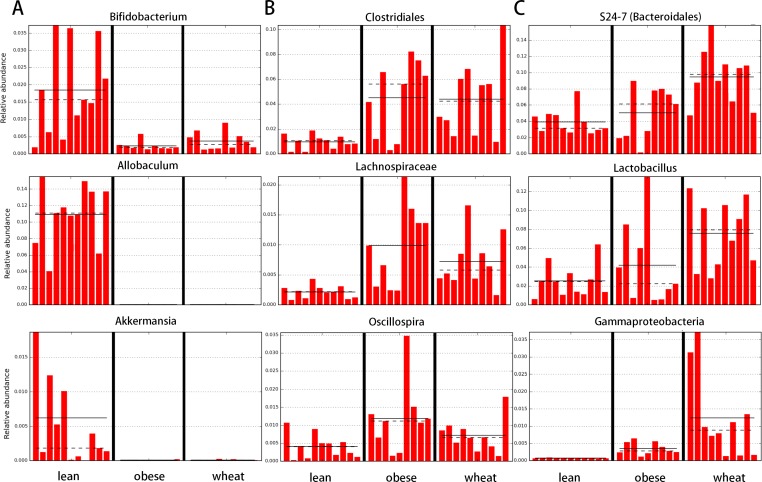
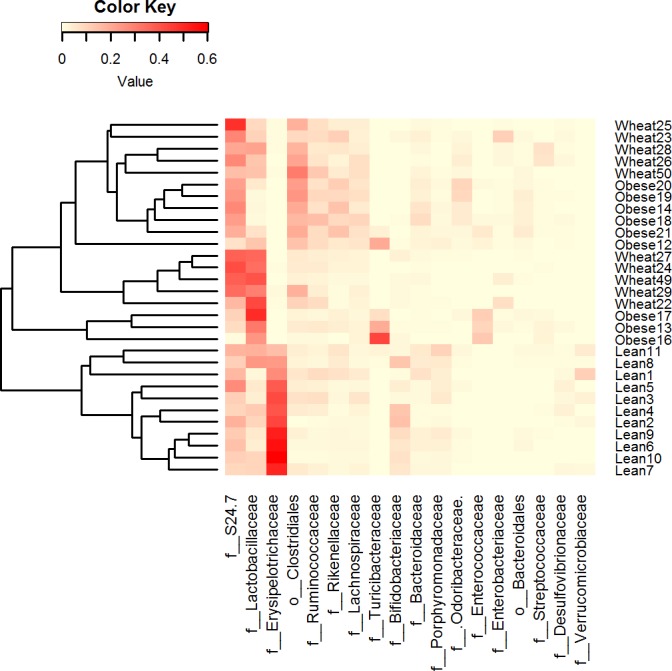
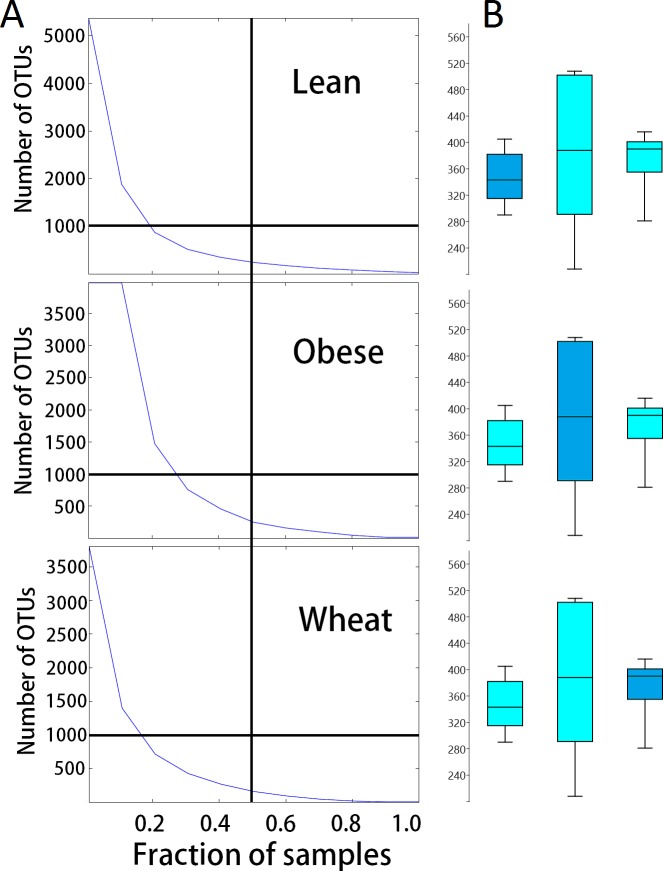
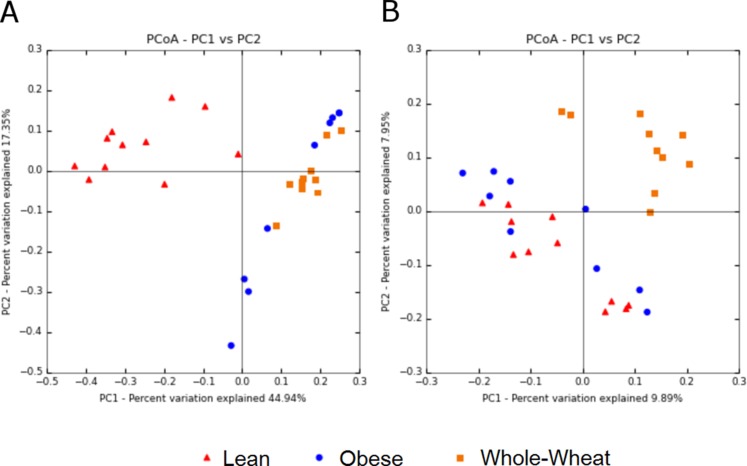
The digestive tract of mammals and other animals is colonized by trillions of metabolically-active microorganisms. Changes in the gut microbiota have been associated with obesity in both humans and laboratory animals. Dietary modifications can often modulate the obese gut microbial ecosystem towards a more healthy state. This phenomenon should preferably be studied using dietary ingredients that are relevant to human nutrition. This study was designed to evaluate the influence of whole-wheat, a food ingredient with several beneficial properties, on gut microorganisms of obese diabetic mice. Diabetic (db/db) mice were fed standard (obese-control) or whole-wheat isocaloric diets (WW group) for eight weeks; non-obese mice were used as control (lean-control). High-throughput sequencing using the MiSeq platform coupled with freely-available computational tools and quantitative real-time PCR were used to analyze fecal bacterial 16S rRNA gene sequences. Short-chain fatty acids were measured in caecal contents using quantitative high-performance liquid chromatography photo-diode array analysis. Results showed no statistical difference in final body weights between the obese-control and the WW group. The bacterial richness (number of Operational Taxonomic Units) did not differ among the treatment groups. The abundance of Ruminococcaceae, a family containing several butyrate-producing bacteria, was found to be higher in obese (median: 6.9%) and WW-supplemented mice (5.6%) compared to lean (2.7%, p = 0.02, Kruskal-Wallis test). Caecal concentrations of butyrate were higher in obese (average: 2.91 mmol/mg of feces) but especially in WW-supplemented mice (4.27 mmol/mg) compared to lean controls (0.97 mmol/mg), while caecal succinic acid was lower in the WW group compared to obese but especially to the lean group. WW consumption was associated with ∼3 times higher abundances of Lactobacillus spp. compared to both obese and lean control mice. Analysis of weighted UniFrac distances revealed a distinctive clustering of lean microbial communities separately from both obese and WW-supplemented mice (p = 0.001, ANOSIM test). Predictive metagenome analysis revealed significant differences in several metabolic features of the microbiota among the treatment groups, including carbohydrate, amino acids and vitamin metabolism (p < 0.01, Kruskal-Wallis test). However, obese and WW groups tended to share more similar abundances of gene families compared to lean mice. Using an in vivo model of obesity and diabetes, this study suggests that daily WW supplementation for eight weeks may not be enough to influence body weight or to output a lean-like microbiome, both taxonomically and metabolically. However, WW-supplementation was associated with several statistically significant differences in the gut microbiome compared to obese controls that deserve further investigation.
哺乳动物和其他动物的消化道中栖息着数万亿具有代谢活性的微生物。肠道微生物群的变化与人类和实验动物的肥胖都有关联。饮食调整通常可以将肥胖的肠道微生物生态系统调节到更健康的状态。最好使用与人类营养相关的饮食成分来研究这一现象。本研究旨在评估具有多种有益特性的食品成分全麦对肥胖糖尿病小鼠肠道微生物的影响。将糖尿病(db/db)小鼠喂食标准(肥胖对照)或全麦等热量饮食(全麦组)八周;非肥胖小鼠用作对照(瘦对照)。使用MiSeq平台结合免费的计算工具进行高通量测序以及定量实时PCR来分析粪便细菌16S rRNA基因序列。使用定量高效液相色谱光电二极管阵列分析法测量盲肠内容物中的短链脂肪酸。结果显示,肥胖对照组和全麦组之间的最终体重没有统计学差异。各治疗组之间的细菌丰富度(操作分类单元数量)没有差异。与瘦小鼠(2.7%,p = 0.02,Kruskal-Wallis检验)相比,肥胖小鼠(中位数:6.9%)和补充全麦的小鼠(5.6%)中,含有几种产丁酸细菌的瘤胃球菌科丰度更高。与瘦对照组(0.97 mmol/mg粪便)相比,肥胖小鼠(平均:2.91 mmol/mg粪便)尤其是补充全麦的小鼠(4.27 mmol/mg粪便)盲肠中的丁酸浓度更高,而与肥胖小鼠相比,尤其是与瘦小鼠组相比,全麦组盲肠中的琥珀酸含量更低。与肥胖和瘦对照小鼠相比,食用全麦与乳酸杆菌属丰度高出约3倍有关。加权UniFrac距离分析显示,瘦微生物群落与肥胖和补充全麦的小鼠分别有明显的聚类(p = 0.001,ANOSIM检验)。预测宏基因组分析显示,各治疗组微生物群的几种代谢特征存在显著差异,包括碳水化合物、氨基酸和维生素代谢(p < 0.01,Kruskal-Wallis检验)。然而,与瘦小鼠相比,肥胖组和全麦组的基因家族丰度往往更相似。使用肥胖和糖尿病的体内模型,本研究表明,连续八周每日补充全麦可能不足以影响体重或产生分类学和代谢上类似于瘦小鼠的微生物群。然而,与肥胖对照组相比,补充全麦与肠道微生物群的几个统计学显著差异有关,值得进一步研究。