Sulik Justin
Max Planck Institute for Psycholinguistics, Nijmegen, Netherlands.
Department of Psychology, Royal Holloway, University of London, London, United Kingdom.
PLoS One. 2018 Jan 16;13(1):e0189540. doi: 10.1371/journal.pone.0189540. eCollection 2018.
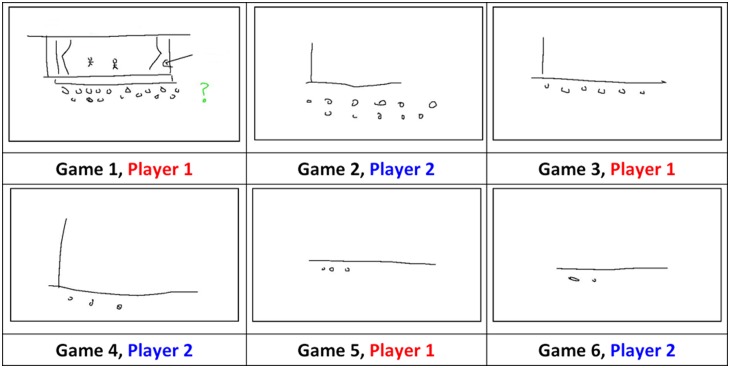
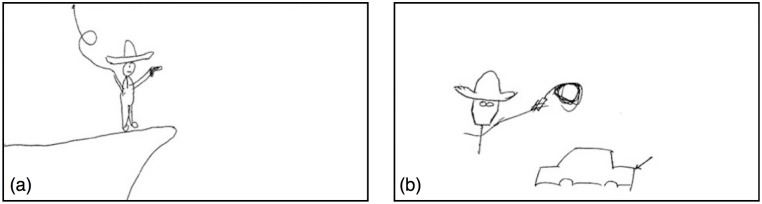
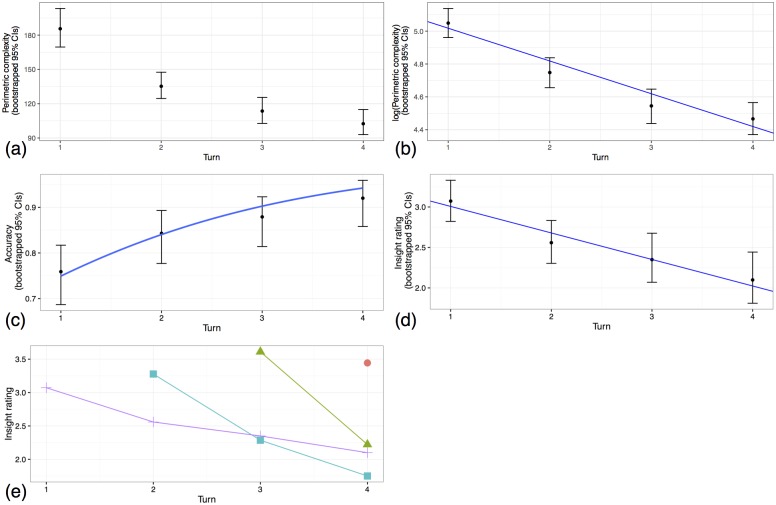
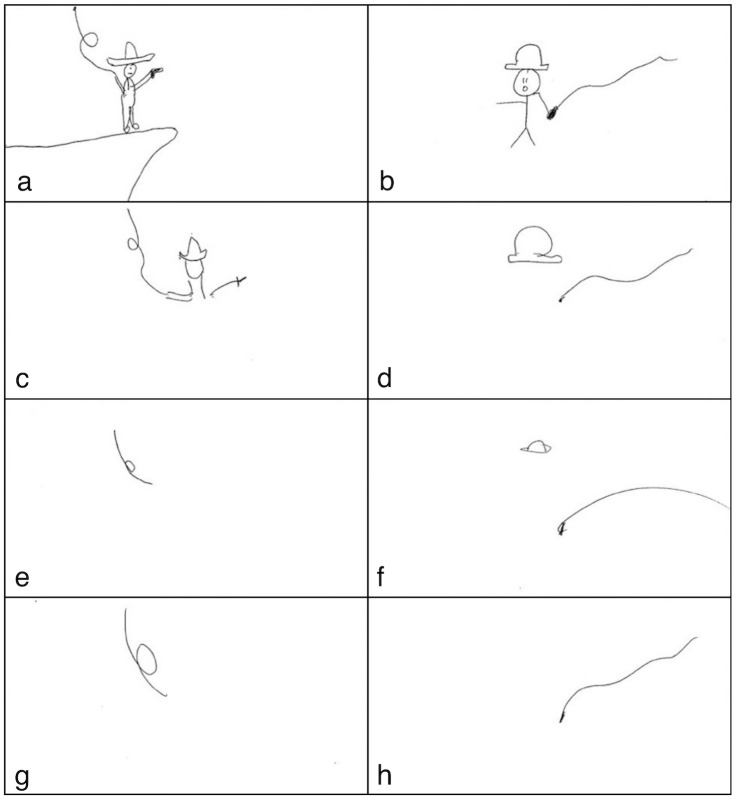
As participants repeatedly interact using graphical signals (as in a game of Pictionary), the signals gradually shift from being iconic (or motivated) to being symbolic (or arbitrary). The aim here is to test experimentally whether this change in the form of the signal implies a concomitant shift in the inferential mechanisms needed to understand it. The results show that, during early, iconic stages, there is more reliance on creative inferential processes associated with insight problem solving, and that the recruitment of these cognitive mechanisms decreases over time. The variation in inferential mechanism is not predicted by the sign's visual complexity or iconicity, but by its familiarity, and by the complexity of the relevant mental representations. The discussion explores implications for pragmatics, language evolution, and iconicity research.
随着参与者反复使用图形信号进行互动(如在猜词游戏中),这些信号逐渐从具有象形性(或有动机性)转变为具有象征性(或任意性)。这里的目的是通过实验测试信号形式的这种变化是否意味着理解它所需的推理机制也会随之发生转变。结果表明,在早期的象形阶段,更多地依赖与顿悟问题解决相关的创造性推理过程,并且随着时间的推移,这些认知机制的使用频率会降低。推理机制的变化不是由符号的视觉复杂性或象形性预测的,而是由其熟悉程度以及相关心理表征的复杂性预测的。讨论探讨了这对语用学、语言进化和象形性研究的意义。