Hassan Md Khurshidul, Kumar Dinesh, Naik Monali, Dixit Manjusha
School of Biological Sciences, National Institute of Science Education and Research, HBNI, Bhimpur- Padanpur, Jatni, Khurda, Odisha, India.
PLoS One. 2018 Jan 17;13(1):e0191377. doi: 10.1371/journal.pone.0191377. eCollection 2018.
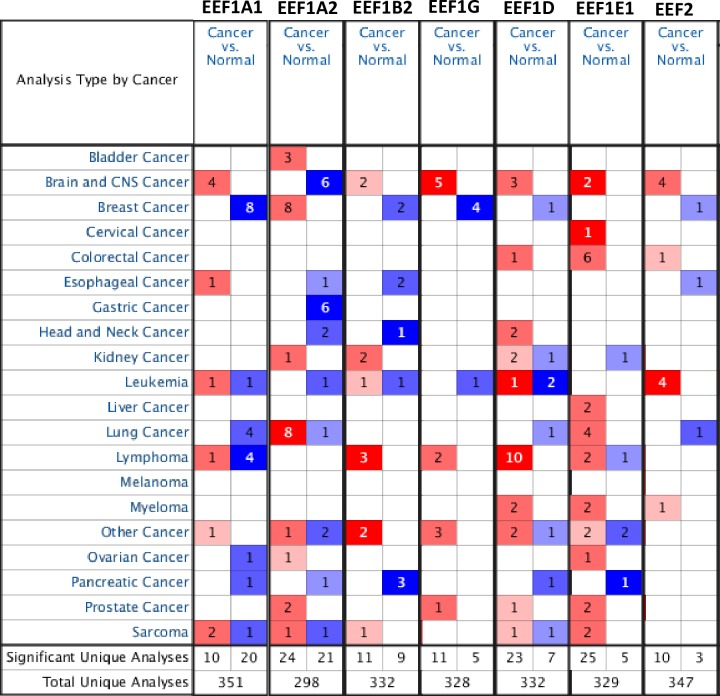
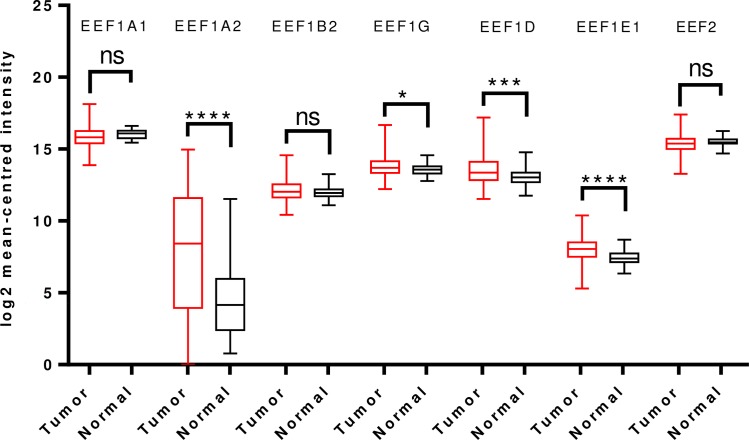
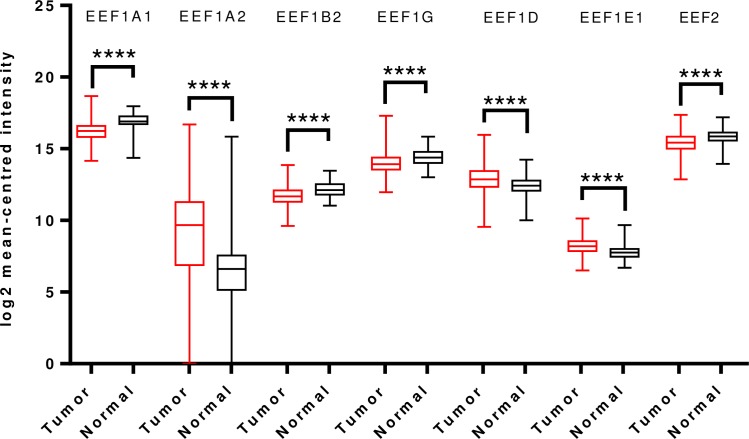
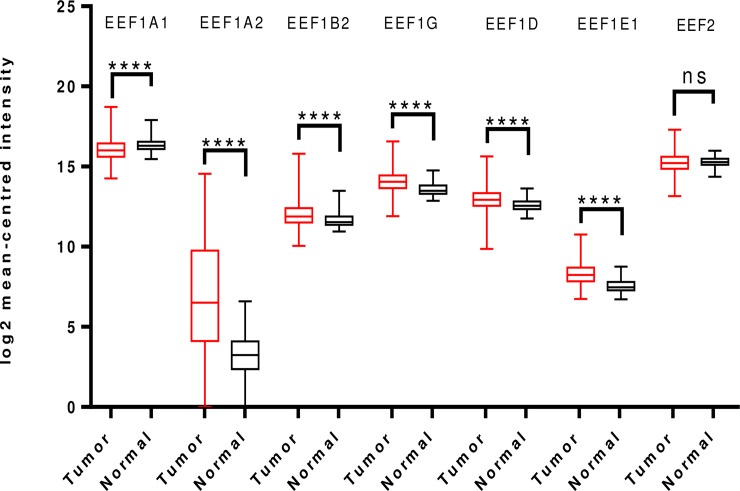
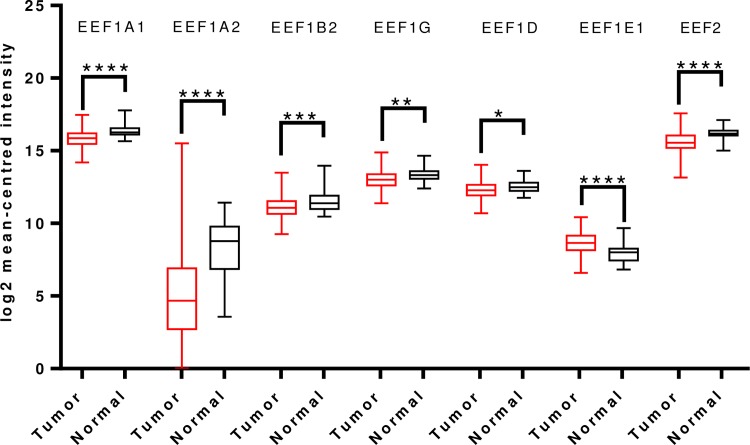
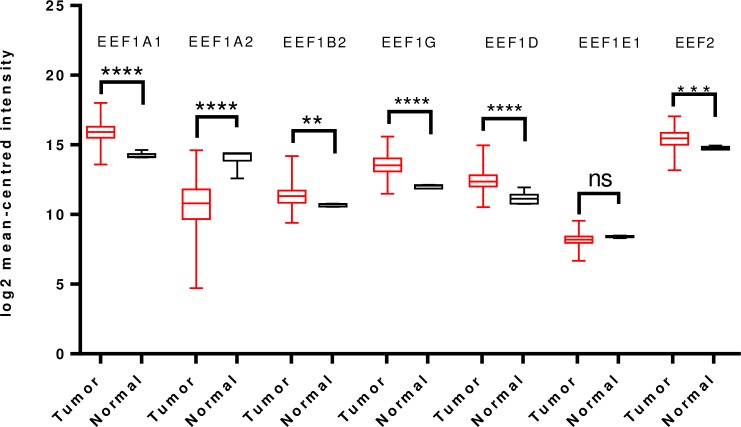
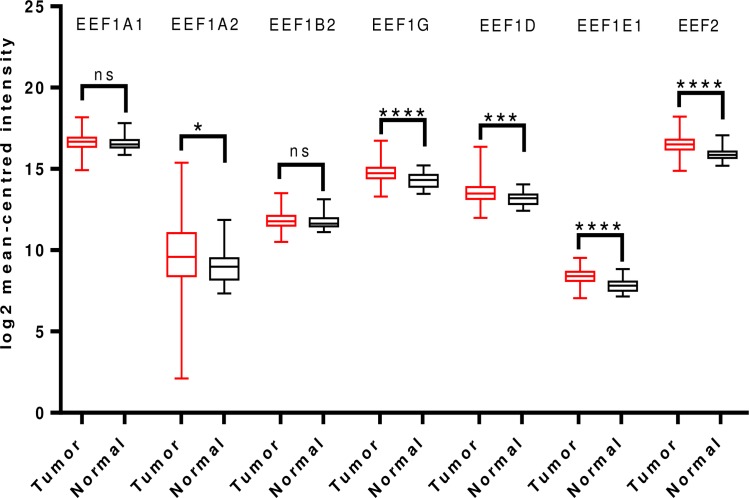
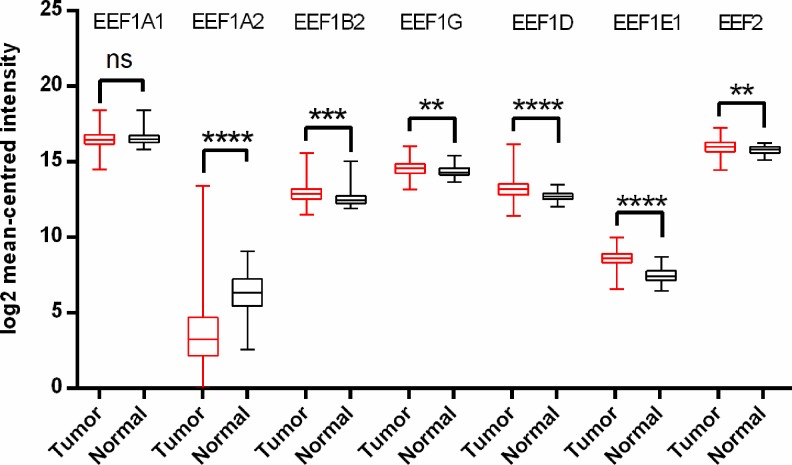
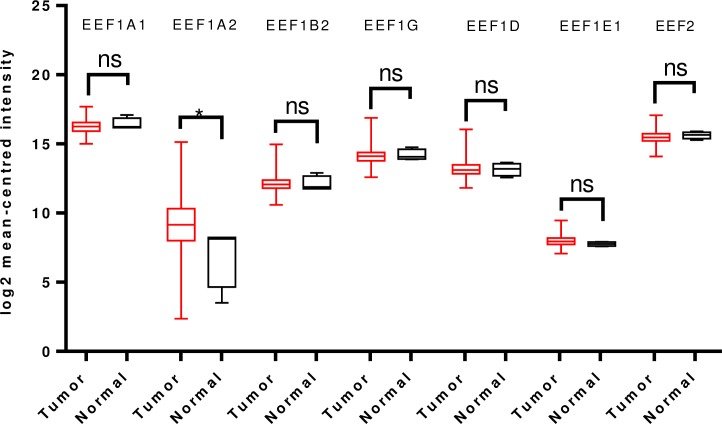
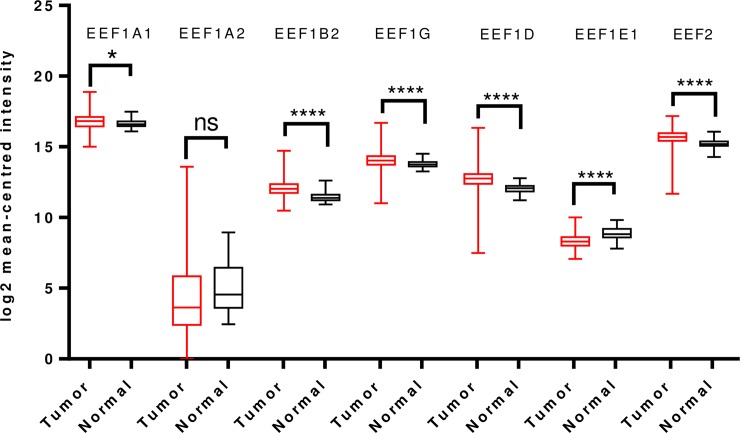
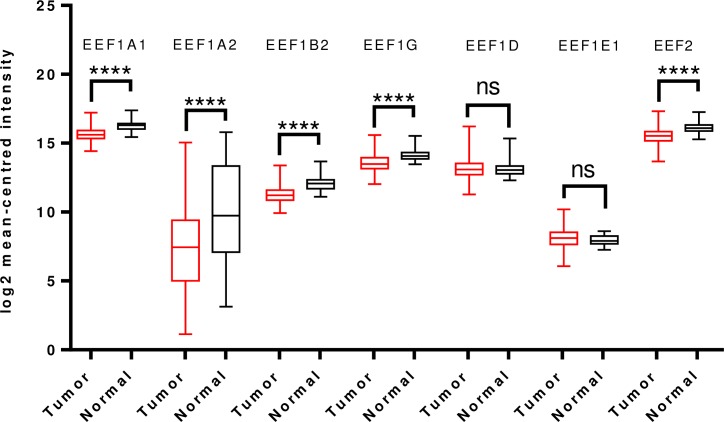
Eukaryotic translation factors, especially initiation factors have garnered much attention with regards to their role in the onset and progression of different cancers. However, the expression levels and prognostic significance of translation elongation factors remain poorly explored in different cancers. In this study, we have investigated the mRNA transcript levels of seven translation elongation factors in different cancer types using Oncomine and TCGA databases. Furthermore, we have identified the prognostic significance of these factors using Kaplan-Meier Plotter and SurvExpress databases. We observed altered expression levels of all the elongation factors in different cancers. Higher expression of EEF1A2, EEF1B2, EEF1G, EEF1D, EEF1E1 and EEF2 was observed in most of the cancer types, whereas reverse trend was observed for EEF1A1. Overexpression of many factors predicted poor prognosis in breast (EEF1D, EEF1E1, EEF2) and lung cancer (EEF1A2, EEF1B2, EEF1G, EEF1E1). However, we didn't see any common correlation of expression levels of elongation factors with survival outcomes across cancer types. Cancer subtype stratification showed association of survival outcomes and expression levels of elongation factors in specific sub-types of breast, lung and gastric cancer. Most interestingly, we observed a reciprocal relationship between the expression levels of the two EEF1A isoforms viz. EEF1A1 and EEF1A2, in most of the cancer types. Our results suggest that translation elongation factors can have a role in tumorigenesis and affect survival in cancer specific manner. Elongation factors have potential to serve as biomarkers and therapeutic drug targets, yet further study is required. Reciprocal relationship of differential expression between EEF1A isoforms observed in multiple cancer types indicates opposing roles in cancer and needs further investigation.
真核生物翻译因子,尤其是起始因子,因其在不同癌症的发生和发展中的作用而备受关注。然而,翻译延伸因子的表达水平及其预后意义在不同癌症中仍未得到充分研究。在本研究中,我们使用Oncomine和TCGA数据库调查了不同癌症类型中七种翻译延伸因子的mRNA转录水平。此外,我们使用Kaplan-Meier Plotter和SurvExpress数据库确定了这些因子的预后意义。我们观察到不同癌症中所有延伸因子的表达水平均发生了改变。在大多数癌症类型中观察到EEF1A2、EEF1B2、EEF1G、EEF1D、EEF1E1和EEF2的表达较高,而EEF1A1则呈现相反趋势。许多因子的过表达预示着乳腺癌(EEF1D、EEF1E1、EEF2)和肺癌(EEF1A2、EEF1B2、EEF1G、EEF1E1)的预后不良。然而,我们未发现延伸因子表达水平与不同癌症类型的生存结果之间存在任何共同关联。癌症亚型分层显示,在乳腺癌、肺癌和胃癌的特定亚型中,生存结果与延伸因子的表达水平相关。最有趣的是,我们在大多数癌症类型中观察到两种EEF1A亚型即EEF1A1和EEF1A2的表达水平之间存在相互关系。我们的结果表明,翻译延伸因子可能在肿瘤发生中起作用,并以癌症特异性方式影响生存。延伸因子有潜力作为生物标志物和治疗药物靶点,但仍需要进一步研究。在多种癌症类型中观察到的EEF1A亚型之间差异表达的相互关系表明它们在癌症中具有相反的作用,需要进一步研究。