Qu Lijun, Li Sumei, Zhuo Yumin, Chen Jianfan, Qin Xiaoping, Guo Guoqing
Department of Urology, The First Affiliated Hospital of Jinan University, Guangzhou, Guangdong 510630, P.R. China.
Department of Anatomy, Medical College of Jinan University, Guangzhou, Guangdong 510630, P.R. China.
Oncol Lett. 2017 Dec;14(6):7467-7472. doi: 10.3892/ol.2017.7153. Epub 2017 Oct 9.
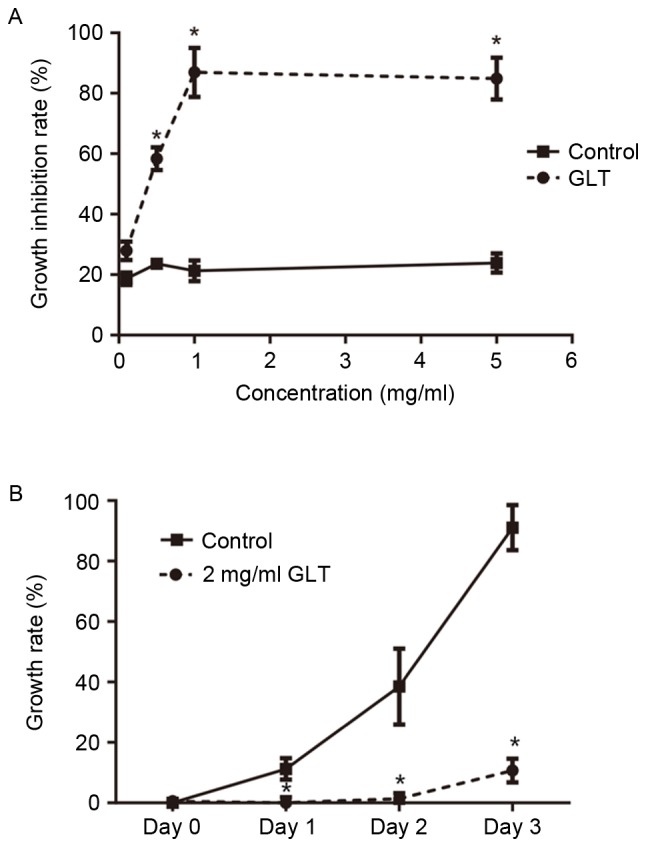
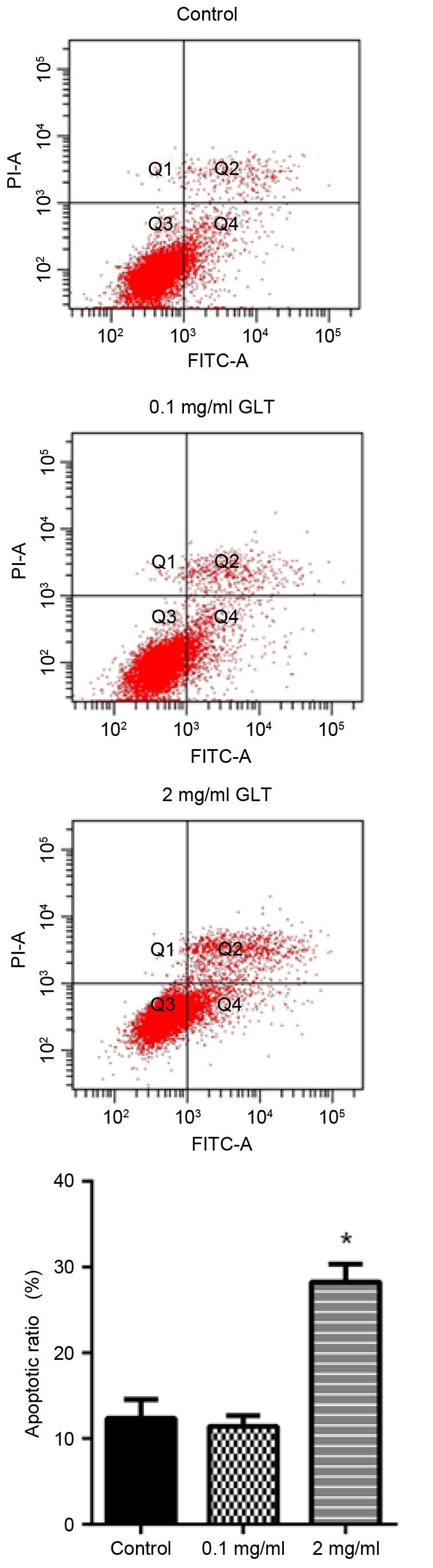
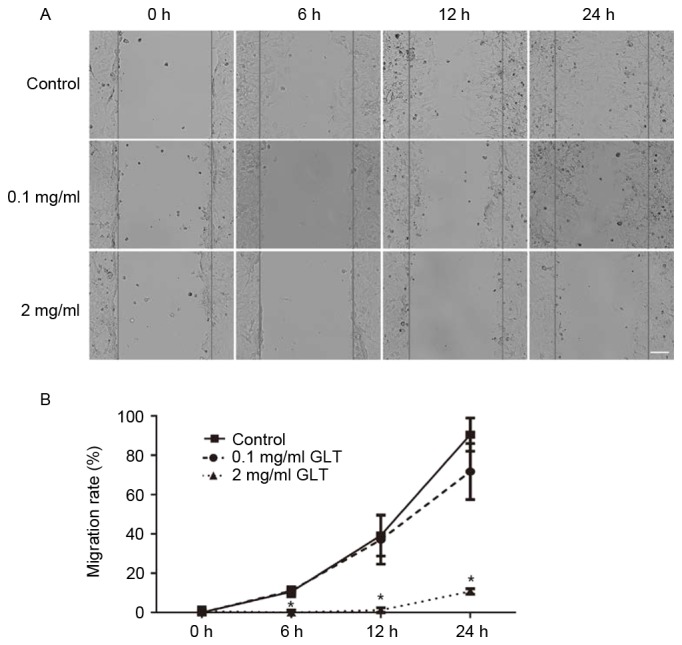
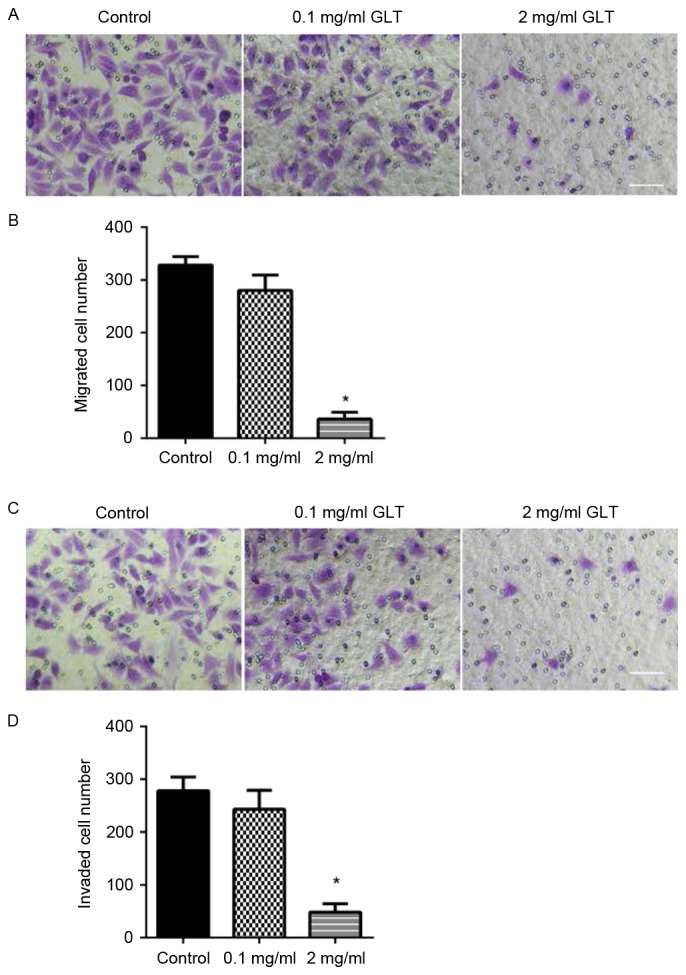
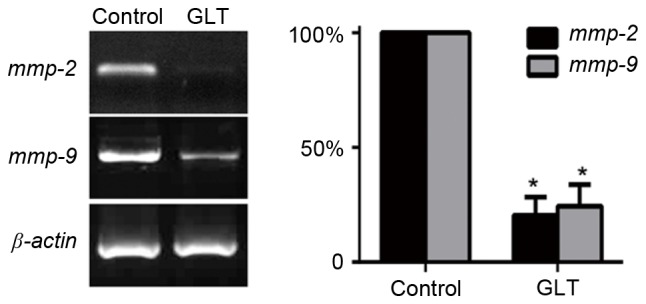
, within the Polyporaceae family of Basidiomycota, is a popular traditional remedy medicine used in Asia to promote health and longevity. Compounds extracted from have revealed anticancer, antioxidant and liver protective effects. has been associated with prostate cancer cells. extracts contain numerous bioactive components; however, the exact functional monomer is unknown and the role of triterpenes from (GLT) in prostate cancer remain obscure. The present study investigated the effects of GLT on cell viability, migration, invasion and apoptosis in DU-145 human prostate cancer cells. The results demonstrated that a high dose (2 mg/ml) of GLT inhibits cell viability in a dose- and time-dependent manner by the regulation of matrix metalloproteases. Furthermore, GLT induced apoptosis of DU-145 cells. In general, GLT exerts its effect on cancer cells via numerous mechanisms and may have potential therapeutic use for the prevention and treatment of cancer.
在担子菌门多孔菌科中,是亚洲一种常用的传统滋补药物,用于促进健康和长寿。从其提取的化合物已显示出抗癌、抗氧化和肝脏保护作用。它与前列腺癌细胞有关。提取物含有多种生物活性成分;然而,确切的功能单体尚不清楚,来自的三萜类化合物(GLT)在前列腺癌中的作用仍不明确。本研究调查了GLT对DU-145人前列腺癌细胞的细胞活力、迁移、侵袭和凋亡的影响。结果表明,高剂量(2mg/ml)的GLT通过调节基质金属蛋白酶以剂量和时间依赖性方式抑制细胞活力。此外,GLT诱导DU-145细胞凋亡。总体而言,GLT通过多种机制对癌细胞发挥作用,可能具有预防和治疗癌症的潜在治疗用途。