Departments of Ophthalmology and Visual Sciences, University of Wisconsin School of Medicine and Public Health, Madison, WI 53705, U.S.A.
McPherson Eye Research Institute, University of Wisconsin School of Medicine and Public Health, Madison, WI 53705, U.S.A.
Clin Sci (Lond). 2018 Jan 19;132(2):185-198. doi: 10.1042/CS20171454. Print 2018 Jan 31.
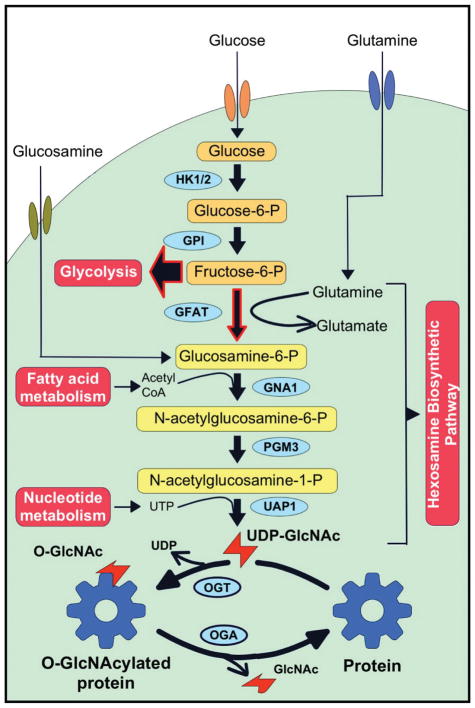
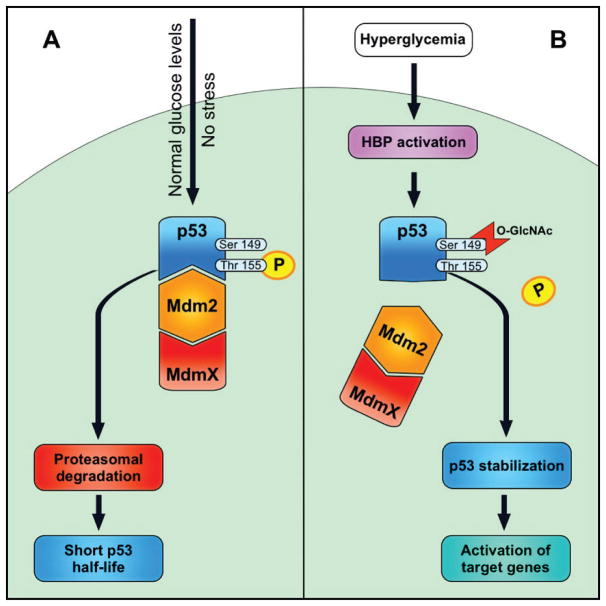
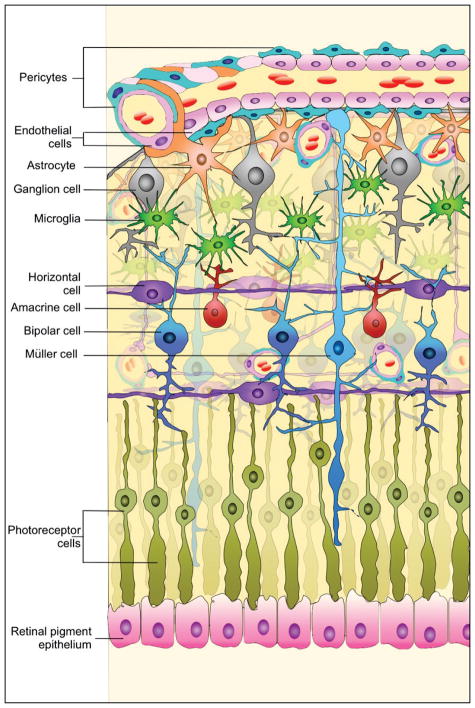
The incidence of diabetes continues to rise among all ages and ethnic groups worldwide. Diabetic retinopathy (DR) is a complication of diabetes that affects the retinal neurovasculature causing serious vision problems, including blindness. Its pathogenesis and severity is directly linked to the chronic exposure to high glucose conditions. No treatments are currently available to stop the development and progression of DR. To develop new and effective therapeutic approaches, it is critical to better understand how hyperglycemia contributes to the pathogenesis of DR at the cellular and molecular levels. We propose alterations in O-GlcNAc modification of target proteins during diabetes contribute to the development and progression of DR. The O-GlcNAc modification is regulated through hexosamine biosynthetic pathway. We showed this pathway is differentially activated in various retinal vascular cells under high glucose conditions perhaps due to their selective metabolic activity. O-GlcNAc modification can alter protein stability, activity, interactions, and localization. By targeting the same amino acid residues (serine and threonine) as phosphorylation, O-GlcNAc modification can either compete or cooperate with phosphorylation. Here we will summarize the effects of hyperglycemia-induced O-GlcNAc modification on the retinal neurovasculature in a cell-specific manner, providing new insight into the role of O-GlcNAc modification in early loss of retinal pericytes and the pathogenesis of DR.
糖尿病的发病率在全球各年龄段和种族中持续上升。糖尿病性视网膜病变(DR)是糖尿病的一种并发症,影响视网膜的神经血管系统,导致严重的视力问题,包括失明。其发病机制和严重程度与长期暴露于高血糖状态直接相关。目前尚无治疗方法可以阻止 DR 的发展和进展。为了开发新的有效治疗方法,关键是要更好地了解高血糖如何在细胞和分子水平上导致 DR 的发病机制。我们提出,在糖尿病期间,靶蛋白的 O-GlcNAc 修饰改变可能导致 DR 的发生和发展。O-GlcNAc 修饰通过己糖胺生物合成途径进行调节。我们表明,该途径在高葡萄糖条件下各种视网膜血管细胞中差异激活,这可能是由于它们的选择性代谢活性。O-GlcNAc 修饰可以改变蛋白质的稳定性、活性、相互作用和定位。通过靶向与磷酸化相同的氨基酸残基(丝氨酸和苏氨酸),O-GlcNAc 修饰可以与磷酸化竞争或合作。在这里,我们将总结高血糖诱导的 O-GlcNAc 修饰对视网膜神经血管系统的细胞特异性影响,为 O-GlcNAc 修饰在视网膜周细胞早期丢失和 DR 发病机制中的作用提供新的见解。