Zheng Hong, Mortensen Luke J, Ravichandran Supriya, Bentley Karen, DeLouise Lisa A
J Biomed Nanotechnol. 2017 Feb;13(2):155-66. doi: 10.1166/jbn.2017.2337.
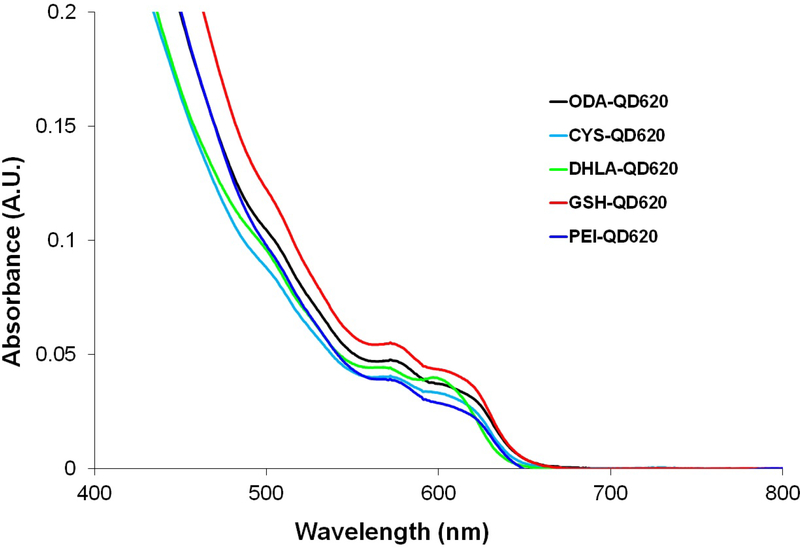
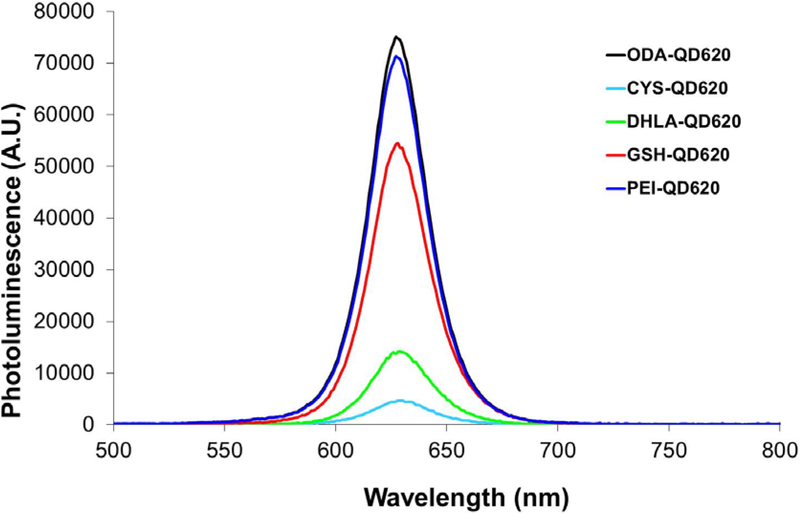
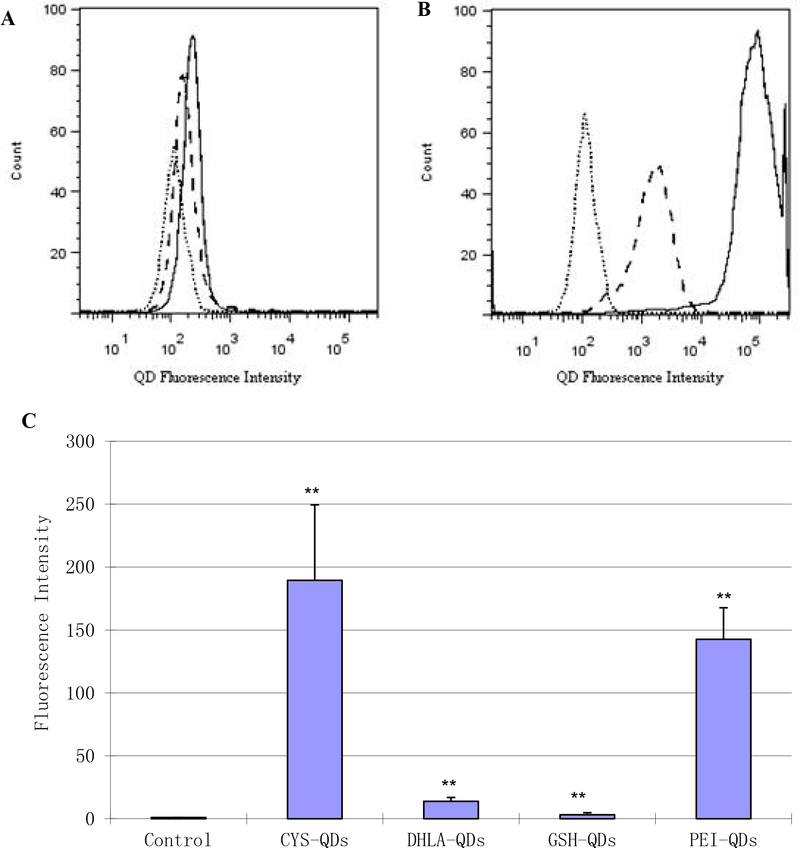
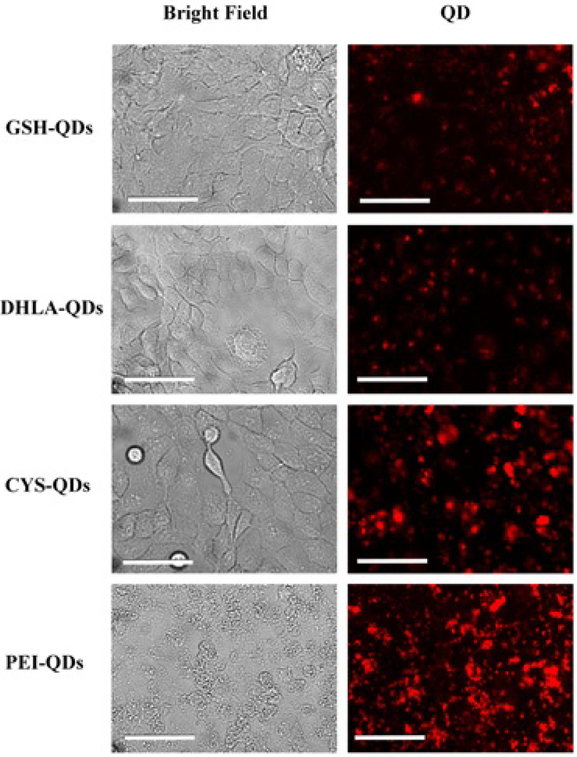
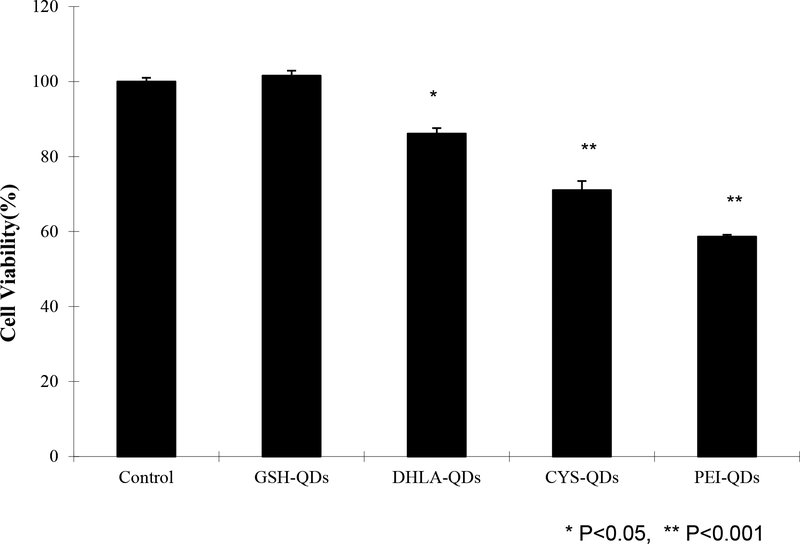
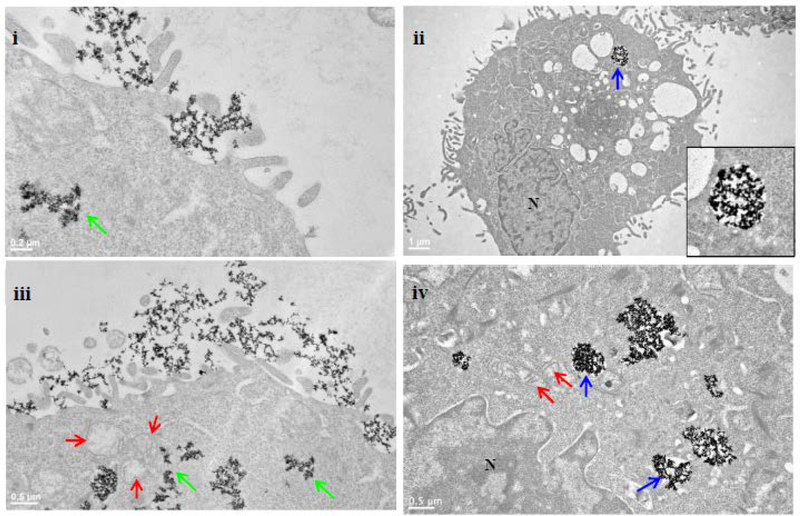
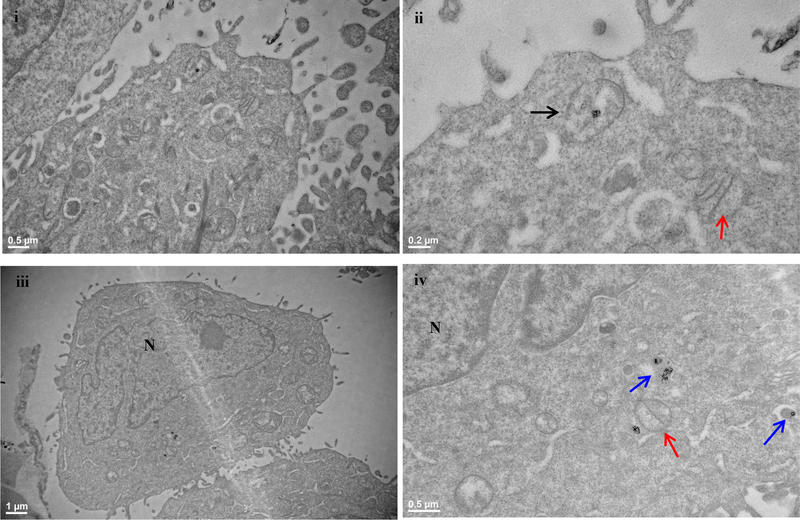
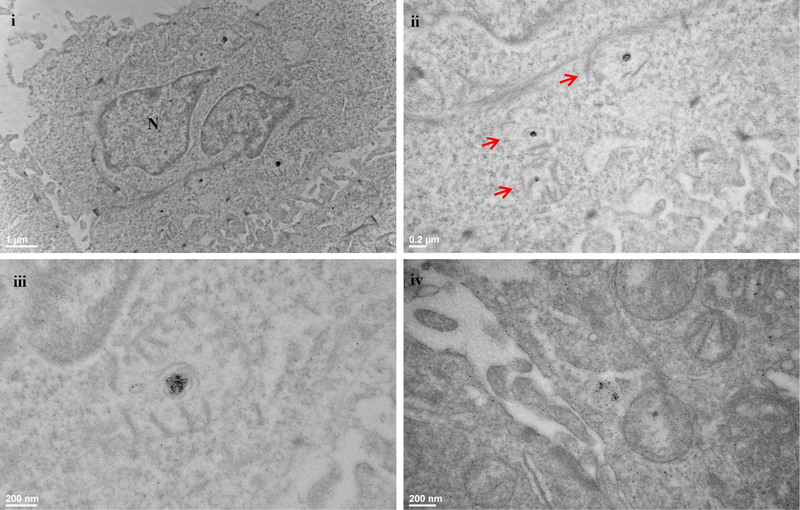
We report on the effect of surface charge and the ligand coating composition of CdSe/ZnS core/shell quantum dot (QD) nanoparticles on human keratinocyte toxicity using fluorescent microscopy, flow cytometry, transmission electron microscopy. Two commonly reported positive charged (cysteamine, polyethylenimine) and two negative charged (glutathione, dihydrolipoic acid) ligands were studied. The QDs were fully characterized by UV-vis absorption spectroscopy, fluorescence emission spectroscopy, dynamic light scattering and zeta potential. Differences in surface coatings and charges were evaluated against cellular uptake, ROS generation, cytotoxicity, and mitochondrial targeting. Results show that the negative charged QDs coated with GSH exhibit excellent water solubility, high quantum yield and low cytotoxicity. Ligand composition is more important in ROS generation than surface charge whereas surface charge is an important driver of cytotoxicity. Most importantly we observe the selective accumulation of glutathione coated QDs in vesicles in the mitochondria matrix. This observation suggests a new strategy for developing mitochondria-targeted nanomaterials for drug/gene delivery.
我们使用荧光显微镜、流式细胞术、透射电子显微镜,报告了CdSe/ZnS核壳量子点(QD)纳米颗粒的表面电荷和配体涂层组成对人角质形成细胞毒性的影响。研究了两种常见的带正电荷的配体(半胱胺、聚乙烯亚胺)和两种带负电荷的配体(谷胱甘肽、二氢硫辛酸)。通过紫外可见吸收光谱、荧光发射光谱、动态光散射和zeta电位对量子点进行了全面表征。针对细胞摄取、活性氧生成、细胞毒性和线粒体靶向性,评估了表面涂层和电荷的差异。结果表明,包覆谷胱甘肽的带负电荷的量子点具有优异的水溶性、高量子产率和低细胞毒性。配体组成在活性氧生成中比表面电荷更重要,而表面电荷是细胞毒性的重要驱动因素。最重要的是,我们观察到谷胱甘肽包覆的量子点选择性地积累在线粒体基质的囊泡中。这一观察结果为开发用于药物/基因递送的线粒体靶向纳米材料提出了一种新策略。