Yamagata Kazuo
Laboratory of Molecular Health Science of Food, Department of Food Bioscience and Biotechnology, Nihon University College of Bioresource Sciences (NUBS), 1866, Kameino, Fujisawa, Kanagawa 252-8510, Japan.
Antioxidants (Basel). 2018 Feb 4;7(2):26. doi: 10.3390/antiox7020026.
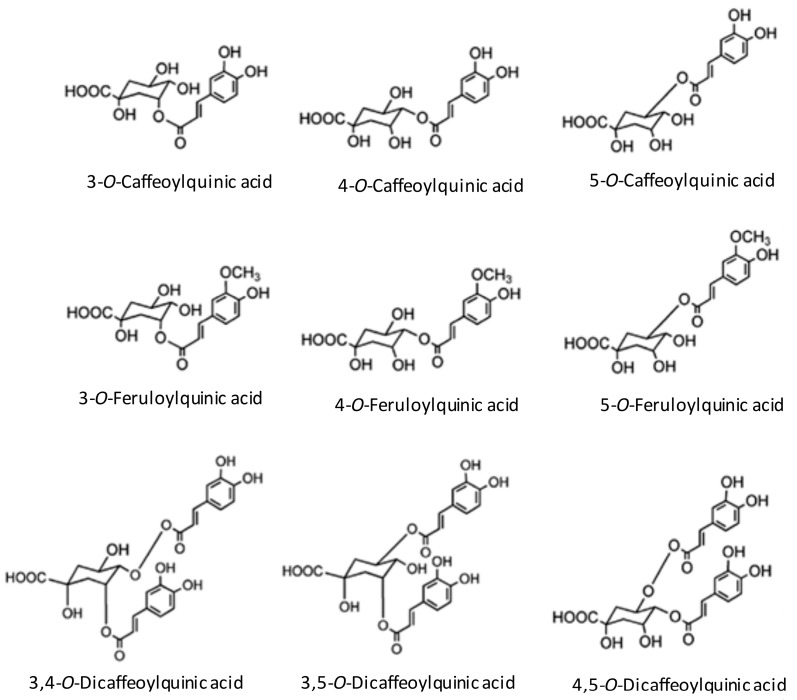
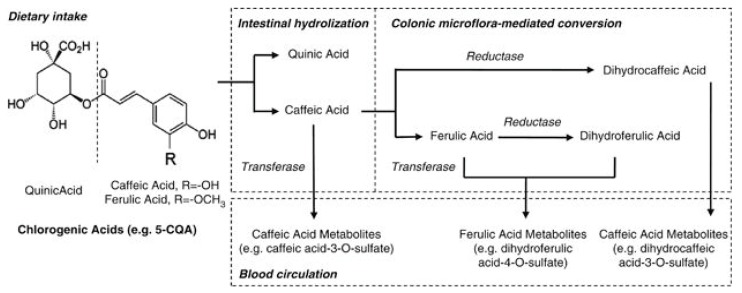
Epidemiologic studies from several countries have found that mortality rates associated with the metabolic syndrome are inversely associated with coffee consumption. Metabolic syndrome can lead to arteriosclerosis by endothelial dysfunction, and increases the risk for myocardial and cerebral infarction. Accordingly, it is important to understand the possible protective effects of coffee against components of the metabolic syndrome, including vascular endothelial function impairment, obesity and diabetes. Coffee contains many components, including caffeine, chlorogenic acid, diterpenes and trigonelline. Studies have found that coffee polyphenols, such as chlorogenic acids, have many health-promoting properties, such as antioxidant, anti-inflammatory, anti-cancer, anti-diabetes, and antihypertensive properties. Chlorogenic acids may exert protective effects against metabolic syndrome risk through their antioxidant properties, in particular toward vascular endothelial cells, in which nitric oxide production may be enhanced, by promoting endothelial nitric oxide synthase expression. These effects indicate that coffee components may support the maintenance of normal endothelial function and play an important role in the prevention of metabolic syndrome. However, results related to coffee consumption and the metabolic syndrome are heterogeneous among studies, and the mechanisms of its functions and corresponding molecular targets remain largely elusive. This review describes the results of studies exploring the putative effects of coffee components, especially in protecting vascular endothelial function and preventing metabolic syndrome.
来自多个国家的流行病学研究发现,与代谢综合征相关的死亡率与咖啡消费量呈负相关。代谢综合征可通过内皮功能障碍导致动脉硬化,并增加心肌梗死和脑梗死的风险。因此,了解咖啡对代谢综合征各组成部分可能的保护作用非常重要,这些组成部分包括血管内皮功能损害、肥胖和糖尿病。咖啡含有许多成分,包括咖啡因、绿原酸、二萜类化合物和胡芦巴碱。研究发现,咖啡多酚,如绿原酸,具有许多促进健康的特性,如抗氧化、抗炎、抗癌、抗糖尿病和抗高血压特性。绿原酸可能通过其抗氧化特性,特别是对血管内皮细胞的抗氧化特性,对代谢综合征风险发挥保护作用,通过促进内皮型一氧化氮合酶的表达,可能会增强一氧化氮的产生。这些作用表明咖啡成分可能有助于维持正常的内皮功能,并在预防代谢综合征中发挥重要作用。然而,不同研究中关于咖啡消费与代谢综合征的结果存在差异,其作用机制和相应的分子靶点在很大程度上仍不清楚。这篇综述描述了探索咖啡成分假定作用的研究结果,特别是在保护血管内皮功能和预防代谢综合征方面的作用。