College of Food Science and Engineering, Shandong Agricultural University, Taian 271018, China.
Key Laboratory of TCM Quality Control Technology, Shandong Analysis and Test Center, Qilu University of Technology (Shandong Academy of Sciences), Jinan 250014, China.
Molecules. 2018 Feb 15;23(2):429. doi: 10.3390/molecules23020429.
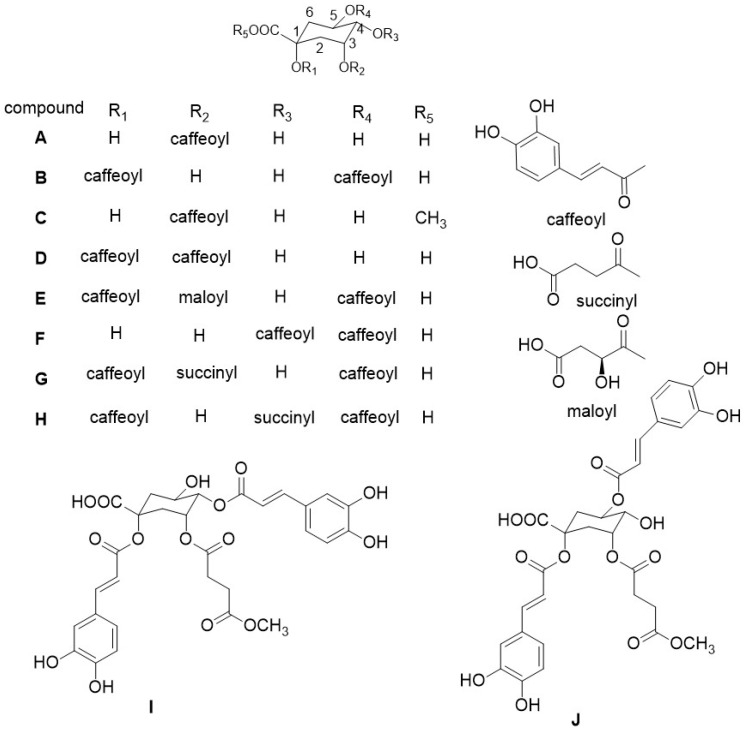
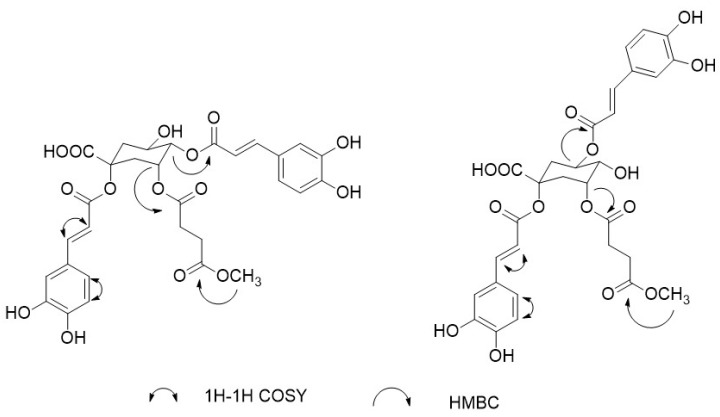
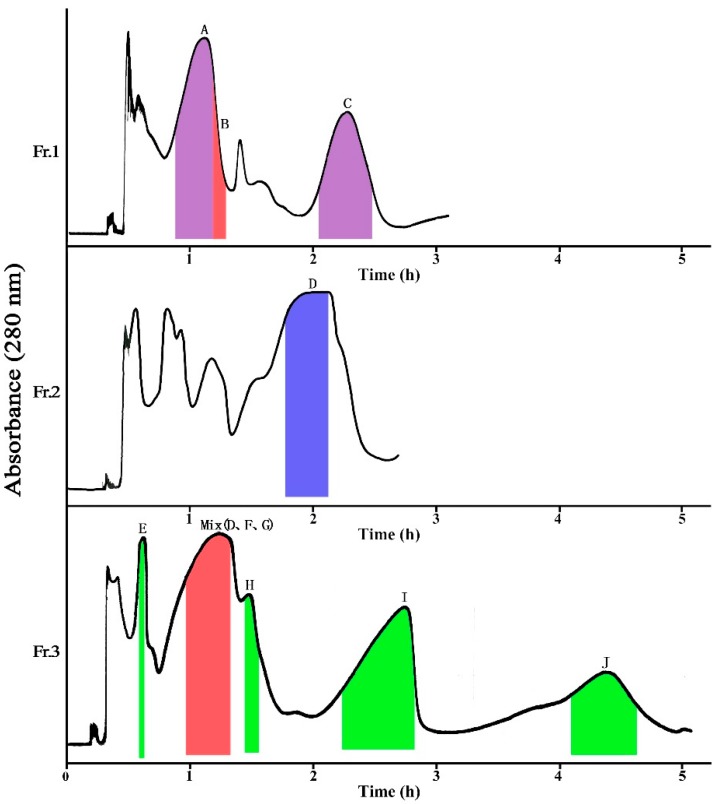
Burdock roots are healthy dietary supplements and a kind of famous traditional Chinese medicine, which contains large amounts of caffeoylquinic acid derivatives. However, little research has been reported on the preparative separation of these compounds from burdock roots. In the present study, a combinative method of HSCCC and semi-preparative HPLC was developed for the semi-preparative separation of caffeoylquinic acid derivatives from the burdock roots. The ethyl acetate extract of burdock roots was first fractionated by MCI macroporous resin chromatography and give three fractions (Fr. 1-3) from the elution of 40% methanol. Then, these three fractions (120 mg) were separately subjected to HSCCC for purification with the solvent system composed of petroleum ether-ethyl acetate-methanol-water at different volume ratios, and the mixtures were further purified by semi-preparative HPLC. As a result, a total of eight known caffeoylquinic acid derivatives including 3--caffeoylquinic acid (32.7 mg, 95.7%), 1,5-- dicaffeoylquinic acid (4.3 mg, 97.2%), 3--caffeoylquinic acid methyl ester (12.1 mg, 93.2%), 1,3--dicaffeoylquinic acid (42.9 mg, 91.1%), 1,5--dicaffeoyl-3--(4-maloyl)-quinic acid (4.3 mg, 84.5%), 4,5--dicaffeoylquinic acid (5.3 mg, 95.5%), 1,5--dicaffeoyl-3--succinylquinic acid (8.7 mg, 93.4%), and 1,5--dicaffeoyl-4--succinylquinic acid (1.7 mg, 91.8%), and two new compounds were obtained. The new compounds were 1,4--dicaffeoyl-3-succinyl methyl ester quinic acid (14.6 mg, 96.1%) and 1,5--dicaffeoyl-3--succinyl methyl ester quinic acid (3.1 mg, 92.6%), respectively. The research indicated that the combination of HSCCC and semi-preparative HPLC is a highly efficient approach for preparative separation of the instability and bioactive caffeoylquinic acid derivatives from natural products.
牛蒡根是健康的膳食补充剂和一种著名的中药,含有大量的咖啡酰奎宁酸衍生物。然而,关于从牛蒡根中制备分离这些化合物的研究报道很少。本研究采用高速逆流色谱(HSCCC)和半制备高效液相色谱(semi-preparative HPLC)相结合的方法,从牛蒡根中半制备分离咖啡酰奎宁酸衍生物。牛蒡根的乙酸乙酯提取物首先通过 MCI 大孔树脂色谱法进行分离,用 40%甲醇洗脱得到三个馏分(Fr.1-3)。然后,将这三个馏分(120mg)分别用石油醚-乙酸乙酯-甲醇-水组成的溶剂系统进行 HSCCC 纯化,混合物进一步用半制备 HPLC 纯化。结果,从总共有 8 种已知的咖啡酰奎宁酸衍生物,包括 3--咖啡酰奎宁酸(32.7mg,95.7%)、1,5--二咖啡酰奎宁酸(4.3mg,97.2%)、3--咖啡酰奎宁酸甲酯(12.1mg,93.2%)、1,3--二咖啡酰奎宁酸(42.9mg,91.1%)、1,5--二咖啡酰-3--(4-马来酰基)-奎宁酸(4.3mg,84.5%)、4,5--二咖啡酰奎宁酸(5.3mg,95.5%)、1,5--二咖啡酰-3--琥珀酰奎宁酸(8.7mg,93.4%)和 1,5--二咖啡酰-4--琥珀酰奎宁酸(1.7mg,91.8%),并获得了两种新化合物。新化合物分别为 1,4--二咖啡酰-3-琥珀酰甲酯奎宁酸(14.6mg,96.1%)和 1,5--二咖啡酰-3--琥珀酰甲酯奎宁酸(3.1mg,92.6%)。研究表明,HSCCC 与半制备 HPLC 的结合是从天然产物中制备分离不稳定和生物活性咖啡酰奎宁酸衍生物的高效方法。