Ghosh Tonmoy, Fattah Shaikh Anowarul, Wahid Khan A
Department of Electrical Electronic EngineeringPabna University of Science and TechnologyPabna6600Bangladesh.
Department of Electrical Electronic EngineeringBangladesh University of Engineering and TechnologyDhaka1000Bangladesh.
IEEE J Transl Eng Health Med. 2018 Jan 24;6:1800112. doi: 10.1109/JTEHM.2017.2756034. eCollection 2018.
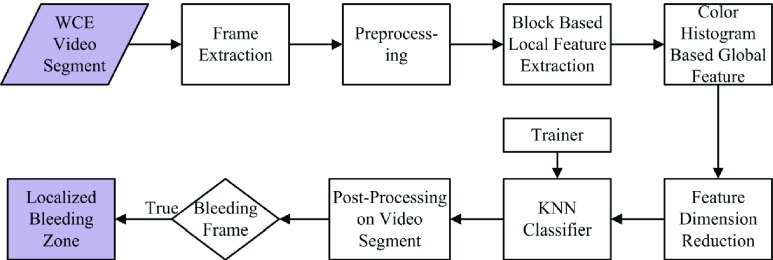
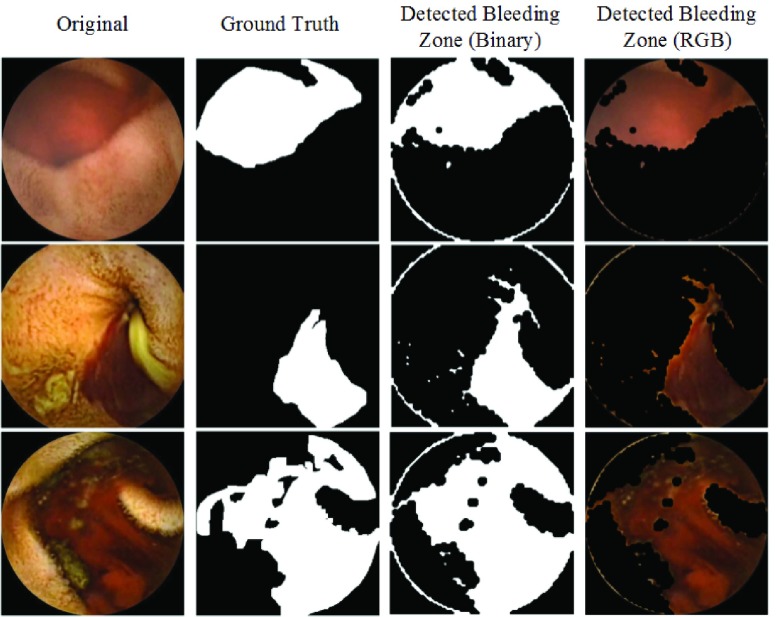
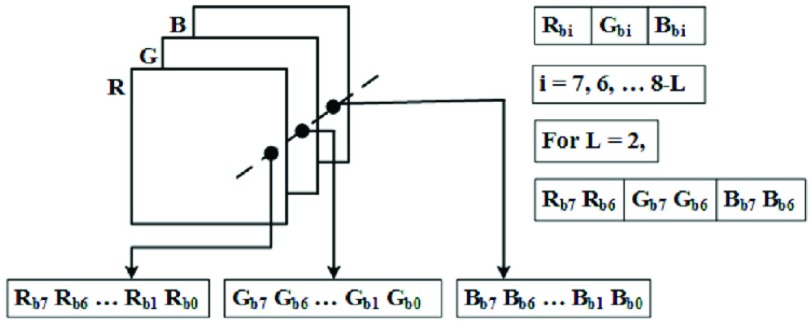
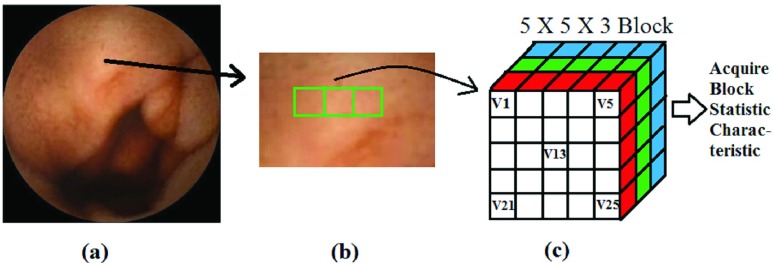
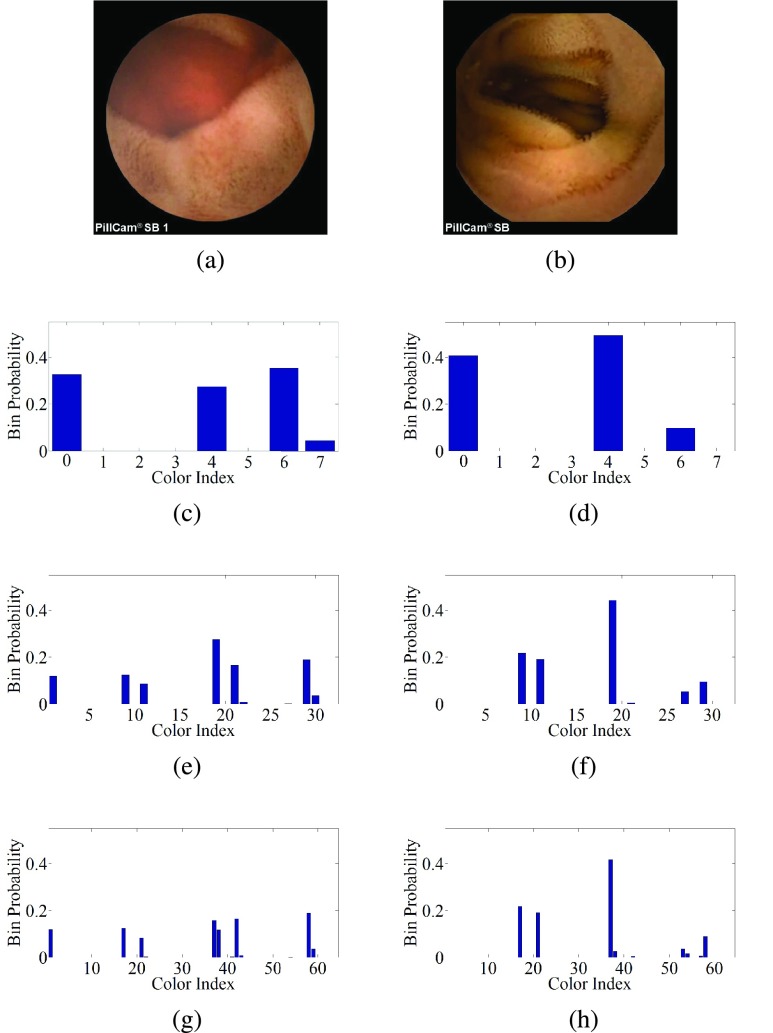
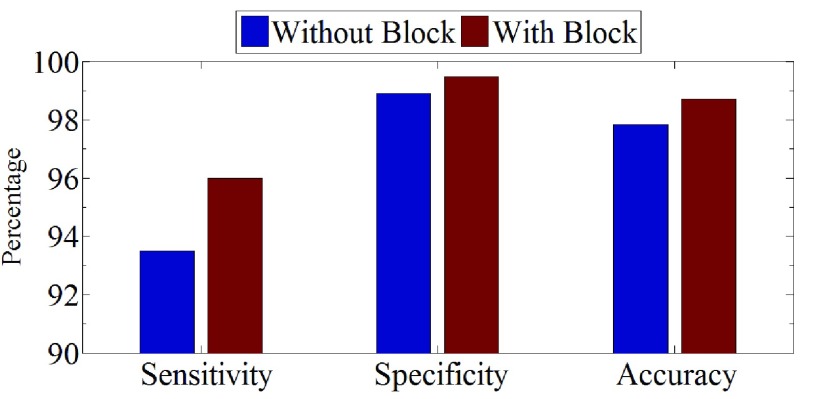
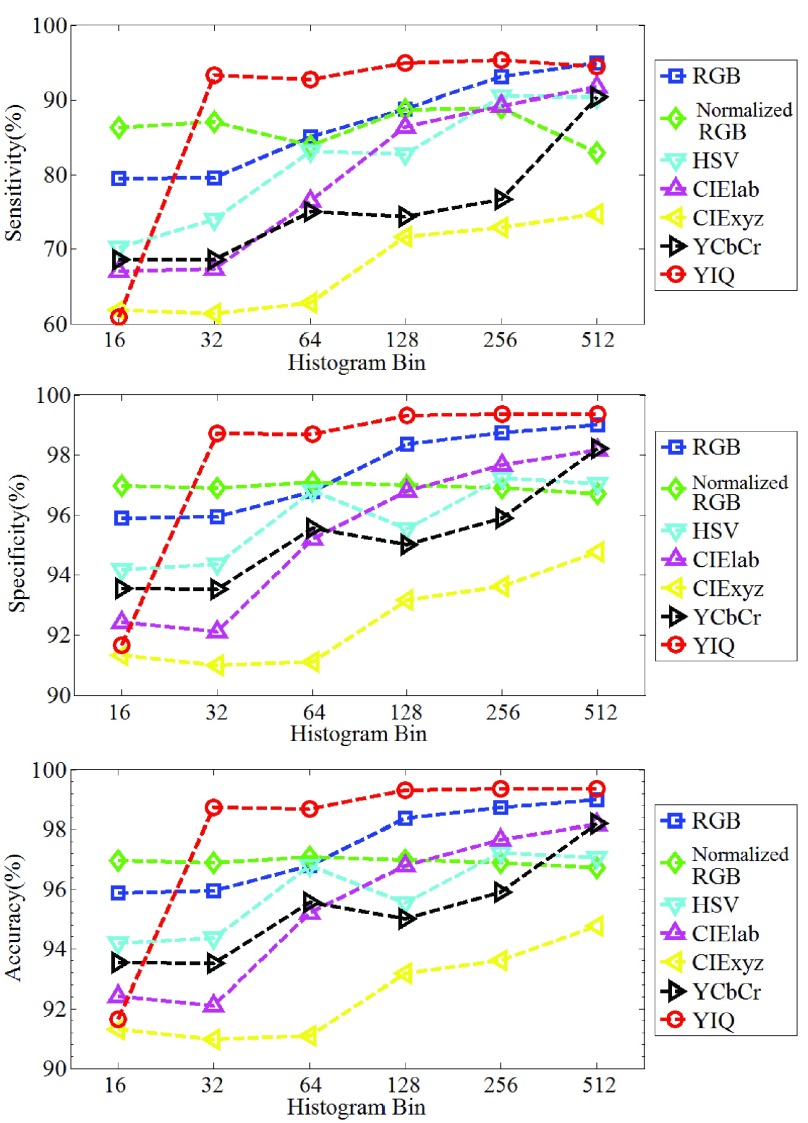
Wireless capsule endoscopy (WCE) is the most advanced technology to visualize whole gastrointestinal (GI) tract in a non-invasive way. But the major disadvantage here, it takes long reviewing time, which is very laborious as continuous manual intervention is necessary. In order to reduce the burden of the clinician, in this paper, an automatic bleeding detection method for WCE video is proposed based on the color histogram of block statistics, namely CHOBS. A single pixel in WCE image may be distorted due to the capsule motion in the GI tract. Instead of considering individual pixel values, a block surrounding to that individual pixel is chosen for extracting local statistical features. By combining local block features of three different color planes of RGB color space, an index value is defined. A color histogram, which is extracted from those index values, provides distinguishable color texture feature. A feature reduction technique utilizing color histogram pattern and principal component analysis is proposed, which can drastically reduce the feature dimension. For bleeding zone detection, blocks are classified using extracted local features that do not incorporate any computational burden for feature extraction. From extensive experimentation on several WCE videos and 2300 images, which are collected from a publicly available database, a very satisfactory bleeding frame and zone detection performance is achieved in comparison to that obtained by some of the existing methods. In the case of bleeding frame detection, the accuracy, sensitivity, and specificity obtained from proposed method are 97.85%, 99.47%, and 99.15%, respectively, and in the case of bleeding zone detection, 95.75% of precision is achieved. The proposed method offers not only low feature dimension but also highly satisfactory bleeding detection performance, which even can effectively detect bleeding frame and zone in a continuous WCE video data.
无线胶囊内窥镜检查(WCE)是可视化整个胃肠道的最先进的非侵入性技术。但这里的主要缺点是,审查时间长,由于需要持续的人工干预,这非常费力。为了减轻临床医生的负担,本文提出了一种基于块统计颜色直方图的WCE视频自动出血检测方法,即CHOBS。WCE图像中的单个像素可能会因胶囊在胃肠道中的运动而失真。不是考虑单个像素值,而是选择围绕该单个像素的一个块来提取局部统计特征。通过组合RGB颜色空间的三个不同颜色平面的局部块特征,定义一个索引值。从这些索引值中提取的颜色直方图提供了可区分的颜色纹理特征。提出了一种利用颜色直方图模式和主成分分析的特征约简技术,该技术可以大幅降低特征维度。对于出血区域检测,使用提取的局部特征对块进行分类,这些局部特征不会给特征提取带来任何计算负担。通过对从一个公开可用数据库收集的几个WCE视频和2300张图像进行广泛实验,与一些现有方法相比,获得了非常令人满意的出血帧和区域检测性能。在出血帧检测的情况下,所提方法获得的准确率、灵敏度和特异性分别为97.85%、99.47%和99.15%,在出血区域检测的情况下,精度达到95.75%。所提方法不仅具有低特征维度,而且具有非常令人满意的出血检测性能,甚至可以有效地检测连续WCE视频数据中的出血帧和区域。