Institute of Biomedical and Genetic Engineering (IBGE), Islamabad 44000, Pakistan.
Department of Bioinformatics and Biotechnology, International Islamic University, Islamabad 44000, Pakistan.
Int J Mol Sci. 2018 Feb 26;19(3):652. doi: 10.3390/ijms19030652.
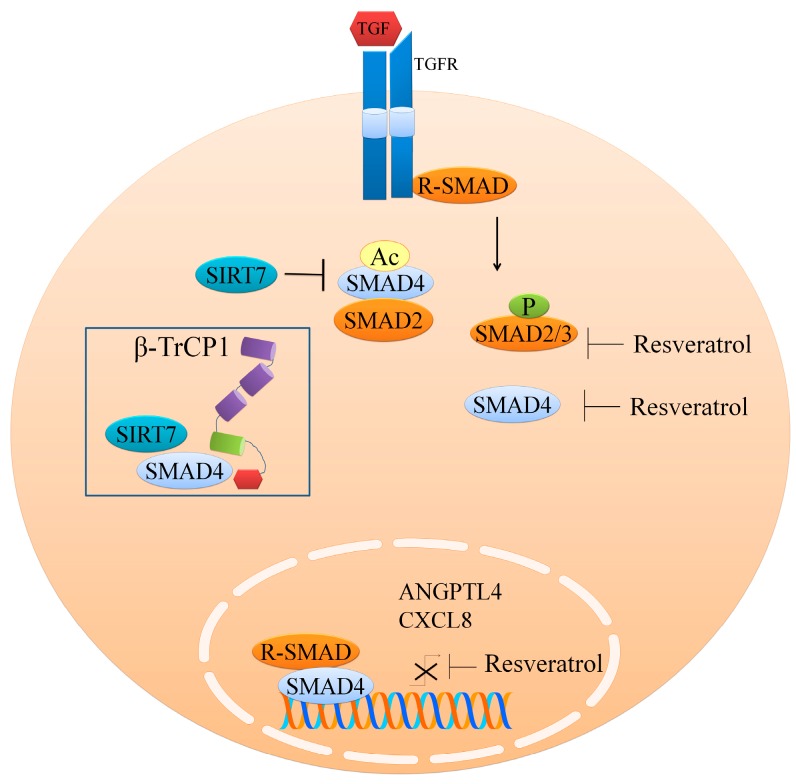
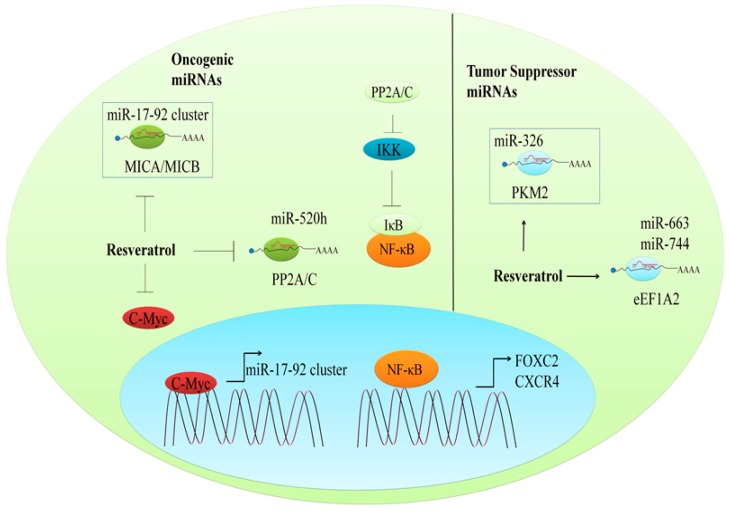
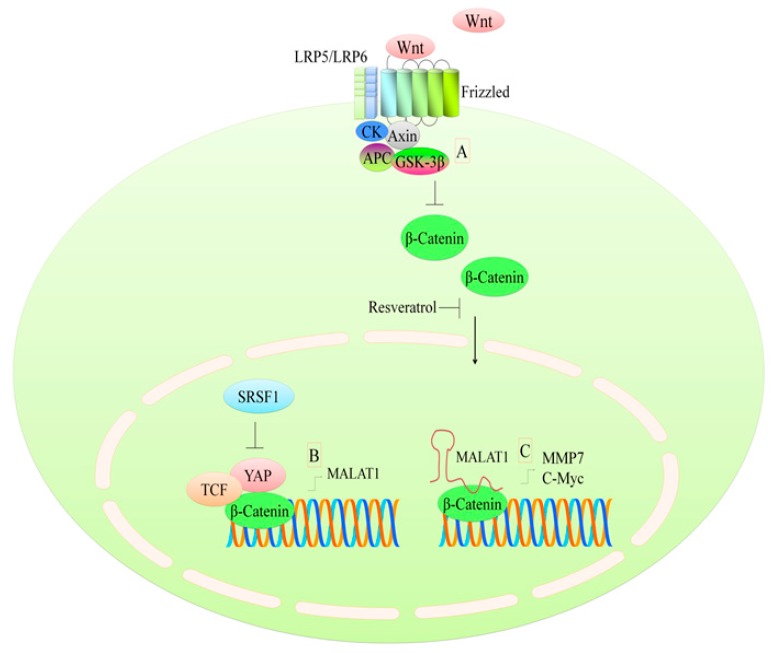
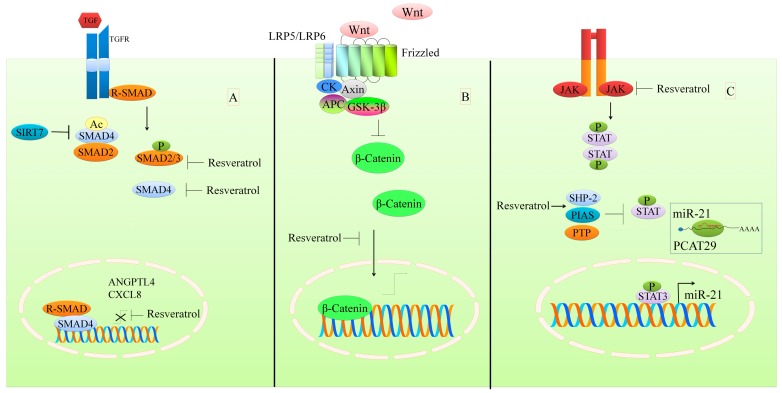
Genomic and proteomic studies have helped improve our understanding of the underlying mechanism(s) of cancer development and progression. Mutations, overexpressed oncogenes, inactivated/downregulated tumor suppressors, loss of apoptosis, and dysregulated signal transduction cascades are some of the well-studied areas of research. Resveratrol has gained considerable attention in the last two decades because of its pleiotropic anticancer activities. In this review, we have summarized the regulation of WNT, SHH (sonic hedgehog)/GLI (glioma-associated oncogene homolog), TGFβ1 (transforming growth factor beta 1)/SMAD, NOTCH, TRAIL (tumor necrosis factor-related apoptosis-inducing ligand), STAT (signal transducer and activator of transcription), and microRNAs by resveratrol in different cancers. The importance of these signaling pathways in cancer progression, along with their modulation by resveratrol, is discussed. Further, we also evaluate the mechanisms and implications of the downregulation of oncogenic miRNAs and the upregulation of tumor suppressor miRNAs by resveratrol, both of which also define its ability to inhibit tumor growth and metastasis. It is envisioned that designing effective clinical trials will be helpful for the identification of resveratrol responders and non-responders and the elucidation of how this phytochemical can be combined with current therapeutic options to improve their clinical efficacy and reduce off-target effects.
基因组学和蛋白质组学研究有助于提高我们对癌症发生和发展的潜在机制的理解。突变、过表达的癌基因、失活/下调的肿瘤抑制因子、凋亡丧失和失调的信号转导级联是一些研究得很好的领域。白藜芦醇在过去二十年中引起了相当大的关注,因为它具有多种抗癌活性。在这篇综述中,我们总结了白藜芦醇在不同癌症中对 WNT、SHH(sonic hedgehog)/GLI(glioma-associated oncogene homolog)、TGFβ1(transforming growth factor beta 1)/SMAD、NOTCH、TRAIL(tumor necrosis factor-related apoptosis-inducing ligand)、STAT(signal transducer and activator of transcription)和 microRNAs 的调节。讨论了这些信号通路在癌症进展中的重要性及其被白藜芦醇的调节。此外,我们还评估了白藜芦醇下调致癌 microRNAs 和上调肿瘤抑制 microRNAs 的机制和意义,这两者也定义了它抑制肿瘤生长和转移的能力。设计有效的临床试验将有助于识别白藜芦醇的应答者和非应答者,并阐明这种植物化学物质如何与现有的治疗选择相结合,以提高其临床疗效并减少脱靶效应。