Juslin Patrik N, Laukka Petri, Bänziger Tanja
1Department of Psychology, Uppsala University, Box 1225, 751 42 Uppsala, Sweden.
2Department of Psychology, Stockholm University, Stockholm, Sweden.
J Nonverbal Behav. 2018;42(1):1-40. doi: 10.1007/s10919-017-0268-x. Epub 2017 Oct 25.
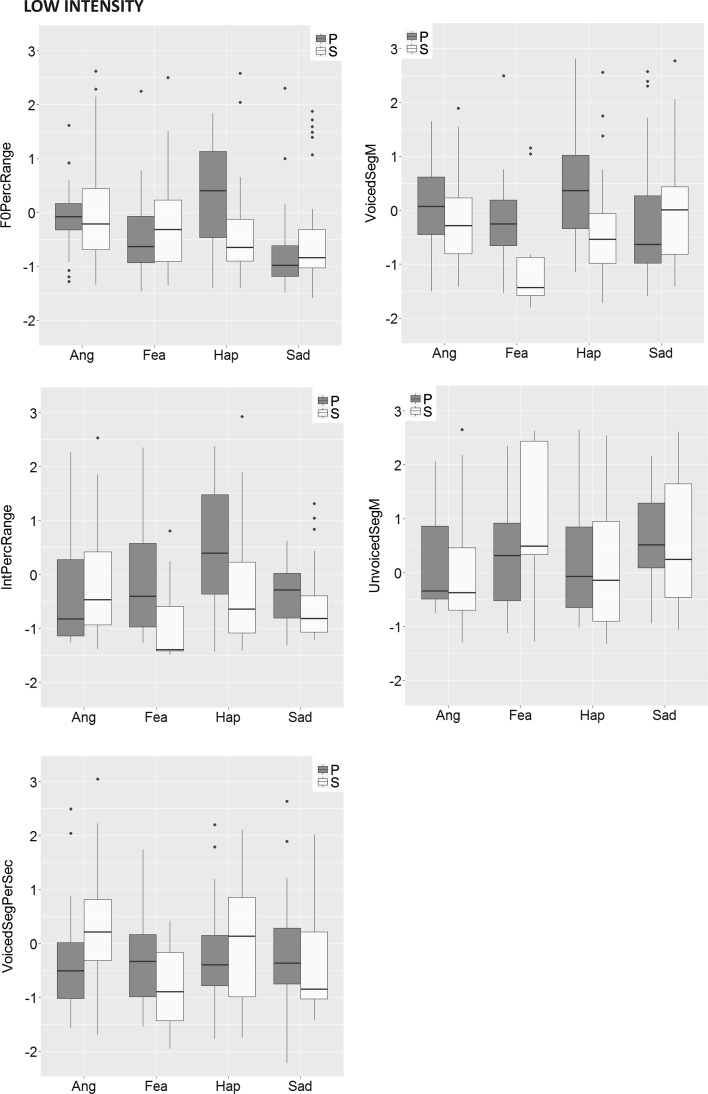
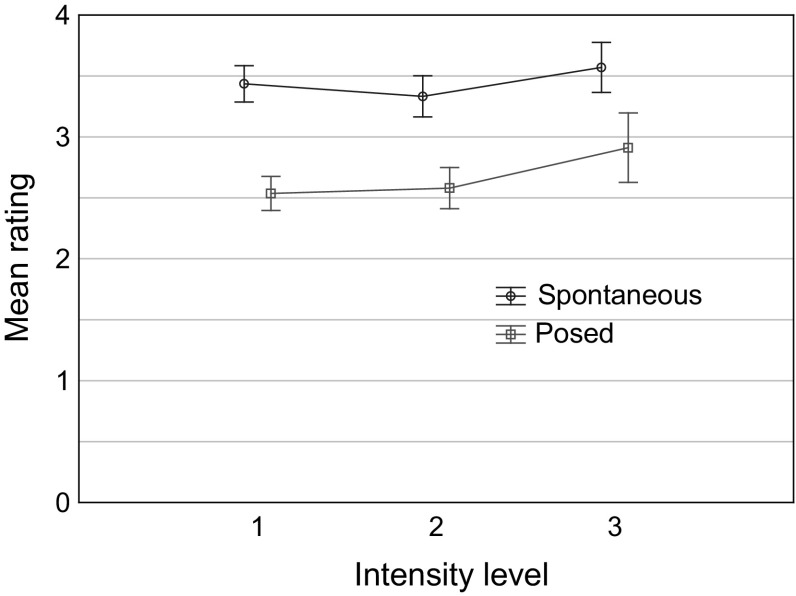
It has been the subject of much debate in the study of vocal expression of emotions whether posed expressions (e.g., actor portrayals) are different from spontaneous expressions. In the present investigation, we assembled a new database consisting of 1877 voice clips from 23 datasets, and used it to systematically compare spontaneous and posed expressions across 3 experiments. Results showed that (a) spontaneous expressions were generally rated as more genuinely emotional than were posed expressions, even when controlling for differences in emotion intensity, (b) there were differences between the two stimulus types with regard to their acoustic characteristics, and (c) spontaneous expressions with a high emotion intensity conveyed discrete emotions to listeners to a similar degree as has previously been found for posed expressions, supporting a dose-response relationship between intensity of expression and discreteness in perceived emotions. Our conclusion is that there are reliable differences between spontaneous and posed expressions, though not necessarily in the ways commonly assumed. Implications for emotion theories and the use of emotion portrayals in studies of vocal expression are discussed.
在情感的声音表达研究中,摆拍表情(如演员的刻画)是否与自发表情不同一直是一个备受争议的话题。在本研究中,我们收集了一个新的数据库,其中包含来自23个数据集的1877个语音片段,并利用它在3个实验中系统地比较自发表情和摆拍表情。结果表明:(a)即使在控制了情感强度差异的情况下,自发表情通常比摆拍表情被评为更具真实情感;(b)这两种刺激类型在声学特征方面存在差异;(c)高情感强度的自发表情向听众传达离散情感的程度与之前在摆拍表情中发现的程度相似,这支持了表情强度与感知情感的离散度之间的剂量反应关系。我们的结论是,自发表情和摆拍表情之间存在可靠的差异,尽管不一定是人们通常认为的方式。本文还讨论了这些结论对情感理论以及在声音表达研究中使用情感刻画的启示。