Qin Xing, Su Xiaoyun, Luo Huiying, Ma Rui, Yao Bin, Ma Fuying
1Key Laboratory for Feed Biotechnology of the Ministry of Agriculture, Feed Research Institute, Chinese Academy of Agricultural Sciences, No. 12 South Zhongguancun Street, Beijing, 100081 People's Republic of China.
2College of Life Science and Technology, Huazhong University of Science and Technology, Wuhan, 430074 People's Republic of China.
Biotechnol Biofuels. 2018 Mar 2;11:58. doi: 10.1186/s13068-018-1060-9. eCollection 2018.
is one of the most potent white rot fungi for biological pretreatment of lignocellulose for second biofuel production. To elucidate the underlying molecular mechanism involved in lignocellulose deconstruction, genomic and transcriptomic analyses were carried out for CD2 grown in submerged fermentation using ball-milled corn stover as the carbon source.
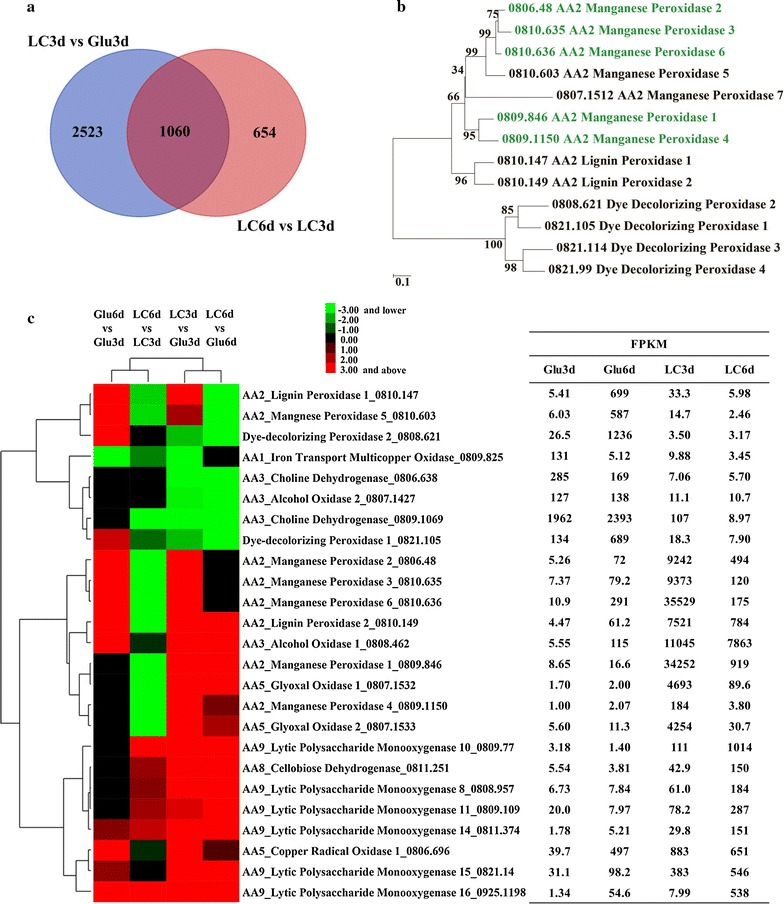
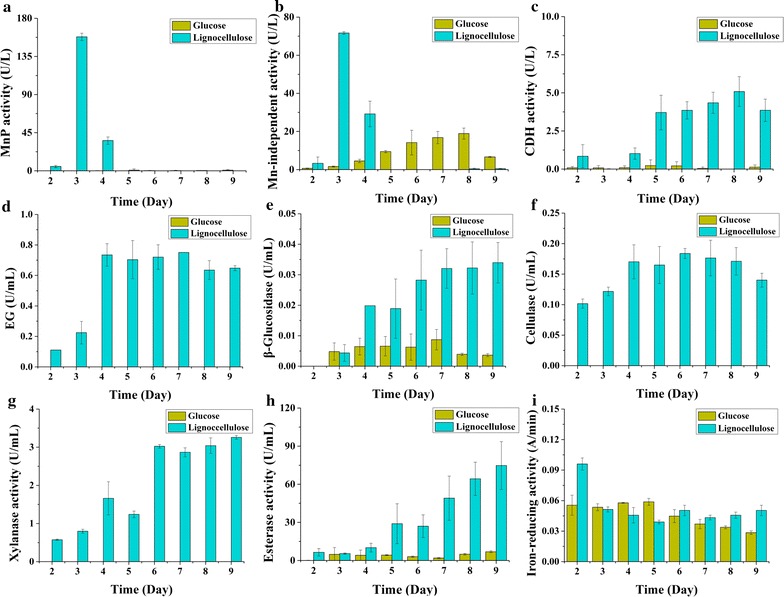
CD2 efficiently decomposed 74.9% lignin, 86.3% cellulose, and 83.5% hemicellulose in corn stover within 9 days. Manganese peroxidases were rapidly induced, followed by accumulation of cellulase and hemicellulase. Genomic analysis revealed that CD2 possessed a complete set of lignocellulose-degrading enzyme system composed mainly of class II peroxidases, dye-decolorizing peroxidases, auxiliary enzymes, and 182 glycoside hydrolases. Comparative transcriptomic analysis substantiated the notion of a selection mode of degradation. These analyses also suggested that free radicals, derived either from MnP-organic acid interplay or from Fenton reaction involving Fe and HO, could play an important role in lignocellulose degradation.
The selective strategy employed by CD2, in combination with low extracellular glycosidases cleaving plant cell wall polysaccharides into fermentable sugars, may account for high pretreatment efficiency of . Our study also hints the importance of free radicals for future designing of novel, robust lignocellulose-degrading enzyme cocktails.
是用于木质纤维素生物预处理以生产第二代生物燃料的最有效的白腐真菌之一。为了阐明参与木质纤维素解构的潜在分子机制,以球磨玉米秸秆为碳源,对在深层发酵中生长的CD2进行了基因组和转录组分析。
CD2在9天内有效地分解了玉米秸秆中74.9%的木质素、86.3%的纤维素和83.5%的半纤维素。锰过氧化物酶被迅速诱导,随后纤维素酶和半纤维素酶积累。基因组分析表明,CD2拥有一套完整的木质纤维素降解酶系统,主要由II类过氧化物酶、染料脱色过氧化物酶、辅助酶和182种糖苷水解酶组成。比较转录组分析证实了降解的选择模式这一概念。这些分析还表明,源自MnP-有机酸相互作用或涉及铁和羟基的芬顿反应的自由基可能在木质纤维素降解中起重要作用。
CD2采用的选择性策略,与将植物细胞壁多糖切割成可发酵糖的低细胞外糖苷酶相结合,可能是其预处理效率高的原因。我们的研究还暗示了自由基对于未来设计新型、强大的木质纤维素降解酶混合物的重要性。