Johnson Chacko Lejo, Schmidbauer Dominik T, Handschuh Stephan, Reka Alen, Fritscher Karl D, Raudaschl Patrik, Saba Rami, Handler Michael, Schier Peter P, Baumgarten Daniel, Fischer Natalie, Pechriggl Elisabeth J, Brenner Erich, Hoermann Romed, Glueckert Rudolf, Schrott-Fischer Anneliese
Department of Otolaryngology, Medical University of Innsbruck, Innsbruck, Austria.
Department of Biotechnology & Food Engineering, Management Center Innsbruck, Innsbruck, Austria.
Front Neurosci. 2018 Feb 26;12:107. doi: 10.3389/fnins.2018.00107. eCollection 2018.
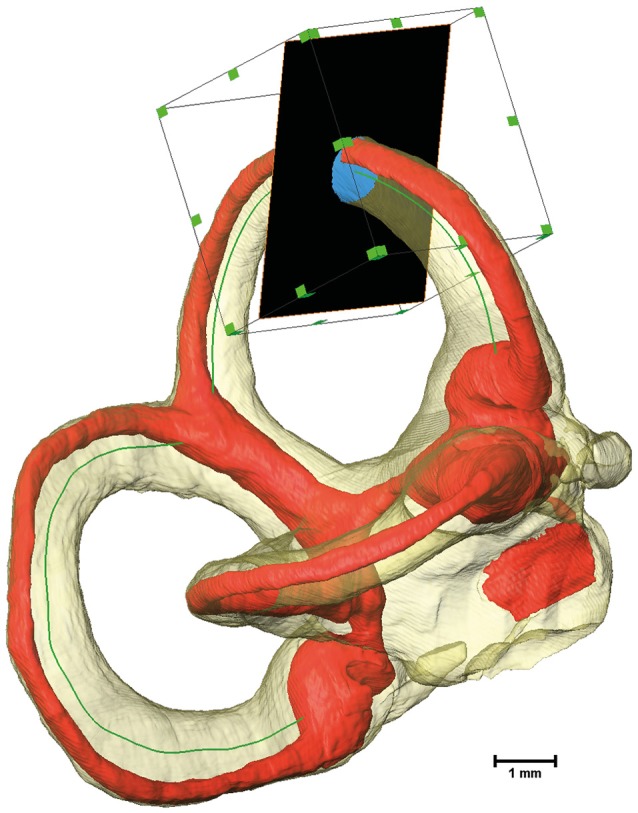
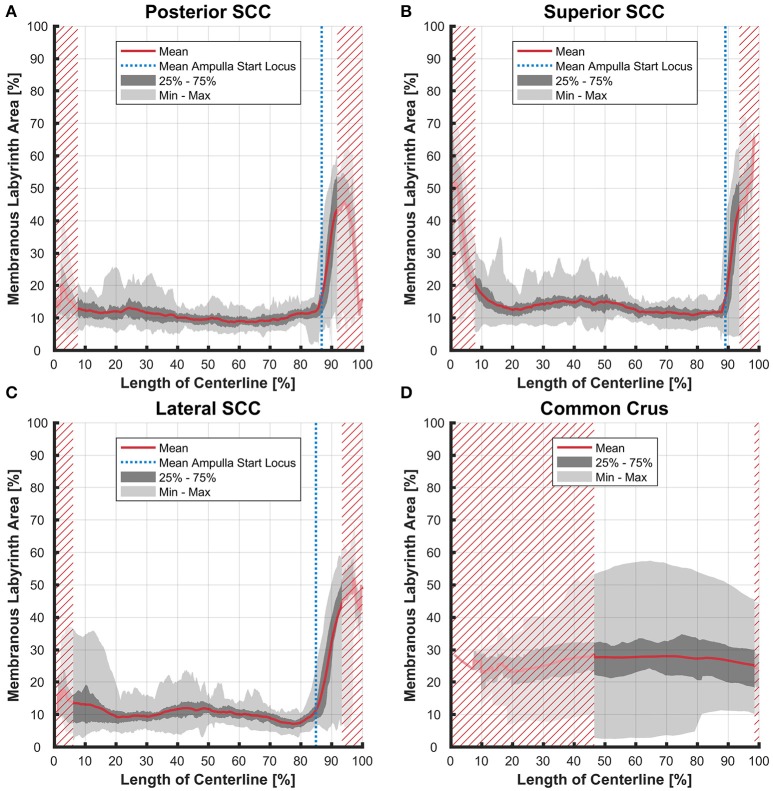
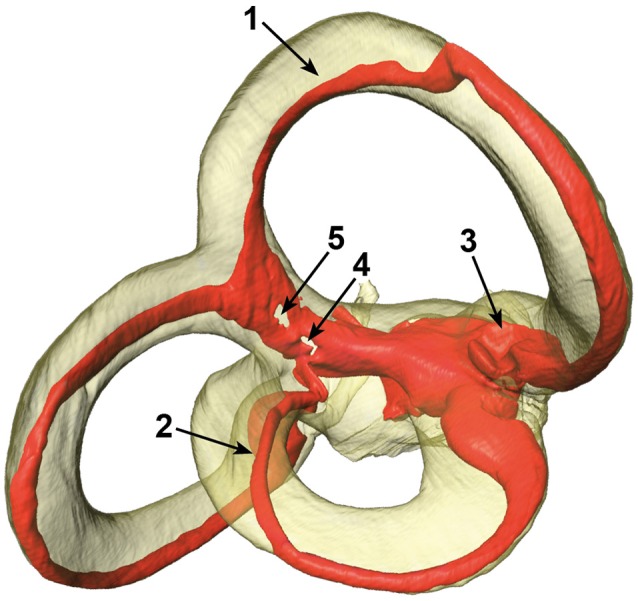
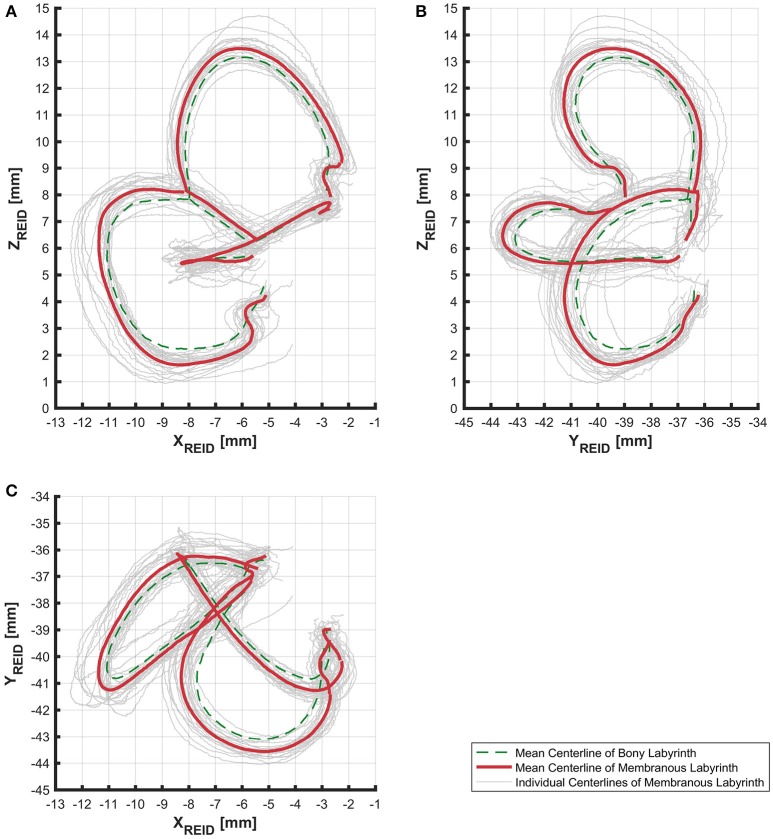
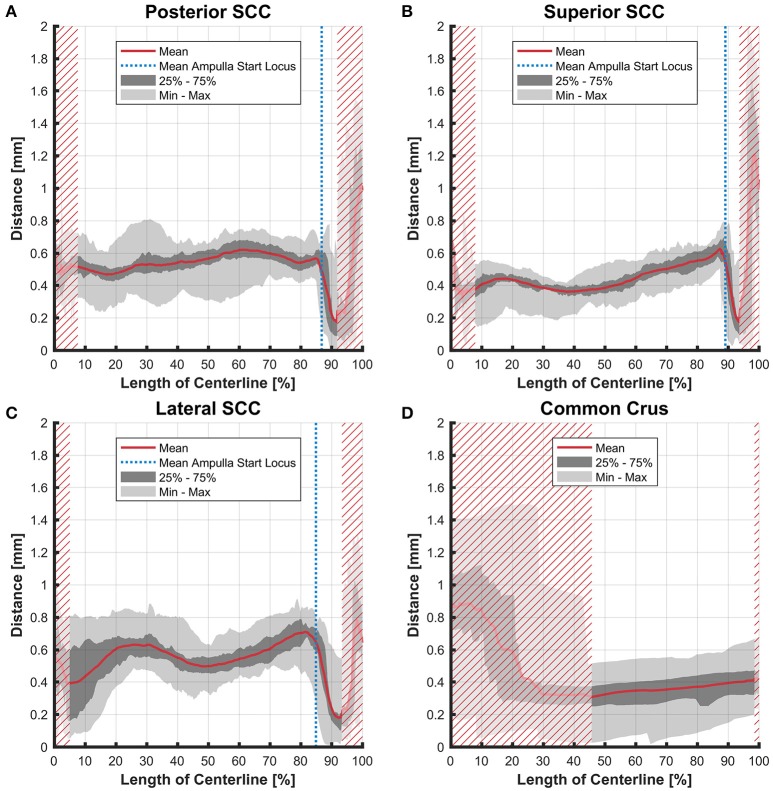
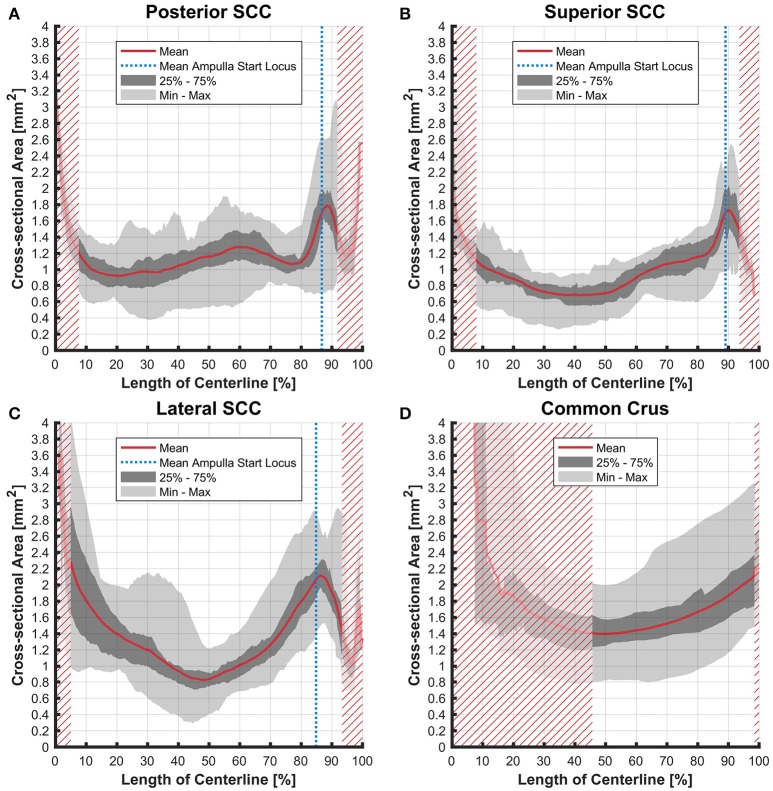
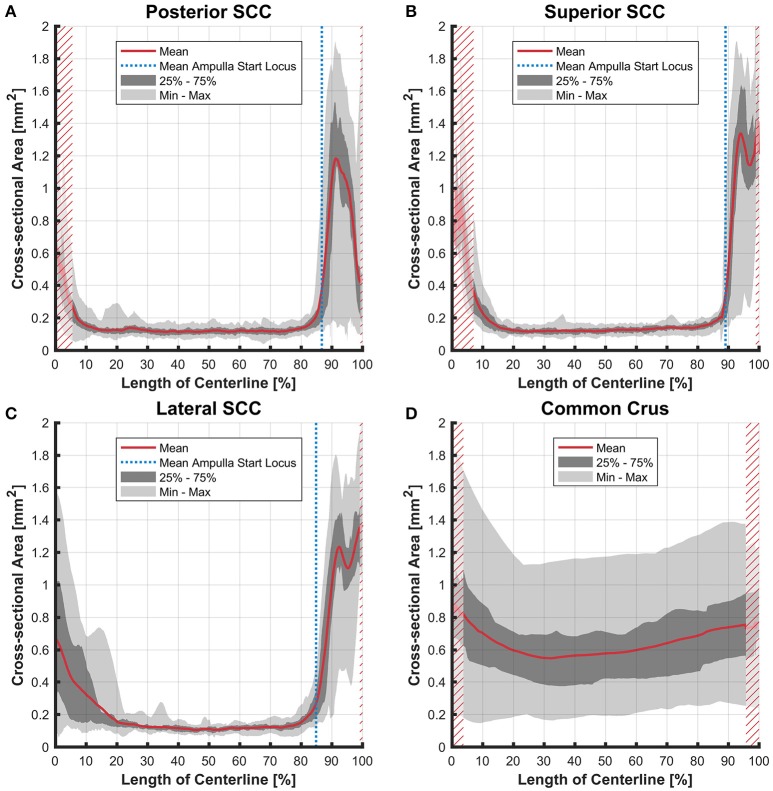
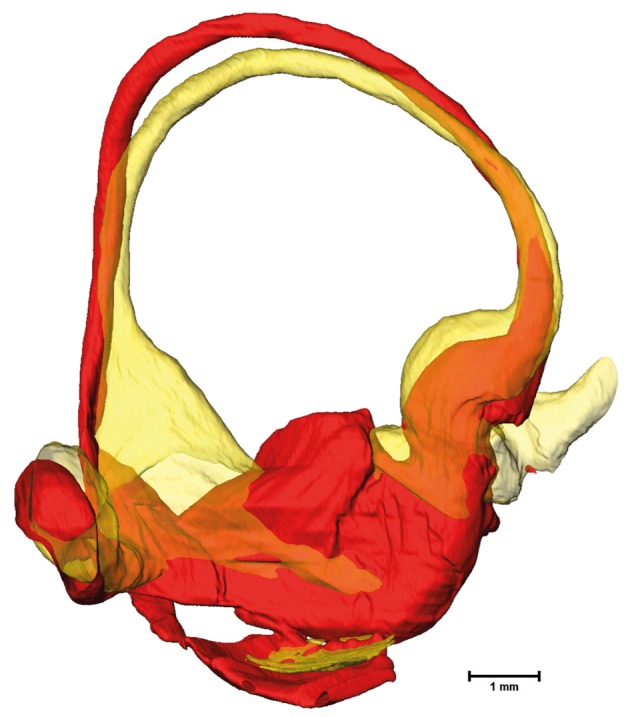
Stable posture and body movement in humans is dictated by the precise functioning of the ampulla organs in the semi-circular canals. Statistical analysis of the interrelationship between bony and membranous compartments within the semi-circular canals is dependent on the visualization of soft tissue structures. Thirty-one human inner ears were prepared, post-fixed with osmium tetroxide and decalcified for soft tissue contrast enhancement. High resolution X-ray microtomography images at 15 μm voxel-size were manually segmented. This data served as templates for centerline generation and cross-sectional area extraction. Our estimates demonstrate the variability of individual specimens from averaged centerlines of both bony and membranous labyrinth. Centerline lengths and cross-sectional areas along these lines were identified from segmented data. Using centerlines weighted by the inverse squares of the cross-sectional areas, plane angles could be quantified. The fit planes indicate that the bony labyrinth resembles a Cartesian coordinate system more closely than the membranous labyrinth. A widening in the membranous labyrinth of the lateral semi-circular canal was observed in some of the specimens. Likewise, the cross-sectional areas in the perilymphatic spaces of the lateral canal differed from the other canals. For the first time we could precisely describe the geometry of the human membranous labyrinth based on a large sample size. Awareness of the variations in the canal geometry of the membranous and bony labyrinth would be a helpful reference in designing electrodes for future vestibular prosthesis and simulating fluid dynamics more precisely.
人类稳定的姿势和身体运动取决于半规管中壶腹器官的精确功能。对半规管内骨迷路和膜迷路之间相互关系的统计分析依赖于软组织结构的可视化。制备了31个人类内耳,用四氧化锇后固定并脱钙以增强软组织对比度。以15μm体素大小的高分辨率X射线显微断层扫描图像进行手动分割。这些数据用作中心线生成和横截面积提取的模板。我们的估计显示了个体标本与骨迷路和膜迷路平均中心线的差异。从分割数据中确定沿这些线的中心线长度和横截面积。使用按横截面积的平方反比加权的中心线,可以量化平面角度。拟合平面表明,骨迷路比膜迷路更类似于笛卡尔坐标系。在一些标本中观察到外侧半规管膜迷路变宽。同样,外侧管外淋巴间隙的横截面积与其他管不同。我们首次能够基于大样本量精确描述人类膜迷路的几何形状。了解膜迷路和骨迷路管几何形状的变化将为未来前庭假体的电极设计和更精确地模拟流体动力学提供有用的参考。