Chair for Public Health and Health Services Research, Research Unit for Biopsychosocial Health, Department of Medical Information Processing, Biometry and Epidemiology (IBE), Ludwig-Maximilians-Universität (LMU), 81377 Munich, Germany.
Department of Psychiatry, Universidad Autónoma de Madrid and Institute of Health Carlos III, CIBER of Mental Health (CIBERSAM), 28038 Madrid, Spain.
Int J Environ Res Public Health. 2018 Mar 26;15(4):595. doi: 10.3390/ijerph15040595.
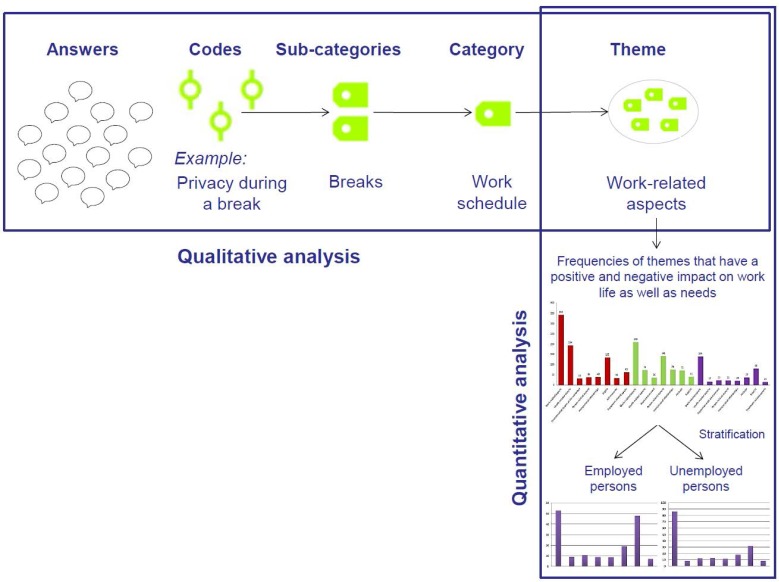
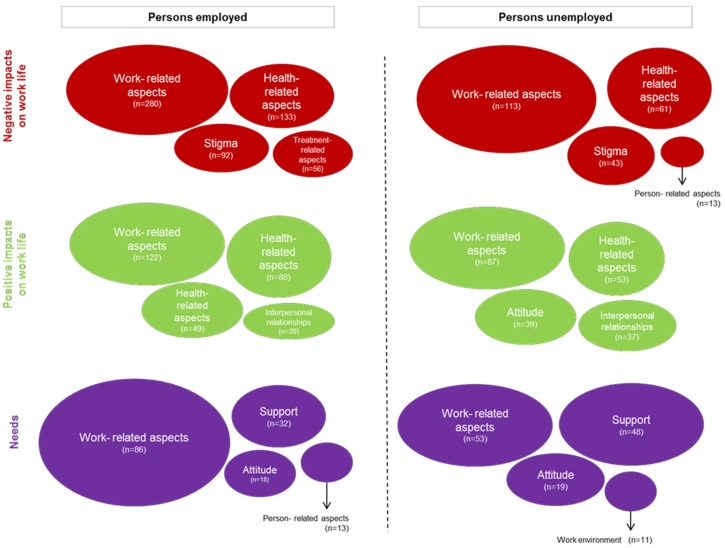
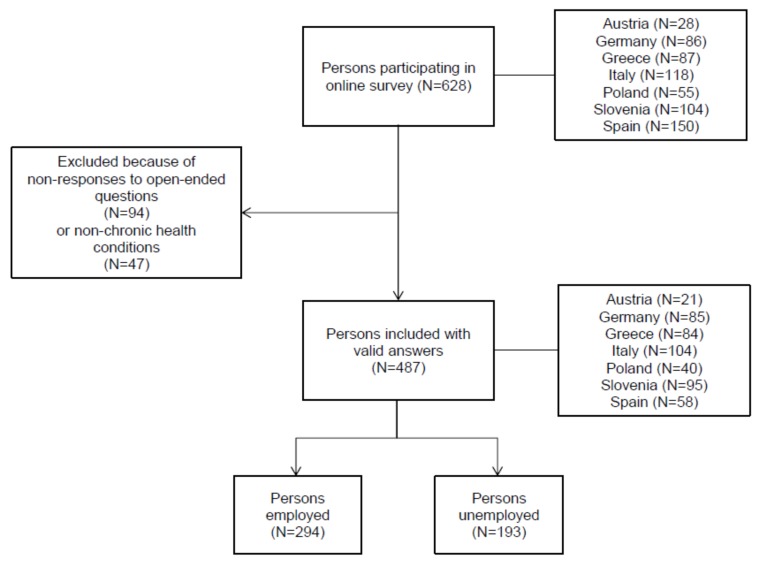
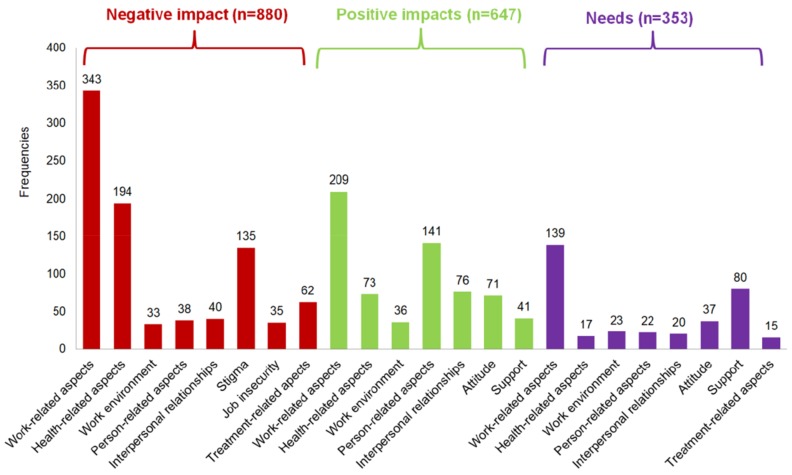
Chronic health conditions represent the major share of the disease burden in Europe and have a significant impact on work. This study aims to: (1) identify factors that have a negative or positive impact on the work lives of persons with chronic health conditions; (2) explore the needs of these persons to maintain a job or return to work and (3) compare these results with respect to these persons' occupational status. An online survey was performed in seven European countries. Open-ended survey questions were analyzed using qualitative methods. In total, 487 participants with six chronic health conditions participated. The majority of participants named work-related aspects (such as career development, stress at the workplace, work structure and schedule as well as workload), support of others and attitudes of others as being the factors positively and negatively impact their work lives the most. Our study shed light on the importance of changing the attitudes of supervisors and co-workers to counteract stigmatization of persons with chronic health conditions in the workplace. In conclusion, this study provides a basis for developing new strategies of integration and reintegration at work for persons with chronic health conditions in European countries.
慢性健康状况在欧洲代表了疾病负担的主要部分,并对工作产生重大影响。本研究旨在:(1)确定对患有慢性健康状况的人的工作生活产生负面影响或积极影响的因素;(2)探讨这些人维持工作或重返工作岗位的需求;(3)并根据这些人的职业状况对这些结果进行比较。在七个欧洲国家进行了在线调查。使用定性方法分析了开放式调查问题。共有 487 名患有六种慢性健康状况的参与者参加了研究。大多数参与者认为工作相关方面(如职业发展、工作场所的压力、工作结构和时间表以及工作量)、他人的支持和他人的态度对他们的工作生活影响最大。我们的研究揭示了改变主管和同事态度的重要性,以抵制工作场所中对患有慢性健康状况的人的污名化。总之,本研究为在欧洲国家为患有慢性健康状况的人制定新的工作融合和再融合策略提供了基础。