Center for Gamma-Ray Imaging, University of Arizona, Tucson, AZ, USA.
College of Optical Sciences, University of Arizona, Tucson, AZ, USA.
Med Phys. 2018 Jun;45(6):2425-2438. doi: 10.1002/mp.12906. Epub 2018 May 6.
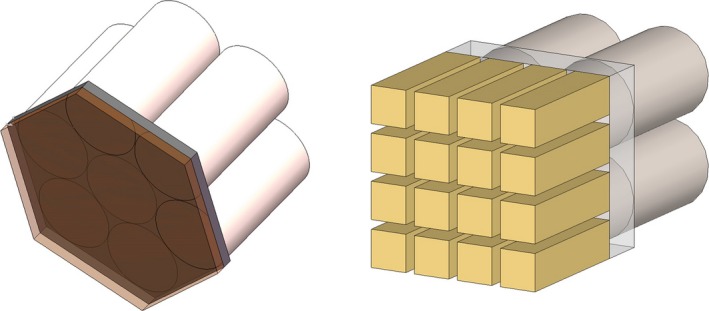
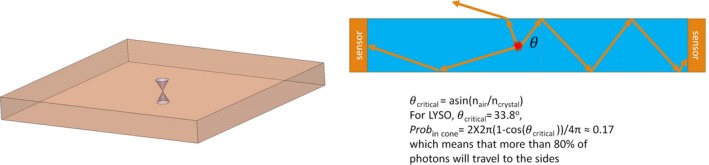
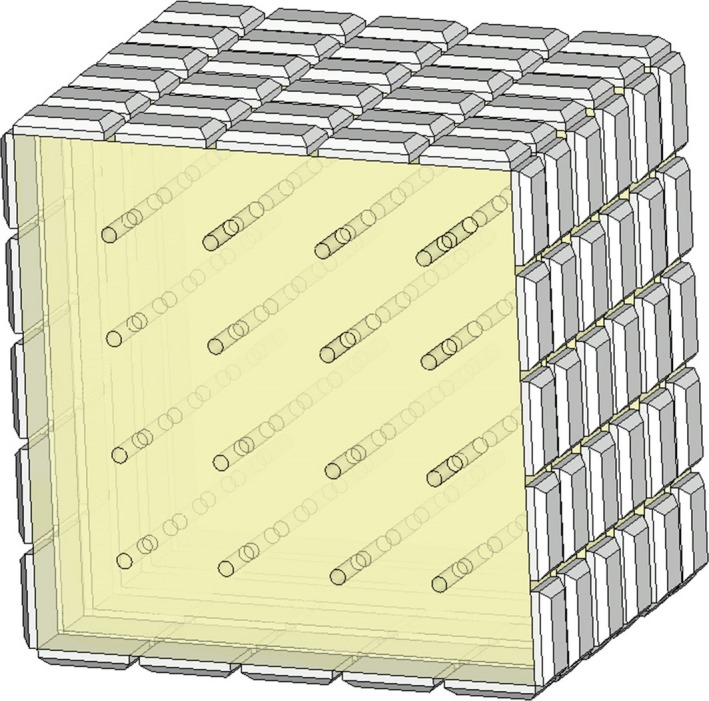
We present a novel gamma-ray-detector design based on total internal reflection (TIR) of scintillation photons within a crystal that addresses many limitations of traditional PET detectors. Our approach has appealing features, including submillimeter lateral resolution, DOI positioning from layer thickness, and excellent energy resolution. The design places light sensors on the edges of a stack of scintillator slabs separated by small air gaps and exploits the phenomenon that more than 80% of scintillation light emitted during a gamma-ray event reaches the edges of a thin crystal with polished faces due to TIR. Gamma-ray stopping power is achieved by stacking multiple layers, and DOI is determined by which layer the gamma ray interacts in.
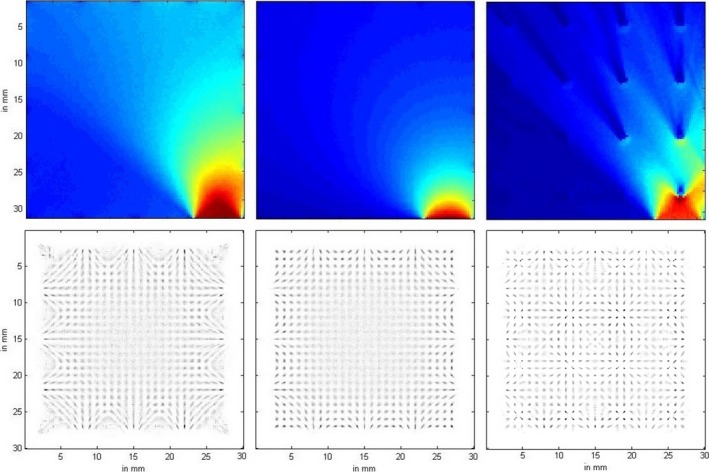
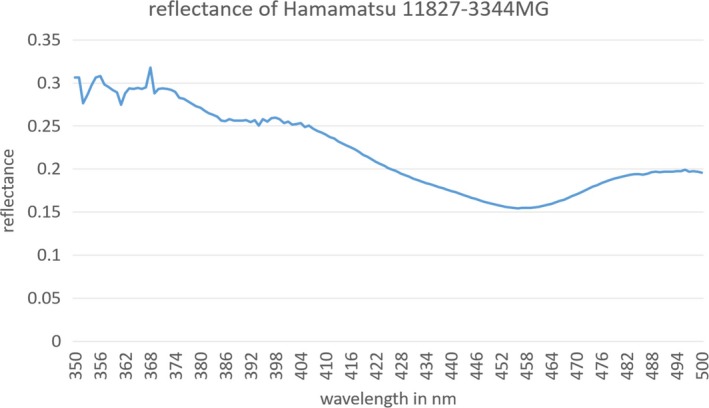
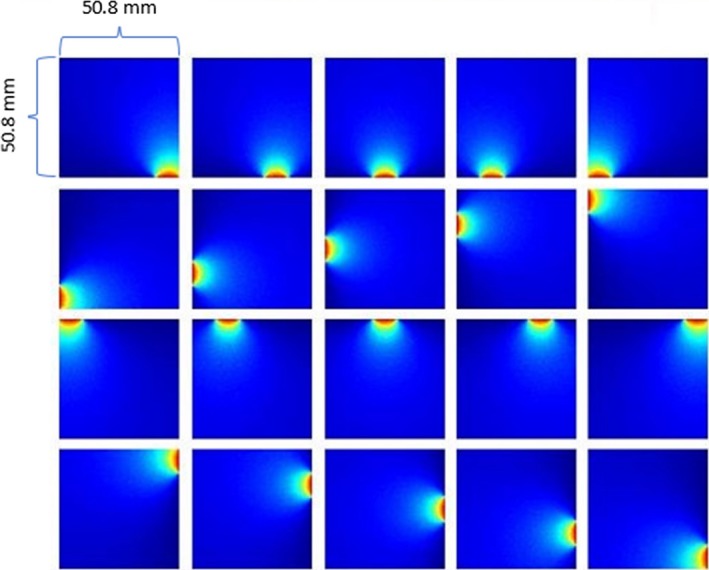
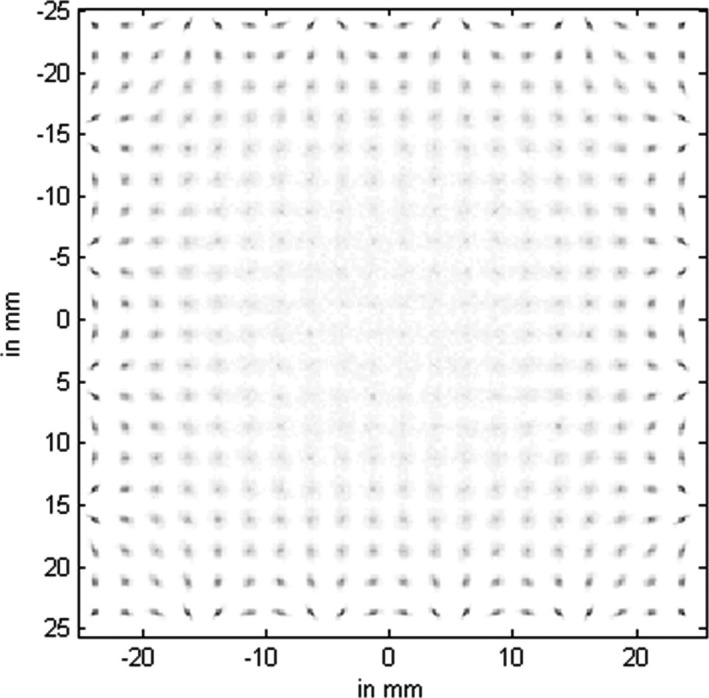
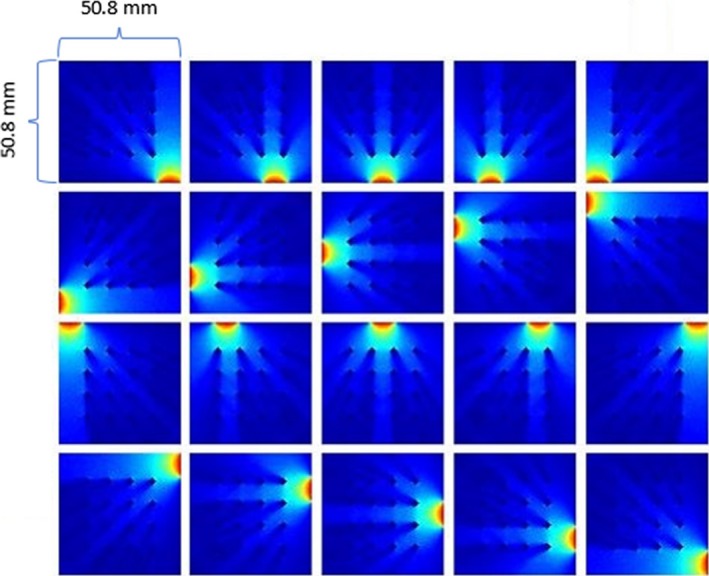
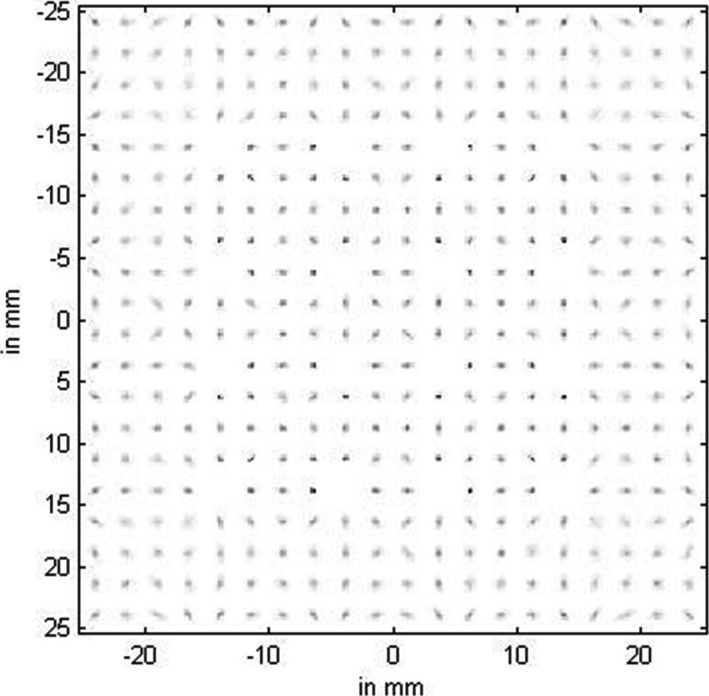
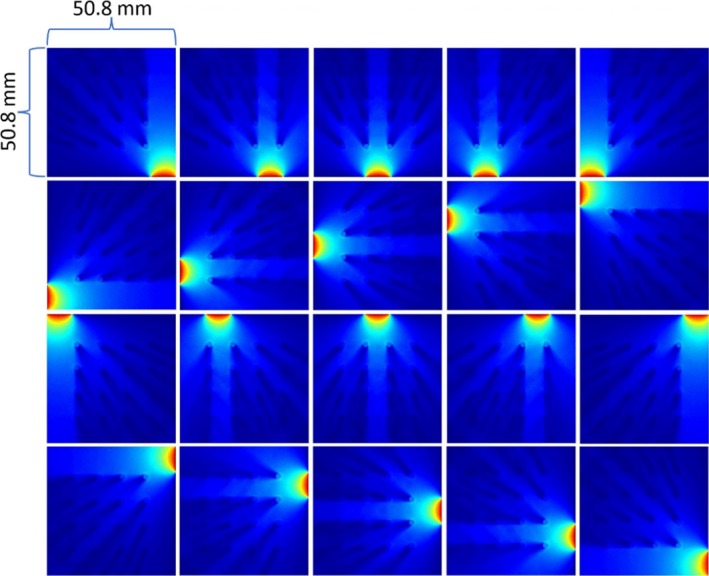
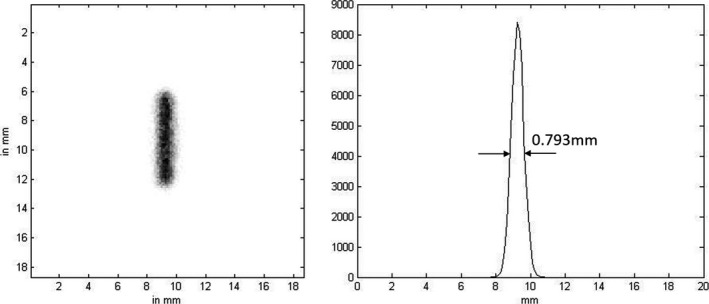
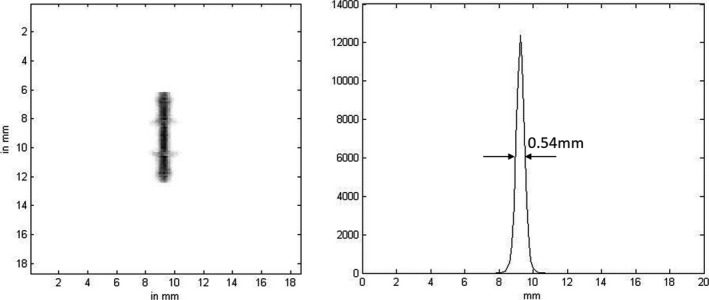
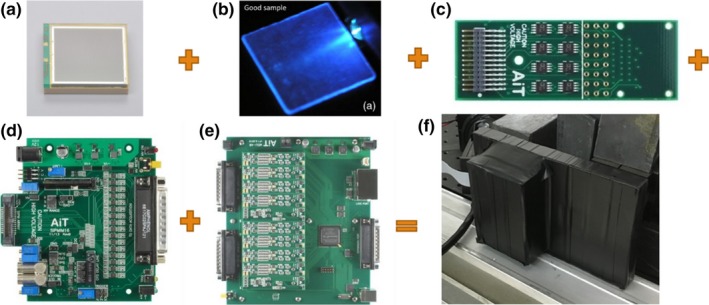
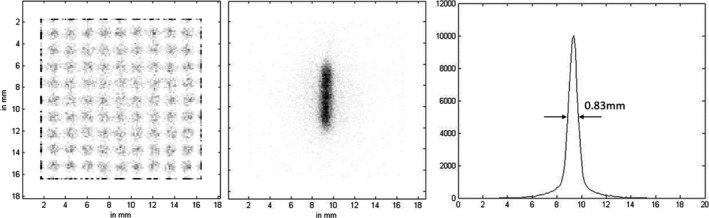
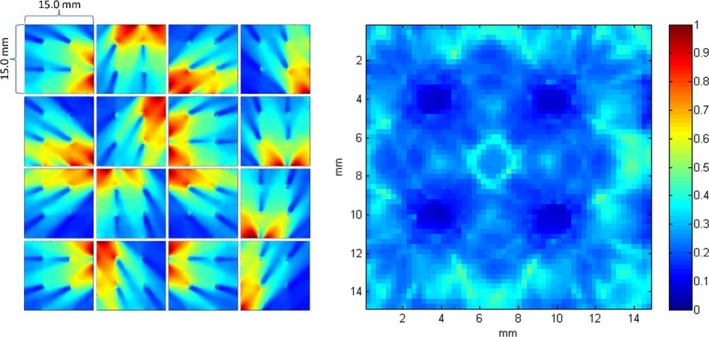
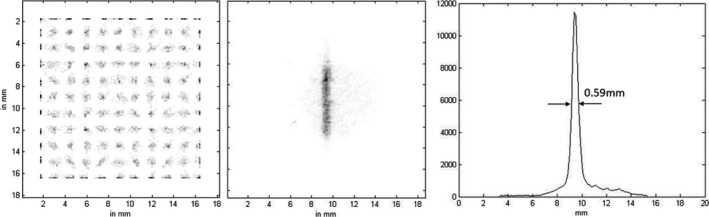
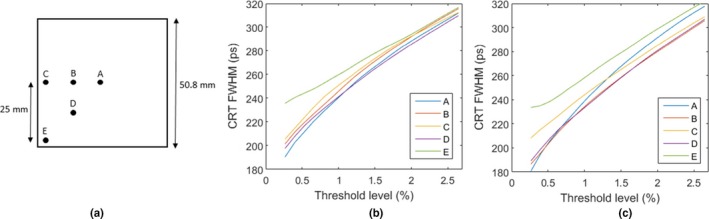
The concept of edge readouts of a thin slab was verified by Monte Carlo simulation of scintillation light transport. An LYSO crystal of dimensions 50.8 mm × 50.8 mm × 3.0 mm was modeled with five rectangular SiPMs placed along each edge face. The mean-detector-response functions (MDRFs) were calculated by simulating signals from 511 keV gamma-ray interactions in a grid of locations. Simulations were carried out to study the influence of choice of scintillator material and dimensions, gamma-ray photon energies, introduction of laser or mechanically induced optical barriers (LIOBs, MIOBs), and refractive indices of optical-coupling media and SiPM windows. We also analyzed timing performance including influence of gamma-ray interaction position and presence of optical barriers. We also modeled and built a prototype detector, a 27.4 mm × 27.4 mm × 3.0 mm CsI(Tl) crystal with 4 SiPMs per edge to experimentally validate the results predicted by the simulations. The prototype detector used CsI(Tl) crystals from Proteus outfitted with 16 Hamamatsu model S13360-6050PE MPPCs read out by an AiT-16-channel readout. The MDRFs were measured by scanning the detector with a collimated beam of 662-keV photons from a Cs source. The spatial resolution was experimentally determined by imaging a tungsten slit that created a beam of 0.44 mm (FWHM) width normal to the detector surface. The energy resolution was evaluated by analyzing list-mode data from flood illumination by the Cs source.
We find that in a block-detector-sized LYSO layer read out by five SiPMs per edge, illuminated by 511-keV photons, the average resolution is 1.49 mm (FWHM). With the introduction of optical barriers, average spatial resolution improves to 0.56 mm (FWHM). The DOI resolution is the layer thickness of 3.0 mm. We also find that optical-coupling media and SiPM-window materials have an impact on spatial resolution. The timing simulation with LYSO crystal yields a coincidence resolving time (CRT) of 200-400 ps, which is slightly position dependent. And the introduction of optical barriers has minimum influence. The prototype CsI(Tl) detector, with a smaller area and fewer SiPMs, was measured to have central-area spatial resolutions of 0.70 and 0.39 mm without and with optical barriers, respectively. These results match well with our simulations. An energy resolution of 6.4% was achieved at 662 keV.
A detector design based on a stack of monolithic scintillator layers that uses edge readouts offers several advantages over current block detectors for PET. For example, there is no tradeoff between spatial resolution and detection sensitivity since no reflector material displaces scintillator crystal, and submillimeter resolution can be achieved. DOI information is readily available, and excellent timing and energy resolutions are possible.
我们提出了一种基于闪烁光子全内反射(TIR)的新型伽马射线探测器设计,该设计解决了传统 PET 探测器的许多局限性。我们的方法具有吸引人的特点,包括亚毫米级的横向分辨率、从层厚确定的 DOI 位置以及出色的能量分辨率。该设计将光传感器放置在由小空气隙隔开的堆叠闪烁体板的边缘,并利用在伽马射线事件中发射的超过 80%的闪烁光由于 TIR 而到达抛光面薄晶体边缘的现象。伽马射线停止功率通过堆叠多个层来实现,而 DOI 则由伽马射线相互作用的层确定。
通过对闪烁光传输的蒙特卡罗模拟验证了薄平板边缘读出的概念。用五个沿每个边缘面放置的 SiPM 对尺寸为 50.8mm×50.8mm×3.0mm 的 LYSO 晶体进行建模。通过在网格位置模拟 511keV 伽马射线相互作用的信号来计算平均探测器响应函数(MDRF)。进行了模拟以研究闪烁材料和尺寸的选择、伽马射线光子能量、引入激光或机械诱导光学阻挡(LIOB、MIOB)以及光学耦合介质和 SiPM 窗口的折射率的影响。我们还分析了包括伽马射线相互作用位置和光学阻挡存在的影响的定时性能。我们还对原型探测器进行了建模和构建,该原型探测器为一个 27.4mm×27.4mm×3.0mm 的 CsI(Tl)晶体,每个边缘有 4 个 SiPM,用于通过 Proteus 提供的 CsI(Tl)晶体来实验验证模拟预测的结果。原型探测器使用配备有 Hamamatsu 型号 S13360-6050PE MPPC 的 16 个 Cs 源的 662keV 光子准直光束进行扫描,以测量 MDRF。通过在探测器表面垂直成像钨狭缝来实验确定空间分辨率,狭缝会创建 0.44mm(FWHM)宽度的光束。通过分析 Cs 源的洪水照明的列表模式数据来评估能量分辨率。
我们发现,在由五个 SiPM 每边缘读取的块状探测器大小的 LYSO 层中,用 511keV 光子照射,平均分辨率为 1.49mm(FWHM)。引入光学阻挡后,平均空间分辨率提高到 0.56mm(FWHM)。DOI 分辨率为 3.0mm 的层厚。我们还发现光学耦合介质和 SiPM 窗口材料对空间分辨率有影响。LYSO 晶体的定时模拟产生 200-400ps 的符合分辨时间(CRT),这与位置略有相关。引入光学阻挡的影响最小。具有较小面积和较少 SiPM 的原型 CsI(Tl)探测器分别在没有和有光学阻挡的情况下测量到的中心区域空间分辨率为 0.70 和 0.39mm,这些结果与我们的模拟结果非常吻合。在 662keV 时达到了 6.4%的能量分辨率。
基于堆叠的单片闪烁体层的探测器设计与当前的 PET 块状探测器相比具有几个优势。例如,由于没有反射材料取代闪烁体晶体,因此不存在空间分辨率和检测灵敏度之间的折衷,并且可以实现亚毫米分辨率。DOI 信息易于获得,并且可以实现出色的定时和能量分辨率。