Middelveen Marianne J, Sapi Eva, Burke Jennie, Filush Katherine R, Franco Agustin, Fesler Melissa C, Stricker Raphael B
Atkins Veterinary Services, Calgary, AB T3B 4C9, Canada.
Department of Biology and Environmental Science, University of New Haven, West Haven, CT 06516, USA.
Healthcare (Basel). 2018 Apr 14;6(2):33. doi: 10.3390/healthcare6020033.
Lyme disease is a tickborne illness that generates controversy among medical providers and researchers. One of the key topics of debate is the existence of persistent infection with the Lyme spirochete, , in patients who have been treated with recommended doses of antibiotics yet remain symptomatic. Persistent spirochetal infection despite antibiotic therapy has recently been demonstrated in non-human primates. We present evidence of persistent infection despite antibiotic therapy in patients with ongoing Lyme disease symptoms.
In this pilot study, culture of body fluids and tissues was performed in a randomly selected group of 12 patients with persistent Lyme disease symptoms who had been treated or who were being treated with antibiotics. Cultures were also performed on a group of ten control subjects without Lyme disease. The cultures were subjected to corroborative microscopic, histopathological and molecular testing for organisms in four independent laboratories in a blinded manner.
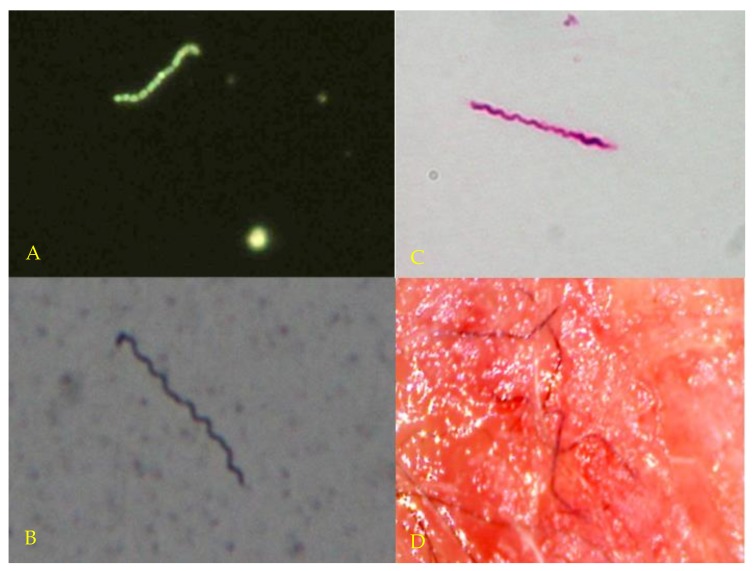
Motile spirochetes identified histopathologically as were detected in culture specimens, and these spirochetes were genetically identified as by three distinct polymerase chain reaction (PCR)-based approaches. Spirochetes identified as were cultured from the blood of seven subjects, from the genital secretions of ten subjects, and from a skin lesion of one subject. Cultures from control subjects without Lyme disease were negative for using these methods.
Using multiple corroborative detection methods, we showed that patients with persistent Lyme disease symptoms may have ongoing spirochetal infection despite antibiotic treatment, similar to findings in non-human primates. The optimal treatment for persistent infection remains to be determined.
莱姆病是一种由蜱传播的疾病,在医疗服务提供者和研究人员中引发了争议。争论的关键话题之一是,在接受了推荐剂量抗生素治疗但仍有症状的患者中,是否存在莱姆螺旋体的持续感染。最近在非人灵长类动物中已证实,尽管进行了抗生素治疗,但仍存在螺旋体持续感染。我们提供了证据,证明患有持续性莱姆病症状的患者尽管接受了抗生素治疗,但仍存在感染。
在这项初步研究中,对一组随机选择的12名患有持续性莱姆病症状且已接受或正在接受抗生素治疗的患者的体液和组织进行培养。还对一组10名无莱姆病的对照受试者进行了培养。这些培养物在四个独立实验室中以盲法进行了针对该生物体的显微镜、组织病理学和分子检测以进行确证。
在培养标本中检测到组织病理学鉴定为的活动螺旋体,并且通过三种不同的基于聚合酶链反应(PCR)的方法将这些螺旋体进行基因鉴定为。从7名受试者的血液、10名受试者的生殖器分泌物以及1名受试者的皮肤病变中培养出鉴定为的螺旋体。使用这些方法,无莱姆病的对照受试者的培养物检测为阴性。
使用多种确证检测方法,我们表明,患有持续性莱姆病症状的患者尽管接受了抗生素治疗,但可能仍存在螺旋体持续感染,这与在非人灵长类动物中的发现相似。持续性感染的最佳治疗方法仍有待确定。