Mathias S D, Berry P, De Vries J, Pascoe K, Colwell H H, Chang D J, Askanase A D
Health Outcomes Solutions, PO Box 2343, Winter Park, FL 32790 USA.
2GlaxoSmithKline, Philadelphia, PA USA.
J Patient Rep Outcomes. 2017;2(1):11. doi: 10.1186/s41687-018-0028-7. Epub 2018 Feb 22.
Comprehensive assessment of systemic lupus erythematosus (SLE) and its treatment requires patient-reported outcome (PRO) measures to capture impacts and fluctuating symptoms. The objective of this study was to develop PROs, in accordance with the Food and Drug Administration (FDA) PRO Guidance, to assess fluctuations in SLE symptoms and its impact.
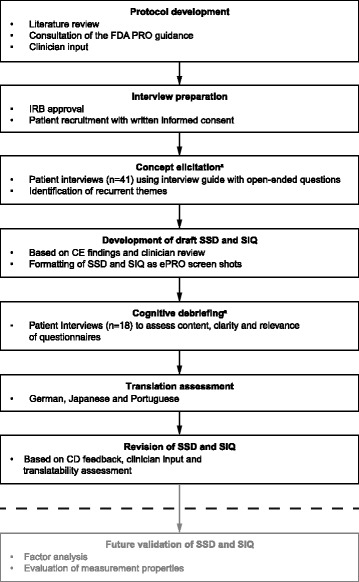
Following independent review board approval, six US rheumatology practices recruited patients with SLE to participate in concept elicitation (CE) interviews, in order to identify important SLE symptoms and their impacts. The SLE Symptom Severity Diary (SSD) and SLE Impact Questionnaire (SIQ) were drafted based on CE interview results and clinician input. The PROs were revised based on patient feedback from cognitive debriefing (CD) interviews, clinician feedback, and a translatability assessment.
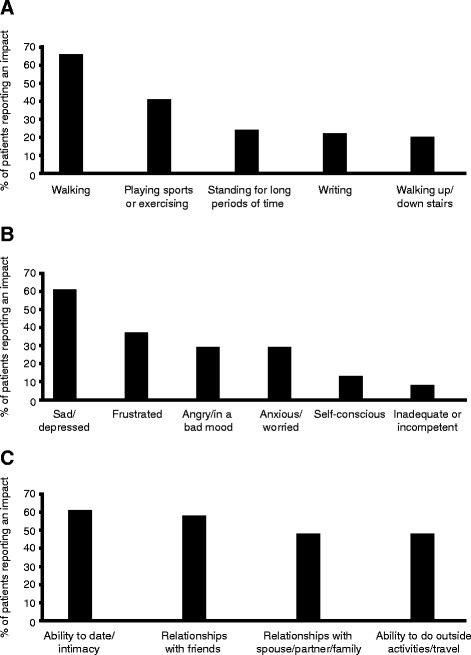
Forty-one patients completed CE interviews. Commonly-reported symptoms included fatigue (98%), joint pain (93%), and rash (88%). The most frequently reported impact was difficulty with chores/housework (61%). Eighteen patients completed CD interviews. The PROs were considered comprehensive, clear, and relevant.The SSD contains 17 items assessing energy/vitality, joint and muscle pain/stiffness/swelling, flu-like symptoms, cognition, numbness/tingling, skin symptoms and hair loss using an 11-point numeric response scale and a 24-h recall period (with the exception of hair loss). It also evaluates steroid status and dose. The SIQ contains 50 items, uses a 5-point Likert scale and a 7-day recall period, to assess disease impacts including patients' ability to make plans, work, and physical/social/emotional functioning.
The SSD and SIQ are comprehensive SLE-specific PROs developed in accordance with the FDA PRO Guidance. Following assessment of their measurement properties, they may be useful in clinical studies and clinical practice to measure fluctuations in, and the impact of, symptoms in patients with SLE.
对系统性红斑狼疮(SLE)及其治疗进行全面评估需要患者报告结局(PRO)指标来反映其影响和症状波动情况。本研究的目的是根据美国食品药品监督管理局(FDA)的PRO指南制定PRO指标,以评估SLE症状的波动及其影响。
在独立审查委员会批准后,美国的六家风湿病诊疗机构招募了SLE患者参与概念激发(CE)访谈,以确定重要的SLE症状及其影响。基于CE访谈结果和临床医生的意见,起草了SLE症状严重程度日记(SSD)和SLE影响问卷(SIQ)。根据认知反馈(CD)访谈中的患者反馈、临床医生反馈和可翻译性评估对PRO指标进行了修订。
41名患者完成了CE访谈。常见症状包括疲劳(98%)、关节疼痛(93%)和皮疹(88%)。最常报告的影响是家务/杂事困难(61%)。18名患者完成了CD访谈。这些PRO指标被认为是全面、清晰且相关的。SSD包含17个项目,使用11分数字反应量表和24小时回忆期(脱发除外)评估精力/活力、关节和肌肉疼痛/僵硬/肿胀、流感样症状、认知、麻木/刺痛感、皮肤症状和脱发情况。它还评估类固醇状态和剂量。SIQ包含50个项目,使用5点李克特量表和7天回忆期,评估疾病影响,包括患者制定计划、工作以及身体/社交/情感功能的能力。
SSD和SIQ是根据FDA的PRO指南制定的全面的SLE特异性PRO指标。在评估其测量特性后,它们可能有助于临床研究和临床实践中测量SLE患者症状的波动及其影响。