Chair for Network Dynamics, Center for Advancing Electronics Dresden (cfaed) and Institute for Theoretical Physics, Technical University of Dresden, 01062, Dresden, Germany.
Network Dynamics, Max Planck Institute for Dynamics and Self-Organization (MPIDS), 37077, Göttingen, Germany.
Nat Commun. 2018 May 17;9(1):1975. doi: 10.1038/s41467-018-04287-5.
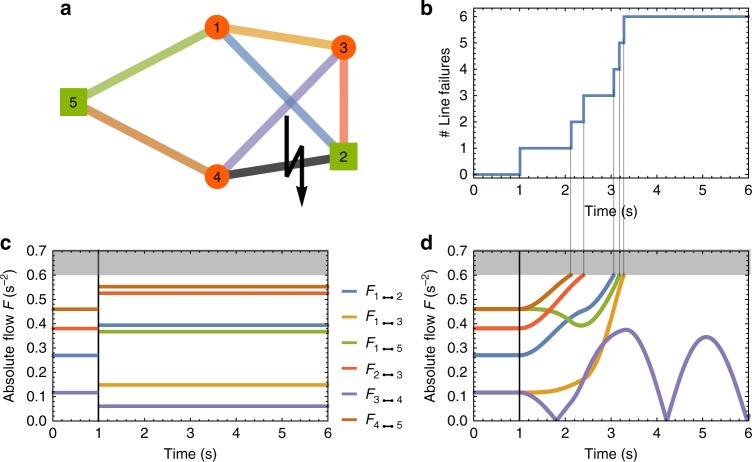
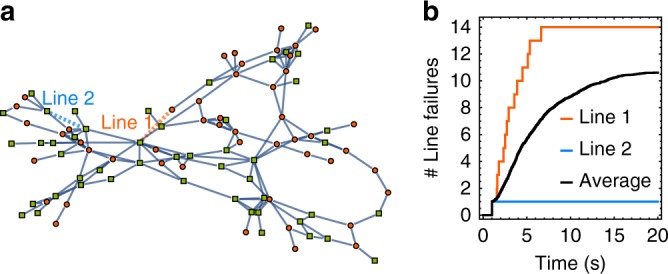
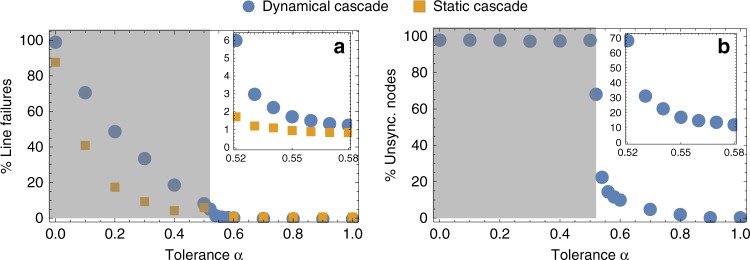
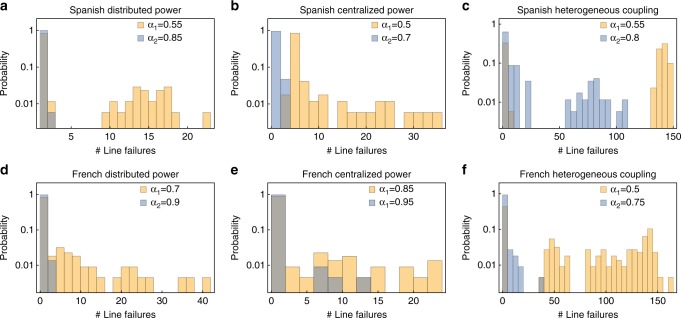
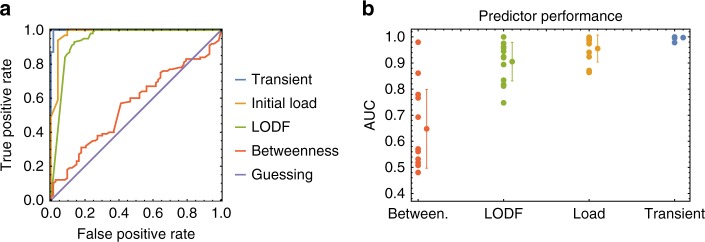
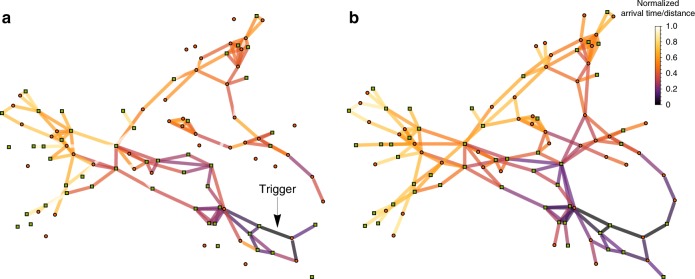
Reliable functioning of infrastructure networks is essential for our modern society. Cascading failures are the cause of most large-scale network outages. Although cascading failures often exhibit dynamical transients, the modeling of cascades has so far mainly focused on the analysis of sequences of steady states. In this article, we focus on electrical transmission networks and introduce a framework that takes into account both the event-based nature of cascades and the essentials of the network dynamics. We find that transients of the order of seconds in the flows of a power grid play a crucial role in the emergence of collective behaviors. We finally propose a forecasting method to identify critical lines and components in advance or during operation. Overall, our work highlights the relevance of dynamically induced failures on the synchronization dynamics of national power grids of different European countries and provides methods to predict and model cascading failures.
基础设施网络的可靠运行对我们的现代社会至关重要。级联故障是大多数大规模网络中断的原因。尽管级联故障通常表现出动态瞬变,但迄今为止,级联的建模主要集中在对稳定状态序列的分析上。在本文中,我们专注于电力传输网络,并引入了一个框架,该框架考虑了级联的基于事件的性质和网络动态的基本原理。我们发现,电网流量中的几秒钟级别的瞬变在集体行为的出现中起着至关重要的作用。最后,我们提出了一种预测方法,可以在运行前或运行期间提前识别关键线路和组件。总的来说,我们的工作强调了动态诱导故障对不同欧洲国家国家电网同步动力学的相关性,并提供了预测和建模级联故障的方法。