State Key Laboratory of Grassland Agro-ecosystems, College of Pastoral Agriculture Science and Technology, Lanzhou University, Lanzhou 730000, China.
Int J Mol Sci. 2018 May 31;19(6):1634. doi: 10.3390/ijms19061634.
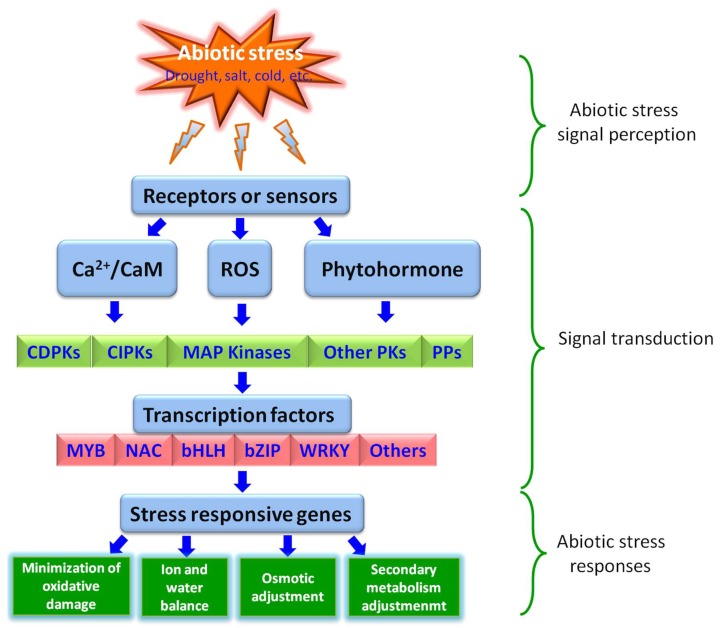
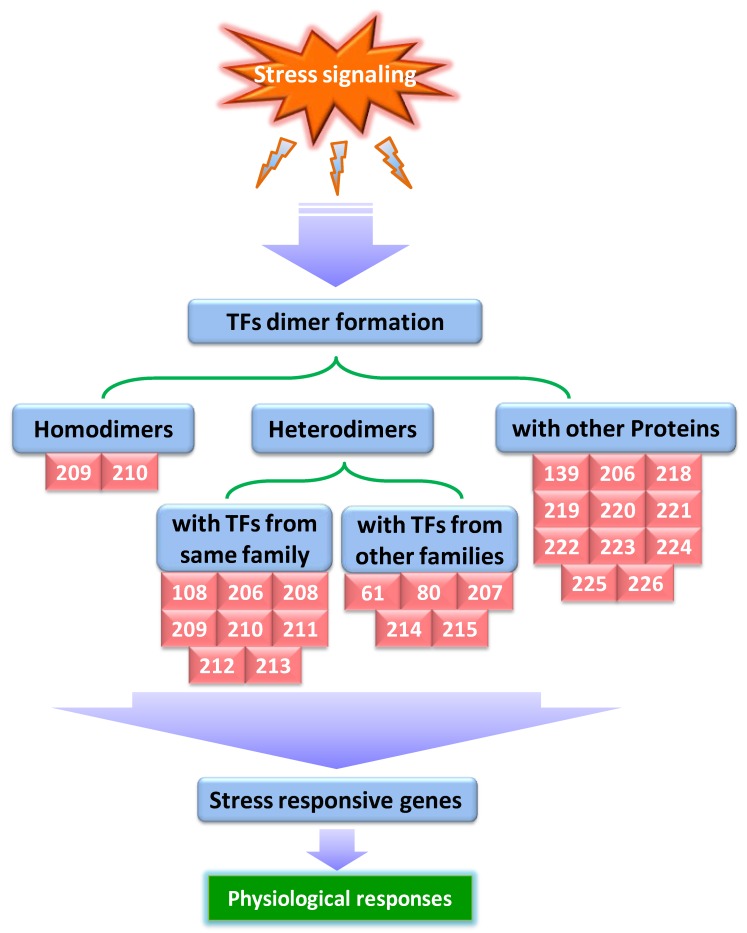
Owing to diverse abiotic stresses and global climate deterioration, the agricultural production worldwide is suffering serious losses. Breeding stress-resilient crops with higher quality and yield against multiple environmental stresses via application of transgenic technologies is currently the most promising approach. Deciphering molecular principles and mining stress-associate genes that govern plant responses against abiotic stresses is one of the prerequisites to develop stress-resistant crop varieties. As molecular switches in controlling stress-responsive genes expression, transcription factors (TFs) play crucial roles in regulating various abiotic stress responses. Hence, functional analysis of TFs and their interaction partners during abiotic stresses is crucial to perceive their role in diverse signaling cascades that many researchers have continued to undertake. Here, we review current developments in understanding TFs, with particular emphasis on their functions in orchestrating plant abiotic stress responses. Further, we discuss novel molecular mechanisms of their action under abiotic stress conditions. This will provide valuable information for understanding regulatory mechanisms to engineer stress-tolerant crops.
由于各种非生物胁迫和全球气候恶化,世界农业生产正遭受严重损失。通过应用转基因技术培育具有更高品质和产量的抗多种环境胁迫的作物,是目前最有前途的方法。解析控制植物对非生物胁迫反应的分子原理和挖掘与胁迫相关的基因,是开发抗胁迫作物品种的前提条件之一。作为控制应激响应基因表达的分子开关,转录因子(TFs)在调节各种非生物应激反应中起着至关重要的作用。因此,在非生物胁迫下分析 TFs 及其互作蛋白的功能对于理解它们在许多研究人员一直在进行的各种信号级联中的作用至关重要。在这里,我们回顾了目前对 TFs 的理解进展,特别强调了它们在协调植物非生物胁迫反应中的功能。此外,我们还讨论了它们在非生物胁迫条件下作用的新分子机制。这将为理解调控机制以工程化培育抗胁迫作物提供有价值的信息。