School of Biotechnology and Biomolecular Sciences, The University of New South Wales, Sydney, NSW 2052, Australia.
Birling Avian Laboratories, Bringelly, NSW 2556, Australia.
Gut Pathog. 2014 Jun 4;6:18. doi: 10.1186/1757-4749-6-18. eCollection 2014.
Poultry represent an important source of foodborne enteropathogens, in particular thermophilic Campylobacter species. Many of these organisms colonize the intestinal tract of broiler chickens as harmless commensals, and therefore, often remain undetected prior to slaughter. The exact reasons for the lack of clinical disease are unknown, but analysis of the gastrointestinal microbiota of broiler chickens may improve our understanding of the microbial interactions with the host.
In this study, the fecal microbiota of 31 market-age (56-day old) broiler chickens, from two different farms, was analyzed using high throughput sequencing. The samples were then screened for two emerging human pathogens, Campylobacter concisus and Helicobacter pullorum, using species-specific PCR.
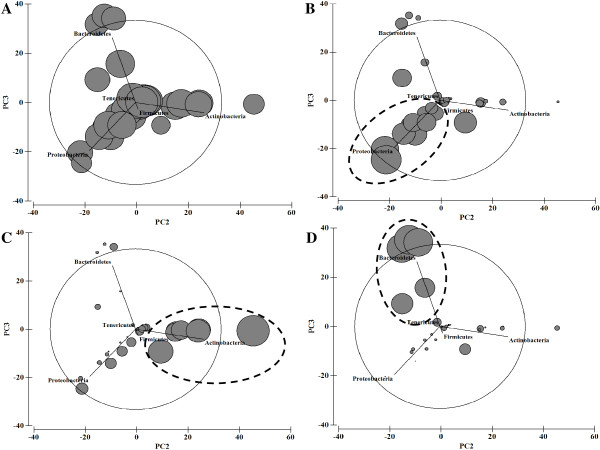
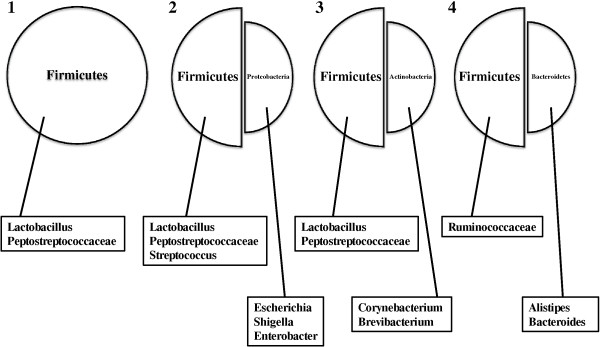
The gastrointestinal microbiota of chickens was classified into four potential enterotypes, similar to that of humans, where three enterotypes have been identified. The results indicated that variations between farms may have contributed to differences in the microbiota, though each of the four enterotypes were found in both farms suggesting that these groupings did not occur by chance. In addition to the identification of Campylobacter jejuni subspecies doylei and the emerging species, C. concisus, C. upsaliensis and H. pullorum, several differences in the prevalence of human pathogens within these enterotypes were observed. Further analysis revealed microbial taxa with the potential to increase the likelihood of colonization by a number of these pathogens, including C. jejuni.
Depletion of these taxa and the addition of taxa that compete with these pathogens, may form the basis of competitive exclusion strategies to eliminate them from the gastrointestinal tract of chickens.
家禽是食源性病原体的重要来源,尤其是嗜热性弯曲杆菌属。许多这些生物体作为无害的共生菌定植于肉鸡的肠道,因此,在屠宰前通常未被检测到。缺乏临床疾病的确切原因尚不清楚,但分析肉鸡的胃肠道微生物群可能会增进我们对微生物与宿主相互作用的理解。
在这项研究中,使用高通量测序分析了来自两个不同农场的 31 只市场龄(56 日龄)肉鸡的粪便微生物群。然后使用种特异性 PCR 对两种新兴的人类病原体弯曲杆菌属 consicus 和 pullorum 进行筛选。
鸡的胃肠道微生物群可分为四个潜在的肠型,类似于人类,其中已确定了三种肠型。结果表明,农场之间的差异可能导致了微生物群的差异,尽管在两个农场都发现了这四种肠型,这表明这些分组并非偶然发生。除了鉴定出弯曲杆菌属 doylei 亚种和新兴物种 C. concisus、C. upsaliensis 和 H. pullorum 外,还观察到这些肠型中人类病原体的流行率存在差异。进一步的分析揭示了具有增加这些病原体定植可能性的微生物类群,包括 C. jejuni。
这些类群的消耗和与这些病原体竞争的类群的添加可能构成从鸡的胃肠道中消除它们的竞争排除策略的基础。