Population Studies Division, Environmental Health Science and Research Bureau, Healthy Environments and Consumer Safety Branch, Health Canada, Ottawa, ON, Canada.
J Expo Sci Environ Epidemiol. 2018 Sep;28(5):481-493. doi: 10.1038/s41370-018-0043-z. Epub 2018 Jun 8.
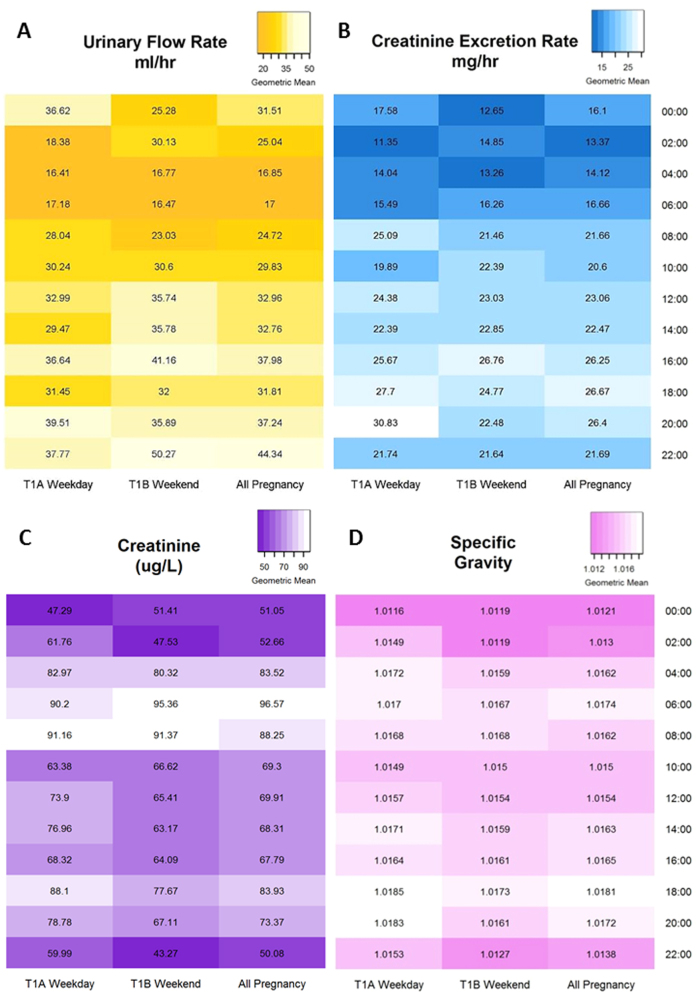
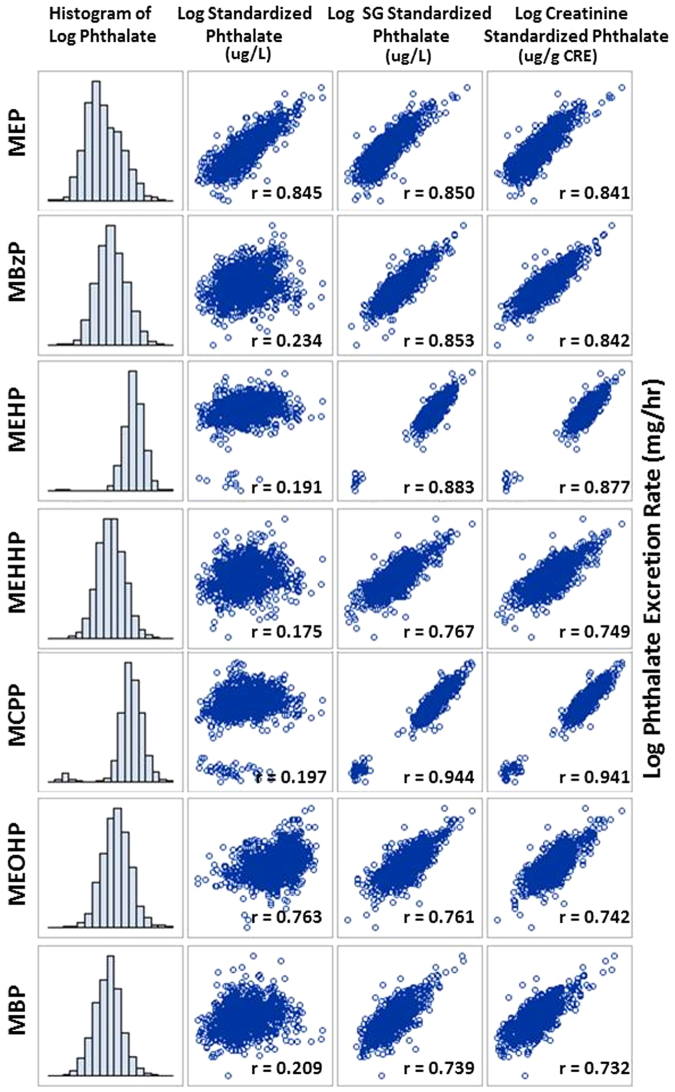
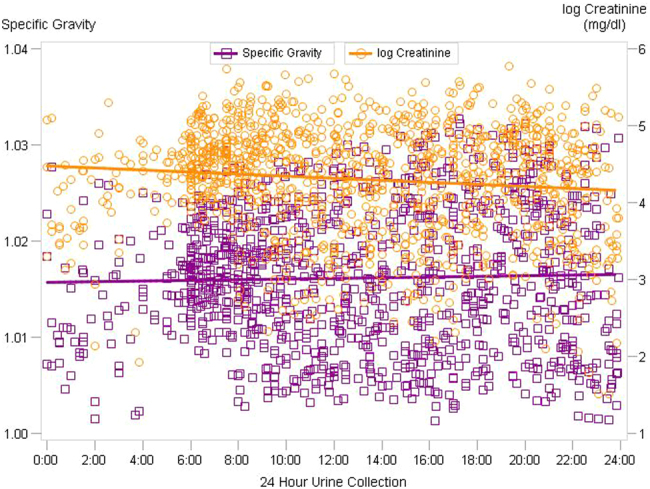
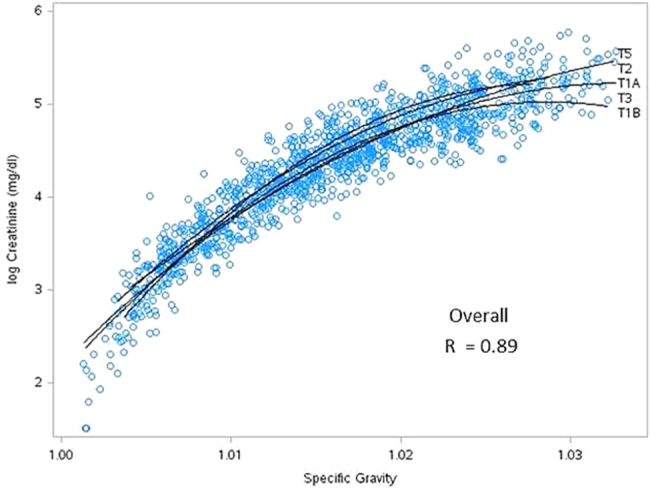
One way of assessing a population's exposure to environmental chemicals is by measuring urinary biomarker concentrations, which can vary depending on the hydration status of the individual. The physiological changes that occur during pregnancy can impact the hydration adjustment approaches, such as calculating the individual's urinary flow rate (UFR), or adjusting concentrations using specific gravity (SG) or creatinine. A total of 1260 serial spot urine samples were collected from 80 women, averaging 32.4 years of age, throughout and shortly after pregnancy. The relationship between each approach was examined and time of day and across pregnancy differences were tested using linear mixed models. The correlation between the calculated excretion rate and each of the adjustment techniques was examined on a selection of seven phthalate metabolites. Based on the linear mixed model results, we found that UFR and creatinine excretion rates differed systematically across the population, with respect to body mass index (BMI) and time. SG differed with respect to BMI, but there were no systematic time trends. SG had the highest within-person reproducibility, according to the intraclass correlation coefficient (ICC). The excretion rate of each of the phthalates was most strongly correlated with the SG-standardized concentration. This analysis showed that SG showed a slightly better within-person reproducibility and the least amount of systematic variation when compared to creatinine adjustment. Therefore, SG correction appears to be a favorable approach for correcting for the hydration status of the pregnant women from this cohort.
评估人群接触环境化学物质的一种方法是测量尿液生物标志物浓度,其浓度可能因个体的水合状态而异。妊娠期间发生的生理变化会影响水合调整方法,例如计算个体的尿流量(UFR),或使用比重(SG)或肌酐调整浓度。从 80 名女性中收集了 1260 份连续的随机尿液样本,这些女性的平均年龄为 32.4 岁,贯穿整个孕期和产后不久。使用线性混合模型检验了每种方法之间的关系,并检验了不同时间点和整个孕期的差异。在选择的七种邻苯二甲酸代谢物上,研究了计算出的排泄率与每种调整技术之间的相关性。根据线性混合模型的结果,我们发现 UFR 和肌酐排泄率在人群中因体重指数(BMI)和时间而异。SG 与 BMI 有关,但没有系统的时间趋势。根据组内相关系数(ICC),SG 的个体内再现性最高。每种邻苯二甲酸的排泄率与 SG 标准化浓度的相关性最强。该分析表明,与肌酐调整相比,SG 显示出稍好的个体内再现性和最小的系统变异。因此,SG 校正似乎是该队列中校正孕妇水合状态的一种有利方法。