John Innes Centre, Department of Metabolic Biology, Norwich Research Park, Norwich NR47UH, United Kingdom.
Norwegian University of Life Sciences, Faculty of Biosciences, Department of Plant Sciences, Fougnerbakken 3, N-1432 Ås, Norway.
Metab Eng. 2018 Jul;48:218-232. doi: 10.1016/j.ymben.2018.06.004. Epub 2018 Jun 8.
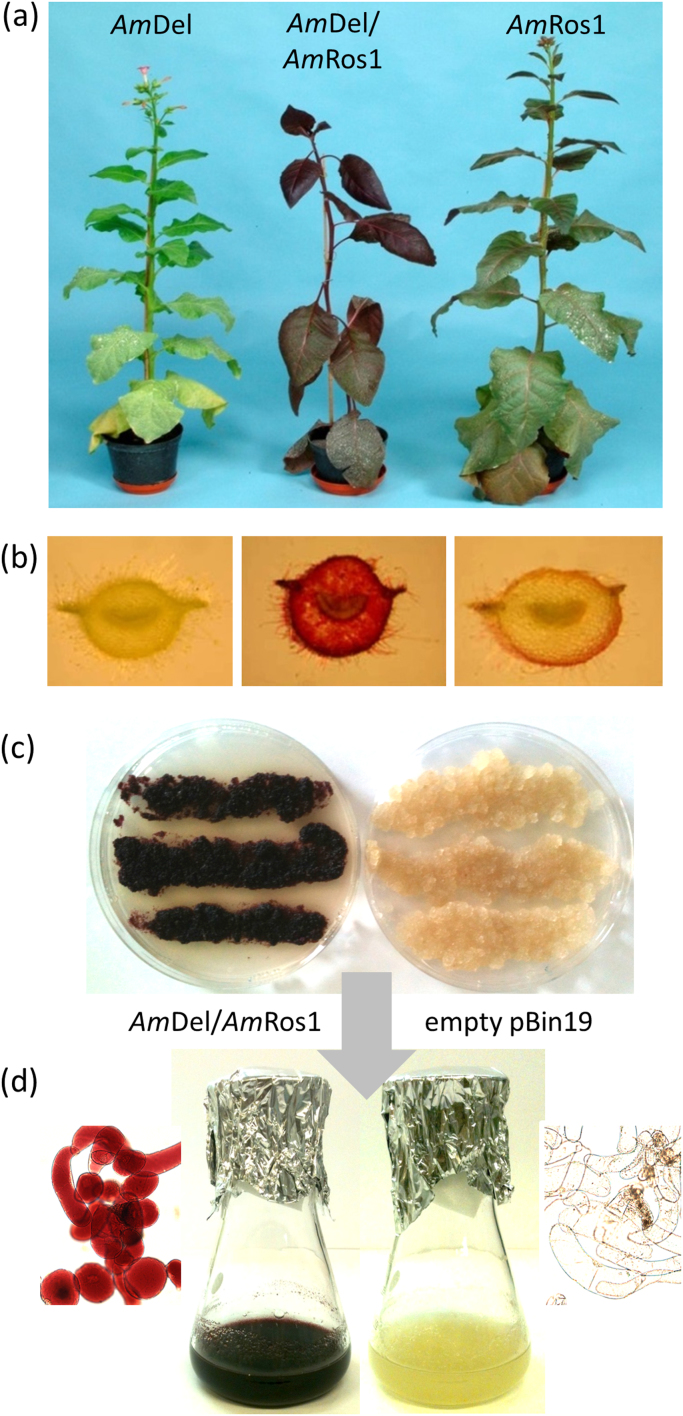
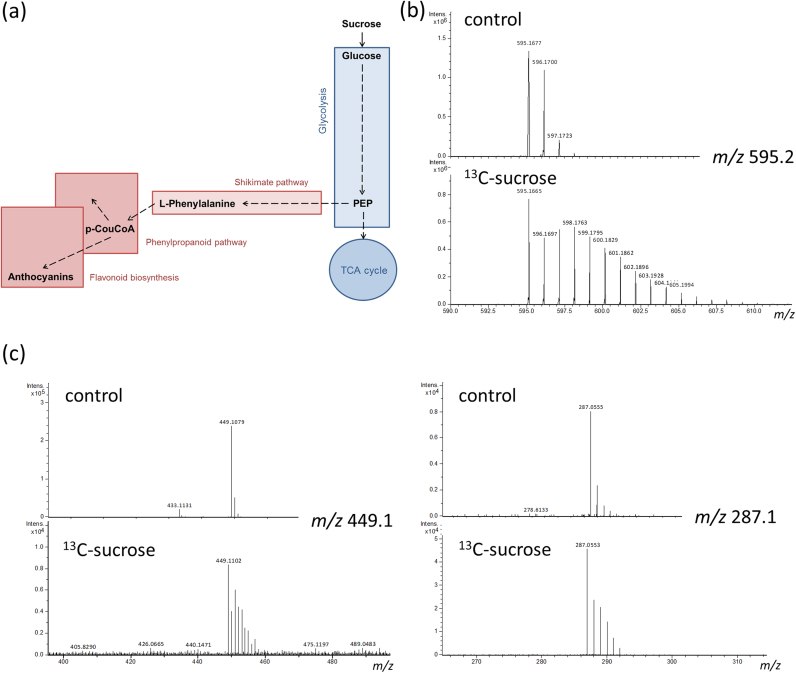
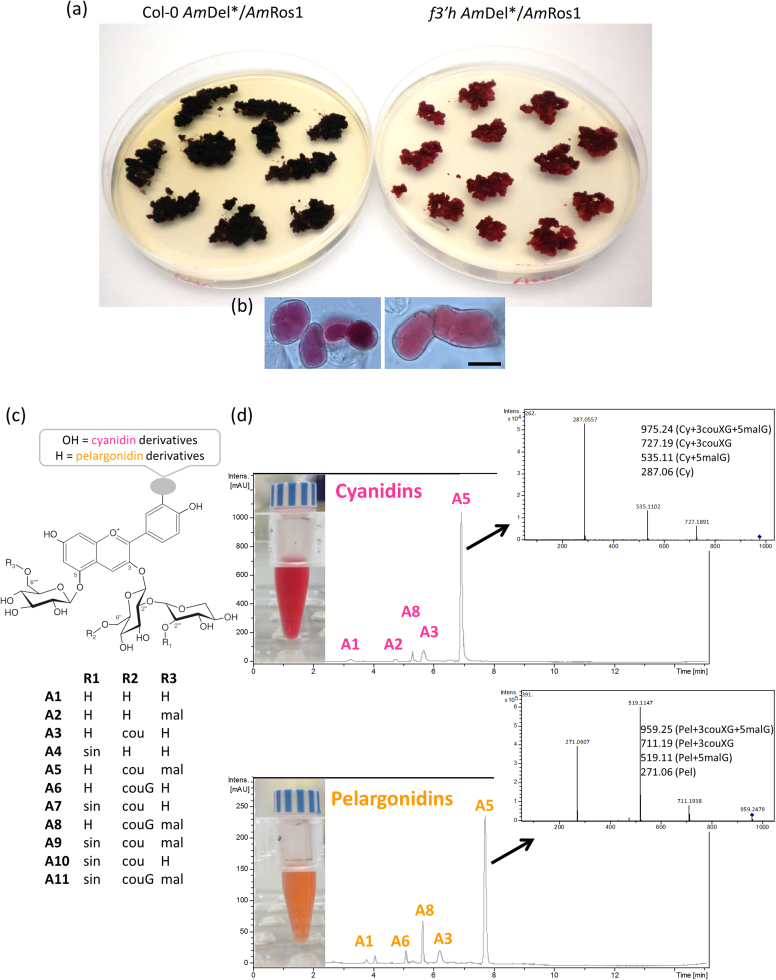
Anthocyanins are widely distributed, glycosylated, water-soluble plant pigments, which give many fruits and flowers their red, purple or blue colouration. Their beneficial effects in a dietary context have encouraged increasing use of anthocyanins as natural colourants in the food and cosmetic industries. However, the limited availability and diversity of anthocyanins commercially have initiated searches for alternative sources of these natural colourants. In plants, high-level production of secondary metabolites, such as anthocyanins, can be achieved by engineering of regulatory genes as well as genes encoding biosynthetic enzymes. We have used tobacco lines which constitutively produce high levels of cyanidin 3-O-rutinoside, delphinidin 3-O-rutinoside or a novel anthocyanin, acylated cyanidin 3-O-(coumaroyl) rutinoside to generate cell suspension cultures. The cell lines are stable in their production rates and superior to conventional plant cell cultures. Scale-up of anthocyanin production in small scale fermenters has been demonstrated. The cell cultures have also proven to be a suitable system for production of C-labelled anthocyanins. Our method for anthocyanin production is transferable to other plant species, such as Arabidopsis thaliana, demonstrating the potential of this approach for making a wide range of highly-decorated anthocyanins. The tobacco cell cultures represent a customisable and sustainable alternative to conventional anthocyanin production platforms and have considerable potential for use in industrial and medical applications of anthocyanins.
花色苷是广泛分布的、糖基化的、水溶性的植物色素,赋予许多水果和花卉以红色、紫色或蓝色。花色苷在饮食中的有益作用促使人们越来越多地将其作为天然食用色素应用于食品和化妆品行业。然而,由于商业上花色苷的可用性和多样性有限,人们开始寻找这些天然食用色素的替代来源。在植物中,可以通过调控基因以及生物合成酶基因的工程化来实现次生代谢物(如花色苷)的高水平生产。我们使用了烟草品系,这些品系持续产生高水平的矢车菊素 3-O-芸香糖苷、飞燕草素 3-O-芸香糖苷或一种新型花色苷——酰化矢车菊素 3-O-(咖啡酰基)芸香糖苷,以生成细胞悬浮培养物。这些细胞系在其产率方面是稳定的,优于常规植物细胞培养物。已经证明在小型发酵罐中进行了花色苷的放大生产。这些细胞培养物也被证明是生产 C 标记花色苷的合适系统。我们的花色苷生产方法可转移到其他植物物种,如拟南芥,证明了这种方法在生产各种高度修饰的花色苷方面的潜力。烟草细胞培养物代表了一种可定制的、可持续的替代传统花色苷生产平台的方法,并且在花色苷的工业和医学应用方面具有很大的潜力。