Laboratory of Virology, Department of Clinical Analyses, Toxicology and Food Sciences, Faculty of Pharmaceutical Sciences of Ribeirao Preto, University of Sao Paulo, Ribeirao Preto, Sao Paulo, Brazil.
Virology Research Center, Ribeirao Preto Medical School, University of São Paulo, Ribeirao Preto, São Paulo, Brazil.
PLoS One. 2018 Jun 13;13(6):e0199071. doi: 10.1371/journal.pone.0199071. eCollection 2018.
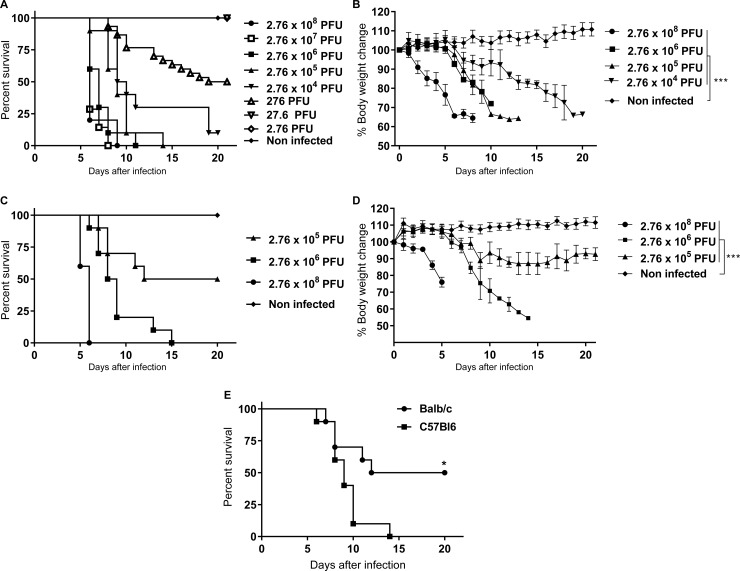
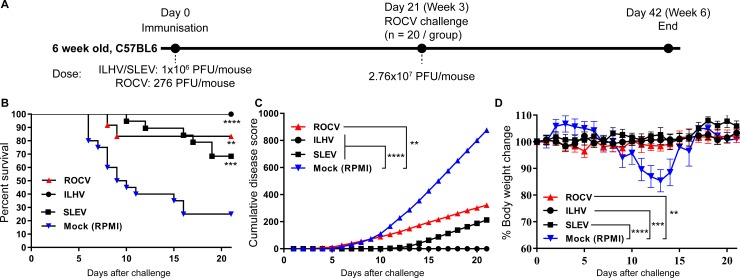
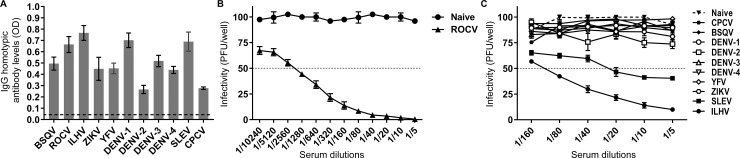
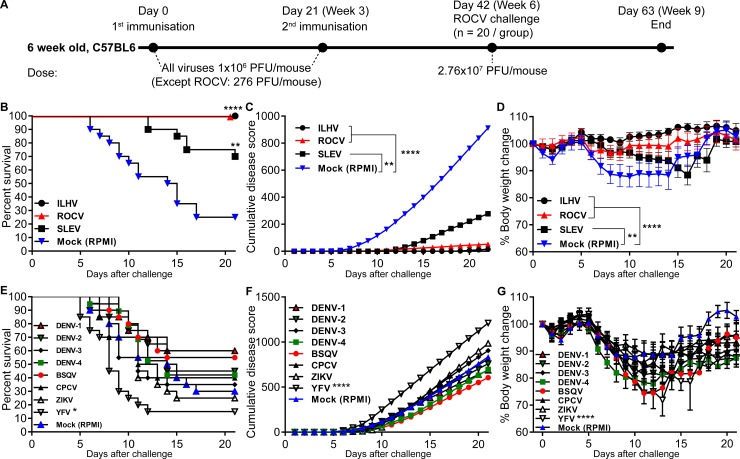
Rocio virus (ROCV) was the causative agent of an unprecedented outbreak of encephalitis during the 1970s in the Vale do Ribeira, Sao Paulo State, in the Southeast region of Brazil. Surprisingly, no further cases of ROCV infection were identified after this outbreak; however, serological surveys have suggested the circulation of ROCV among humans and animals in different regions of Brazil. Cross-protective immunity among flaviviruses is well documented; consequently, immunity induced by infections with other flaviviruses endemic to Brazil could potentially be responsible for the lack of ROCV infections. Herein, we evaluated the cross-protection mediated by other flaviviruses against ROCV infection using an experimental C57BL/6 mouse model. Cross-protection against ROCV infection was observed when animals had prior exposure to Ilheus virus or Saint Louis encephalitis virus, suggesting that cross-reactive anti-flavivirus antibodies may limit ROCV disease outbreaks.
罗西病毒(ROCV)是巴西东南部圣保罗州里贝拉谷在 20 世纪 70 年代爆发脑炎的病原体。令人惊讶的是,此后再没有发现 ROCV 感染病例;然而,血清学调查表明 ROCV 在巴西不同地区的人类和动物中传播。黄病毒之间存在交叉保护免疫已得到充分证实;因此,感染巴西流行的其他黄病毒所诱导的免疫可能是导致缺乏 ROCV 感染的原因。在此,我们使用实验性 C57BL/6 小鼠模型评估了其他黄病毒对 ROCV 感染的交叉保护作用。当动物先前暴露于伊莱乌斯病毒或圣路易斯脑炎病毒时,观察到对 ROCV 感染的交叉保护作用,表明交叉反应性抗黄病毒抗体可能限制 ROCV 疾病爆发。