Division of Immunology, DMIP Microbiology, Immunology, and Parasitology, Federal University of São Paulo, São Paulo, Brazil.
Division of Epidemiology, Faculdade de Saúde Pública, Universidade de São Paulo, São Paulo, Brazil.
Front Immunol. 2018 May 24;9:1122. doi: 10.3389/fimmu.2018.01122. eCollection 2018.
The increased number of individuals older than 80 years, centenarians, and supercentenarians is not a synonym for healthy aging, since severe infections, hospitalization, and disability are frequently observed. In this context, a possible strategy is to preserve the main characteristics/functions of the immune system with the aim to cause less damage to the organism during the aging process. Vitamin D acts on bone marrow, brain, breast, malignant cells, and immune system and has been recommended as a supplement. We aimed to evaluate whether immune parameters and vitamin D serum levels are correlated.
We evaluated some features of the immune system using the peripheral blood of individuals older than 80 years ( = 12) compared to young subjects ( = 10). In addition, we correlated these findings with vitamin D serum levels.
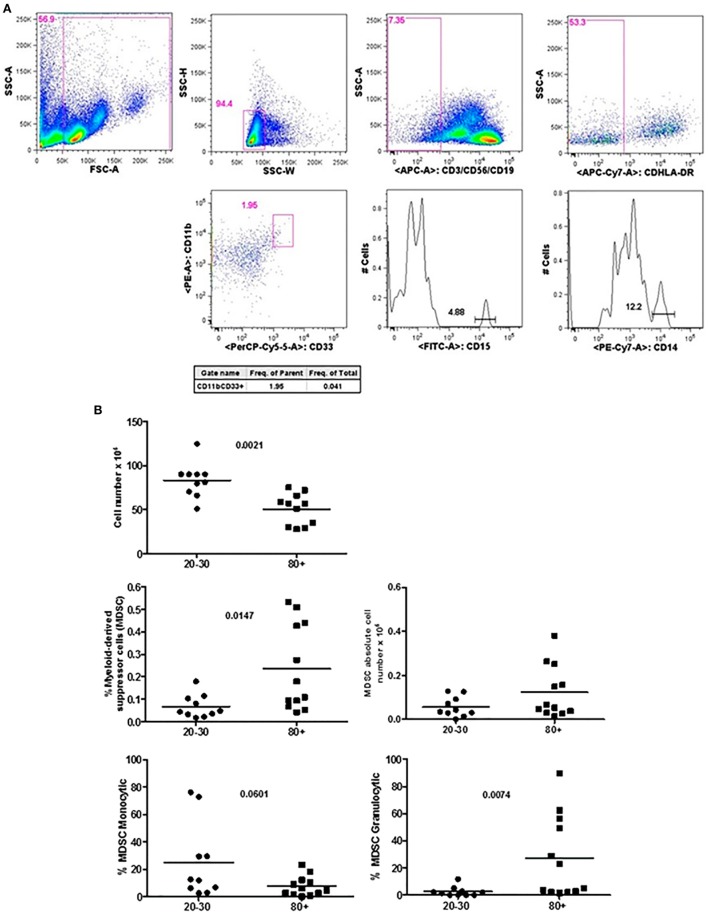
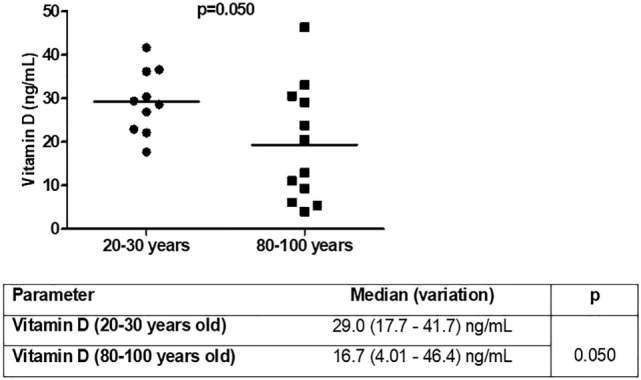
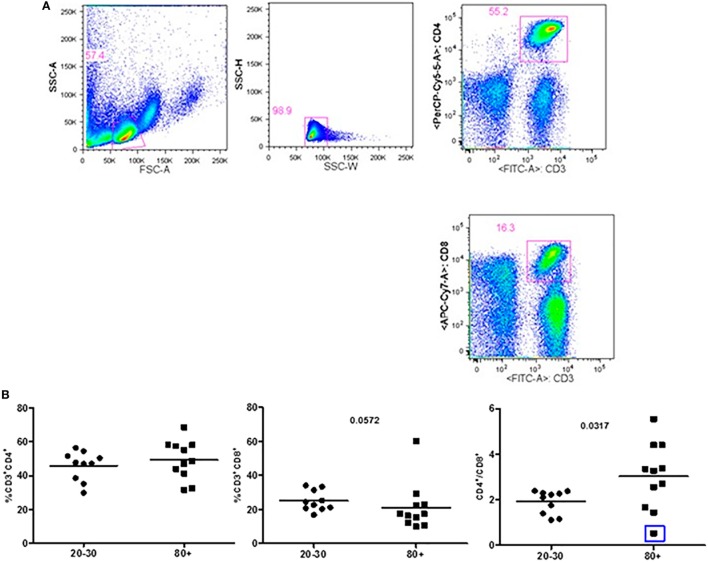
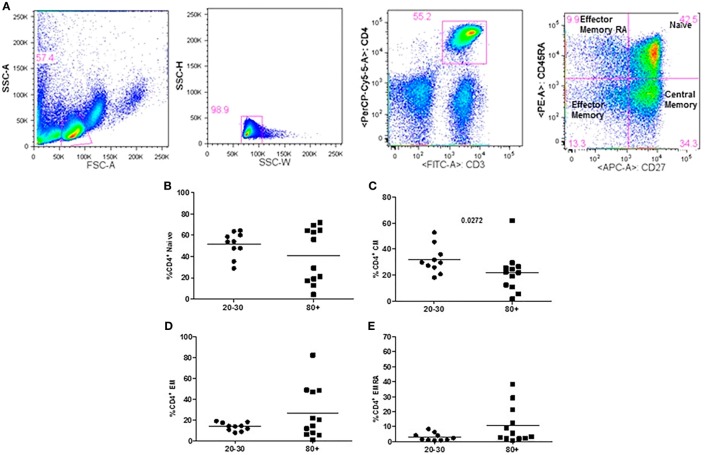
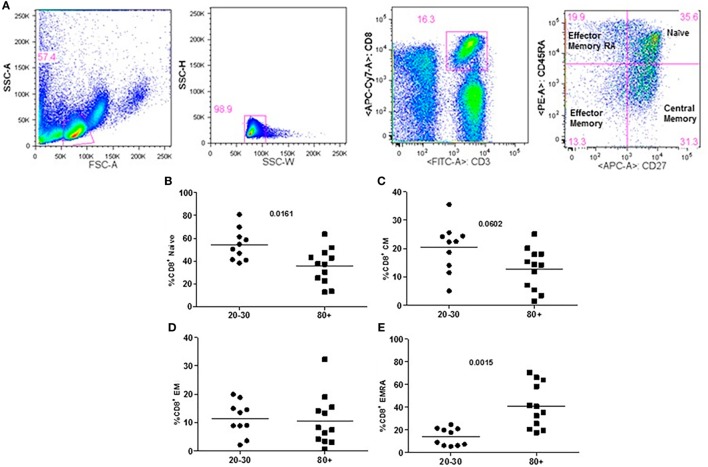
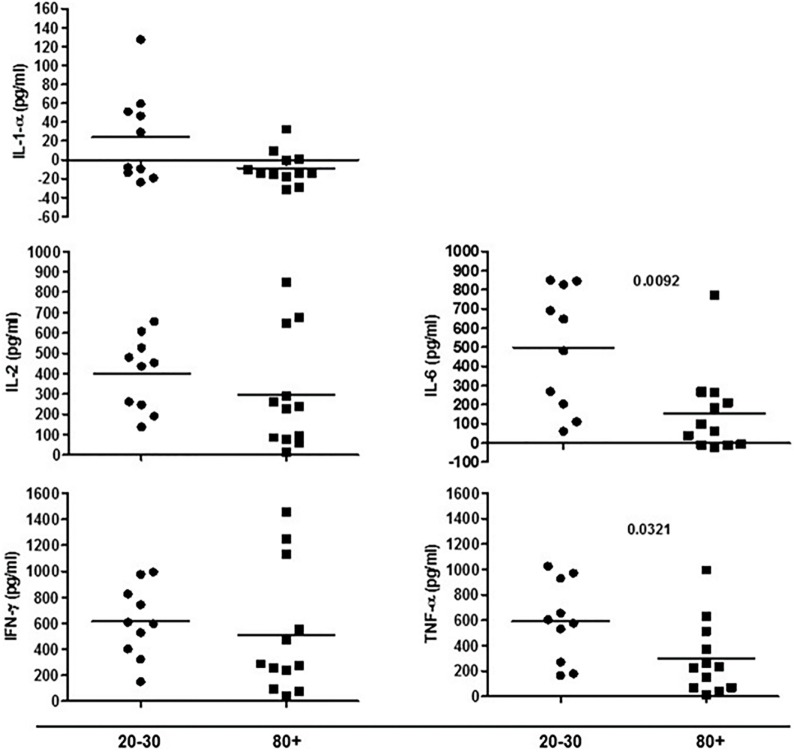
Old individuals presented metabolic parameters of healthy aging and maintained preserved some features of immunity such as CD4/CD8 ratio, and low production of pro-inflammatory cytokines after stimulus. On the other hand, we observed increase in the frequency of myeloid-derived suppressor cells, reduction in circulating leukocytes, in the percentage of total CD8+, and in CD8+ Naïve T cells, in addition to increase in the percentage of CD8+ effector memory re-expressing CD45RA (EMRA) T cells. We found seropositivity for CMV in 97.7%, which was correlated with the decrease of CD8+ Naïve T cells and increase in CD8+ EMRA T cells. Vitamin D levels were insufficient in 50% of old individuals and correlated positively with total CD8+ T cells and negatively with CD8+ EMRA T cells.
In the studied population, longevity was correlated to maintenance of some immune parameters. Considering the limitations of the study as size of the sample and lack of functional assays, it was found that vitamin D in old individuals was correlated to some features of the immune system, mainly in the CD8 compartment.
80 岁以上的个体、百岁老人和超级百岁老人数量的增加并不等同于健康老龄化,因为严重感染、住院和残疾经常发生。在这种情况下,一种可能的策略是保留免疫系统的主要特征/功能,以在衰老过程中减少对机体的损害。维生素 D 作用于骨髓、大脑、乳房、恶性细胞和免疫系统,被推荐作为一种补充。我们旨在评估免疫参数和维生素 D 血清水平是否相关。
我们使用 12 名 80 岁以上个体的外周血评估了免疫系统的一些特征,并与年轻个体(n=10)进行了比较。此外,我们还将这些发现与维生素 D 血清水平相关联。
老年个体表现出健康老龄化的代谢参数,并保持了一些免疫特征,如 CD4/CD8 比值,以及刺激后促炎细胞因子的低产生。另一方面,我们观察到髓源性抑制细胞频率增加、循环白细胞减少、总 CD8+百分比降低以及 CD8+幼稚 T 细胞减少,此外 CD8+效应记忆再表达 CD45RA(EMRA)T 细胞的百分比增加。我们发现 97.7%的个体 CMV 血清呈阳性,这与 CD8+幼稚 T 细胞减少和 CD8+EMRA T 细胞增加有关。50%的老年个体维生素 D 水平不足,与总 CD8+T 细胞呈正相关,与 CD8+EMRA T 细胞呈负相关。
在所研究的人群中,长寿与某些免疫参数的维持相关。考虑到样本量小和缺乏功能测定的研究局限性,发现老年个体的维生素 D 与免疫系统的某些特征相关,主要与 CD8 细胞群相关。