Department of Structural Biology, Stanford University School of Medicine, Stanford, California 94305-5126, USA; email:
Department of Applied Physics, Stanford University, Stanford, California 94305-4090, USA.
Annu Rev Biochem. 2018 Jun 20;87:421-449. doi: 10.1146/annurev-biochem-060815-014818.
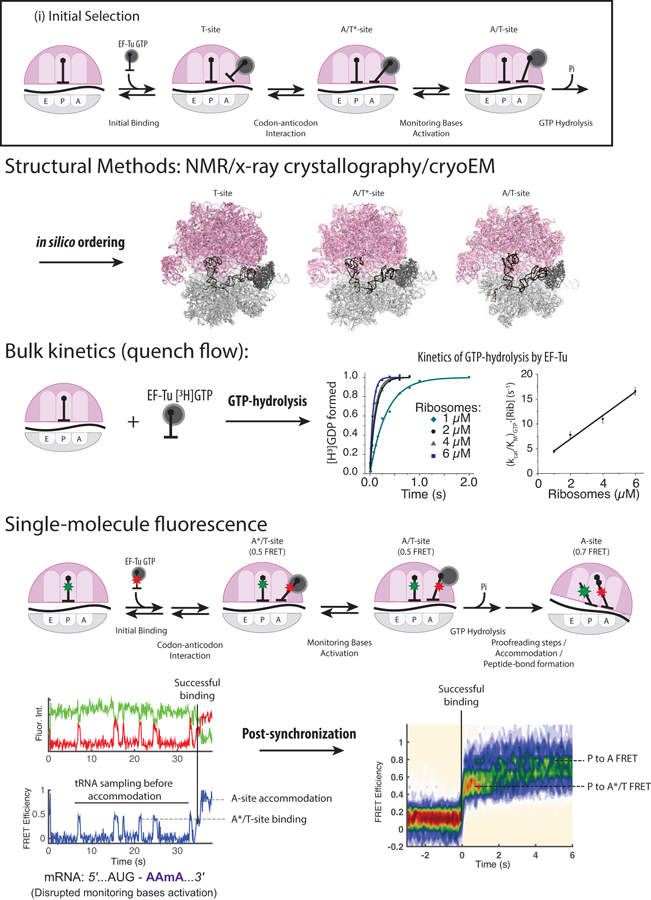
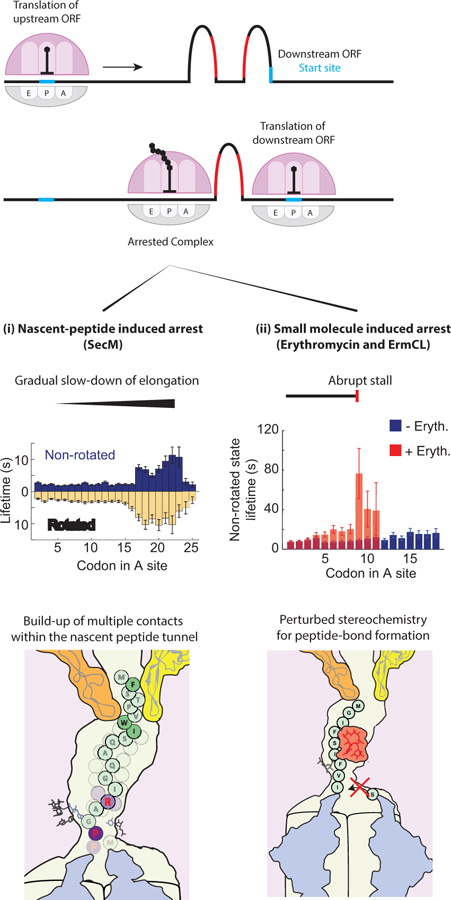
Translation elongation is a highly coordinated, multistep, multifactor process that ensures accurate and efficient addition of amino acids to a growing nascent-peptide chain encoded in the sequence of translated messenger RNA (mRNA). Although translation elongation is heavily regulated by external factors, there is clear evidence that mRNA and nascent-peptide sequences control elongation dynamics, determining both the sequence and structure of synthesized proteins. Advances in methods have driven experiments that revealed the basic mechanisms of elongation as well as the mechanisms of regulation by mRNA and nascent-peptide sequences. In this review, we highlight how mRNA and nascent-peptide elements manipulate the translation machinery to alter the dynamics and pathway of elongation.
翻译延伸是一个高度协调的、多步骤的、多因素的过程,可确保在翻译信使 RNA(mRNA)序列编码的新生肽链上准确且有效地添加氨基酸。尽管翻译延伸受到外部因素的严格调控,但有明确的证据表明,mRNA 和新生肽序列控制延伸动力学,决定合成蛋白质的序列和结构。方法的进步推动了实验的发展,揭示了延伸的基本机制以及 mRNA 和新生肽序列的调节机制。在这篇综述中,我们强调了 mRNA 和新生肽元件如何操纵翻译机制来改变延伸的动力学和途径。