Kurtz Irene S, Schiffman Jessica D
Department of Chemical Engineering, University of Massachusetts Amherst, Amherst, MA 01003-9303, USA.
Materials (Basel). 2018 Jun 22;11(7):1059. doi: 10.3390/ma11071059.
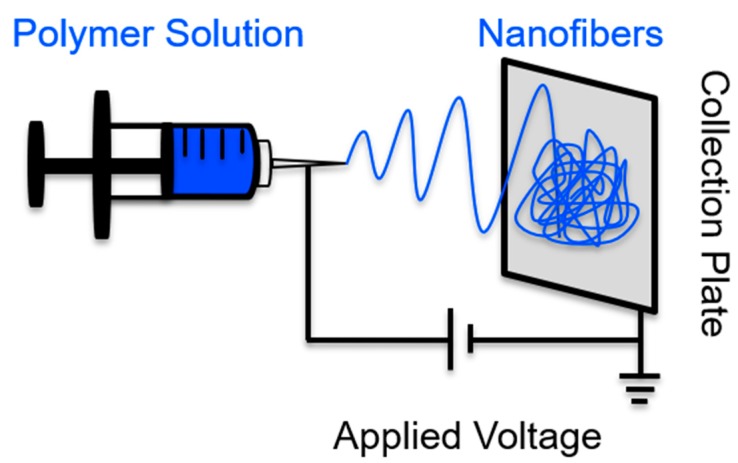
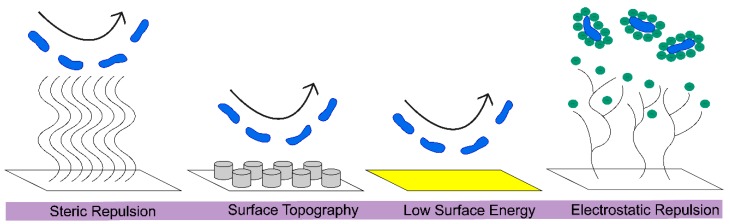
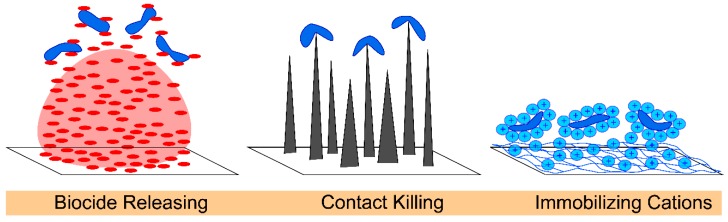
From ship hulls to bandages, biological fouling is a ubiquitous problem that impacts a wide range of industries and requires complex engineered solutions. Eliciting materials to have antibacterial or antifouling properties describes two main approaches to delay biofouling by killing or repelling bacteria, respectively. In this review article, we discuss how electrospun nanofiber mats are blank canvases that can be tailored to have controlled interactions with biologics, which would improve the design of intelligent conformal coatings or freestanding meshes that deliver targeted antimicrobials or cause bacteria to slip off surfaces. Firstly, we will briefly discuss the established and emerging technologies for addressing biofouling through antibacterial and antifouling surface engineering, and then highlight the recent advances in incorporating these strategies into electrospun nanofibers. These strategies highlight the potential for engineering electrospun nanofibers to solicit specific microbial responses for human health and environmental applications.
从船体到绷带,生物污垢是一个普遍存在的问题,影响着广泛的行业,需要复杂的工程解决方案。赋予材料抗菌或防污性能分别描述了通过杀死或排斥细菌来延缓生物污垢的两种主要方法。在这篇综述文章中,我们讨论了如何将电纺纳米纤维垫作为空白画布进行定制,使其与生物制剂产生可控的相互作用,这将改进智能保形涂层或独立网片的设计,这些涂层或网片可提供靶向抗菌剂或使细菌从表面滑落。首先,我们将简要讨论通过抗菌和防污表面工程解决生物污垢的现有技术和新兴技术,然后重点介绍将这些策略纳入电纺纳米纤维的最新进展。这些策略凸显了对电纺纳米纤维进行工程设计以引发特定微生物反应从而用于人类健康和环境应用的潜力。