Nutrition and Dietetics Discipline, School of Life and Environmental Sciences at the Charles Perkins Centre, The University of Sydney, Sydney 2006, Australia.
Nutrients. 2018 Jun 27;10(7):833. doi: 10.3390/nu10070833.
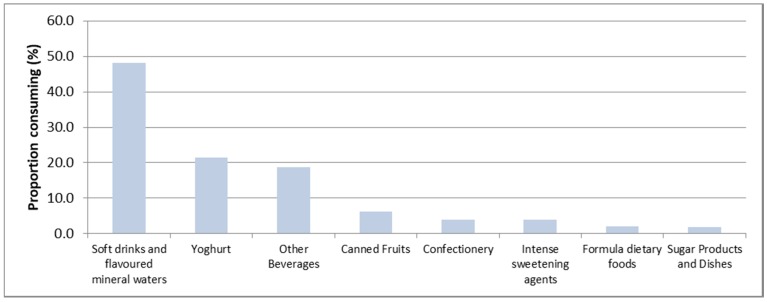
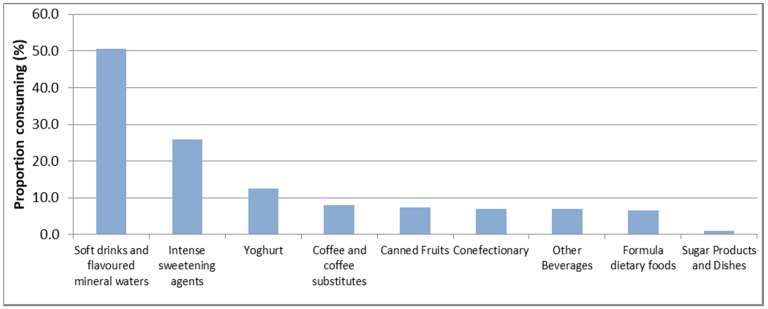
Non-nutritive sweeteners (NNS) are used in the food supply to replace sugar and/or to reduce dietary energy intake. The aim of this research was to assess the consumption prevalence and food sources of NNS in the Australian population. Food group and nutrient intakes were assessed to compare diet quality of NNS consumers and non-consumers. Secondary analysis of the Australian National Nutrition and Physical Activity Survey, 2011/12 was conducted ( = 12,435) after identifying all NNS products consumed in the population. The proportion of participants that reported intake of NNS per day was 18.2% for adults (19+ years), and 8.5% for children (2⁻18 years), with the most common food sources being carbonated soft drinks, tabletop sweeteners, and yoghurt. Characteristics associated with NNS consumption in adults included being female, higher body mass index (BMI), self-reported diabetes status, and being on a weight-loss diet. For adults, NNS consumers had lower free sugar intake but energy intake did not differ from non-consumers. However, for children, no differences in free sugar or energy intake were observed between consumers and non-consumers. While these results support the use of NNS in reducing sugar intake, these data suggest compensatory increases in energy intake may occur.
非营养性甜味剂(NNS)被用于食品供应中以替代糖和/或减少饮食能量摄入。本研究旨在评估澳大利亚人群中 NNS 的消费流行率和食物来源。评估了食物组和营养素的摄入量,以比较 NNS 消费者和非消费者的饮食质量。在确定人群中消费的所有 NNS 产品后,对 2011/12 年澳大利亚国家营养和身体活动调查进行了二次分析(n=12435)。报告每天摄入 NNS 的参与者比例为成年人(19 岁及以上)的 18.2%,儿童(2-18 岁)的 8.5%,最常见的食物来源是碳酸软饮料、餐桌甜味剂和酸奶。与成年人 NNS 消费相关的特征包括女性、更高的体重指数(BMI)、自我报告的糖尿病状况和正在进行减肥饮食。对于成年人,NNS 消费者的游离糖摄入量较低,但能量摄入量与非消费者没有差异。然而,对于儿童,消费者和非消费者之间的游离糖或能量摄入量没有差异。虽然这些结果支持使用 NNS 来减少糖的摄入,但这些数据表明可能会发生能量摄入的补偿性增加。