Department of Microbiology, Immunology and Pathology, Colorado State University, Fort Collins, Colorado, United States of America.
Universidad Autonoma de Nuevo Leon, Facultad de Ciencias Biologicas, San Nicolas de los Garza, Nuevo Leon, México.
PLoS Negl Trop Dis. 2018 Jul 2;12(7):e0006599. doi: 10.1371/journal.pntd.0006599. eCollection 2018 Jul.
ZIKV is a new addition to the arboviruses circulating in the New World, with more than 1 million cases since its introduction in 2015. A growing number of studies have reported vector competence (VC) of Aedes mosquitoes from several areas of the world for ZIKV transmission. Some studies have used New World mosquitoes from disparate regions and concluded that these have a variable but relatively low competence for the Asian lineage of ZIKV.
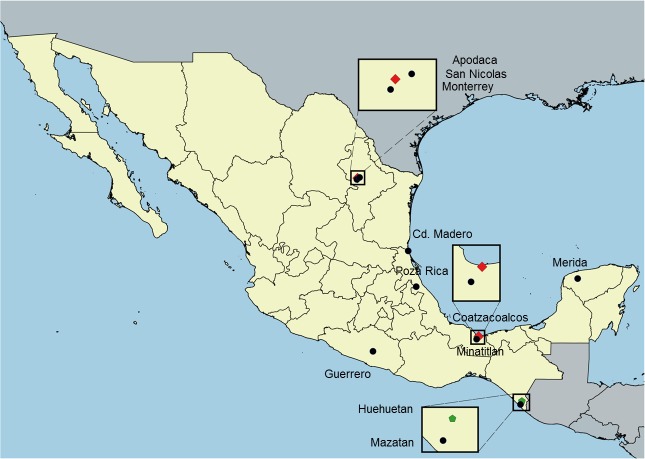
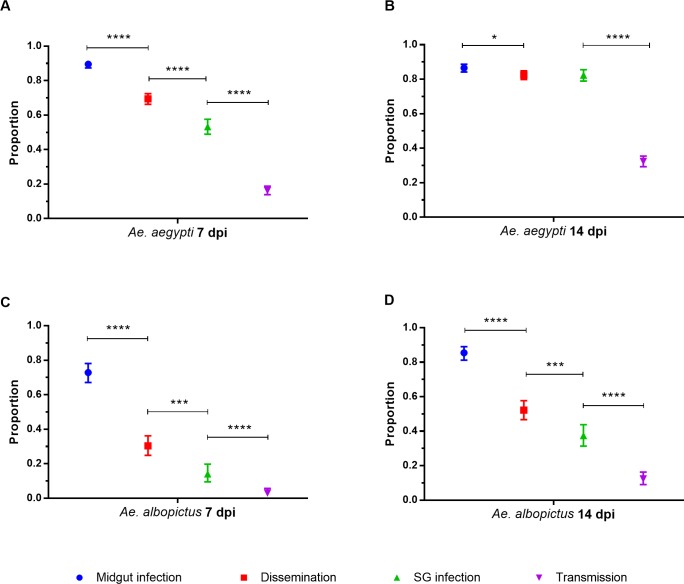
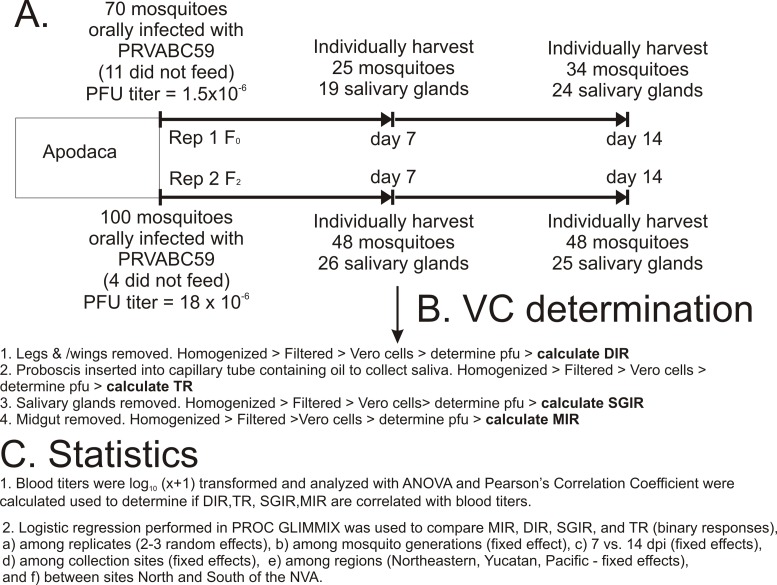
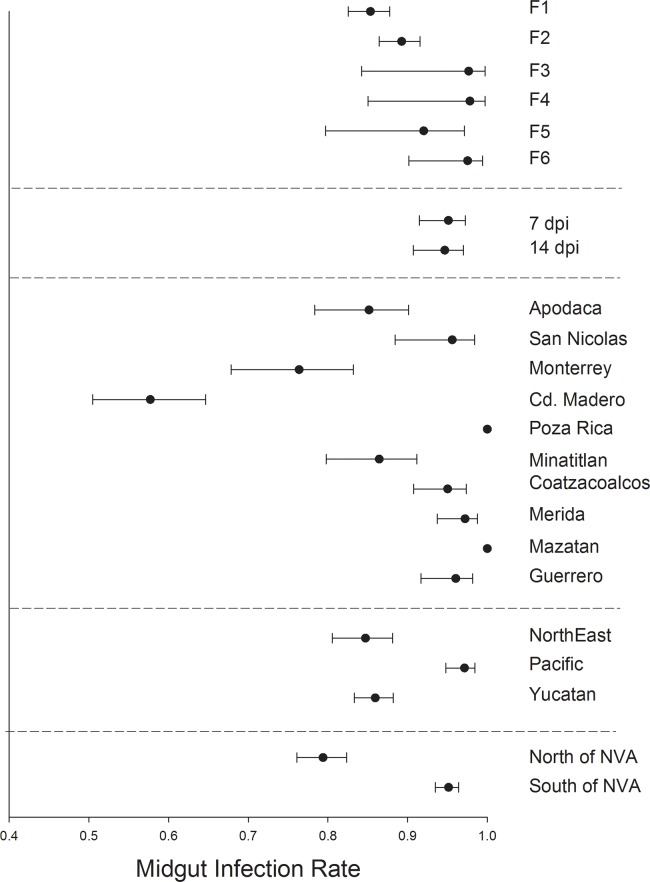
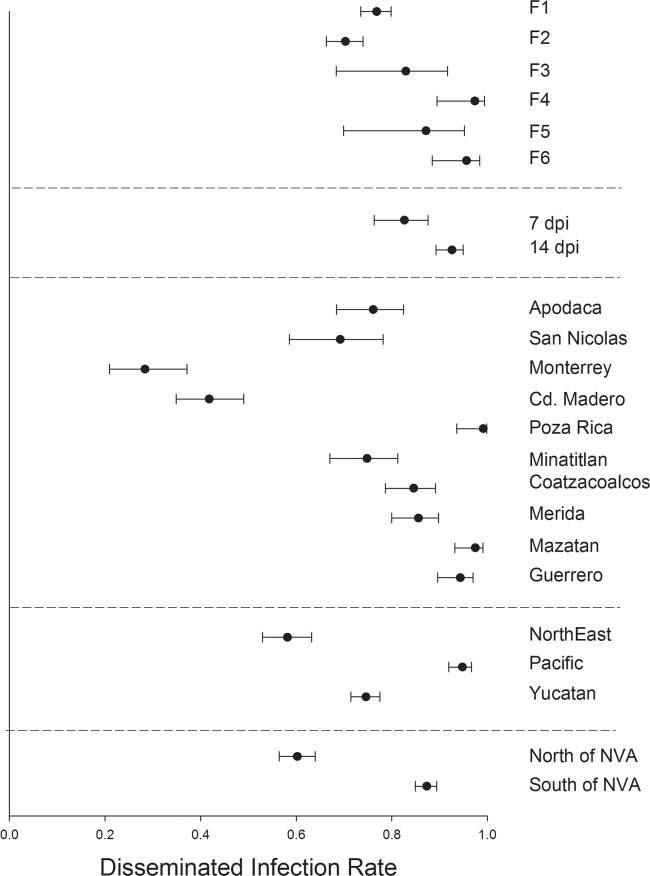
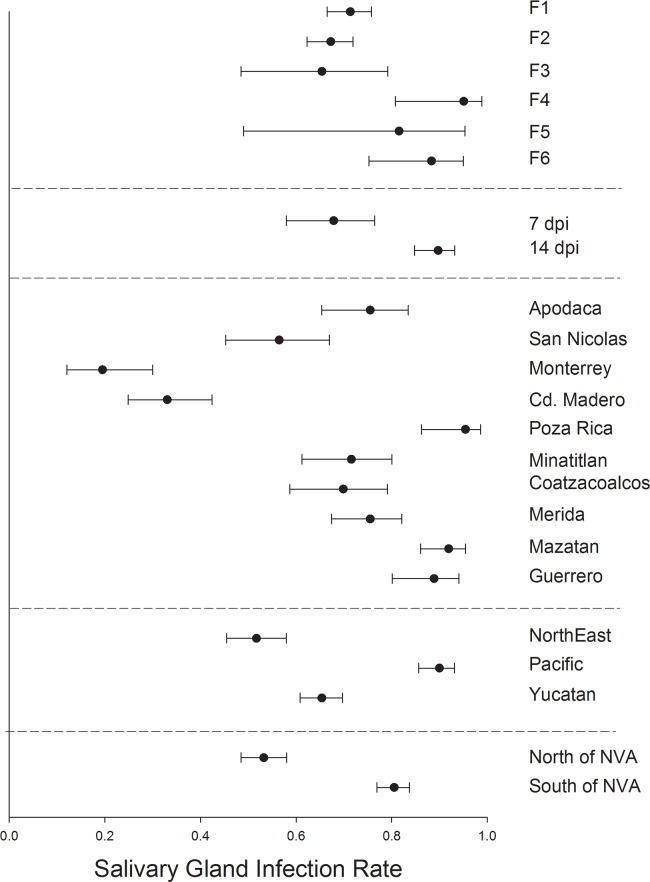
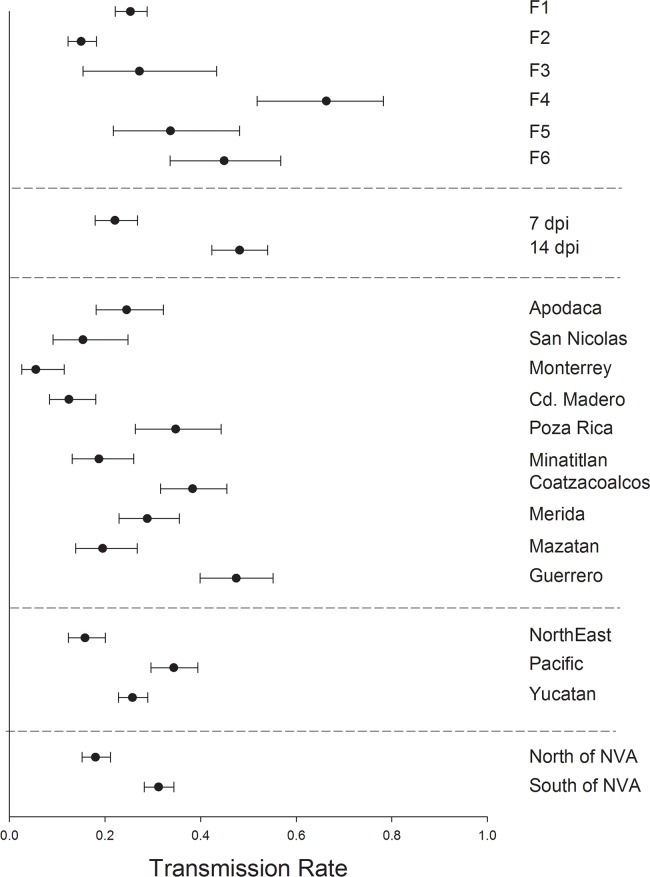
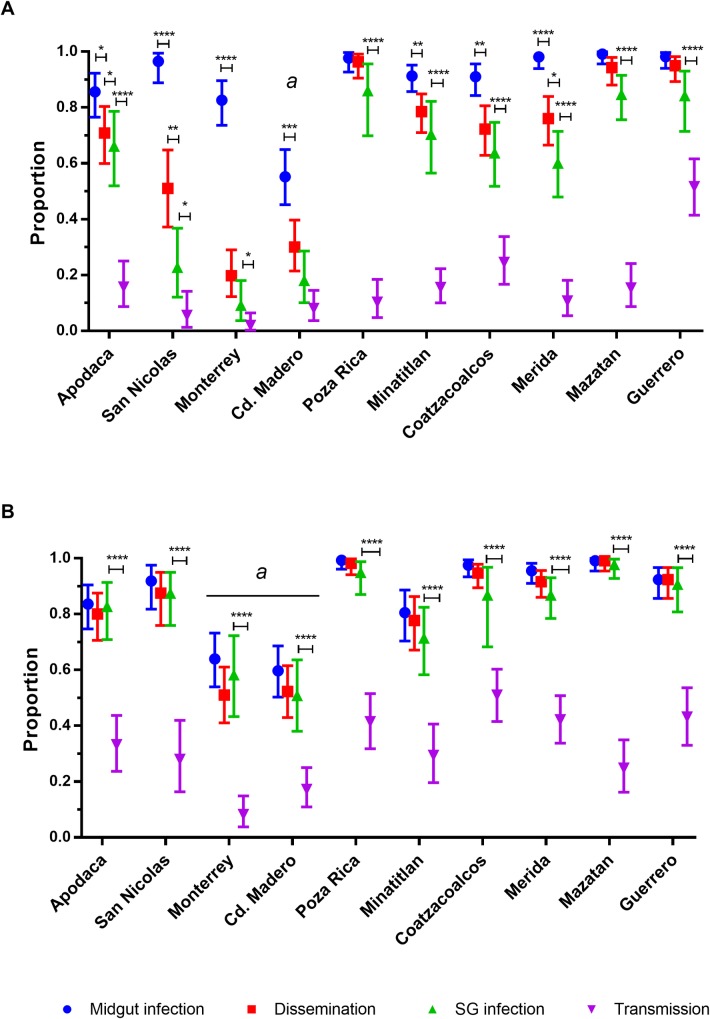
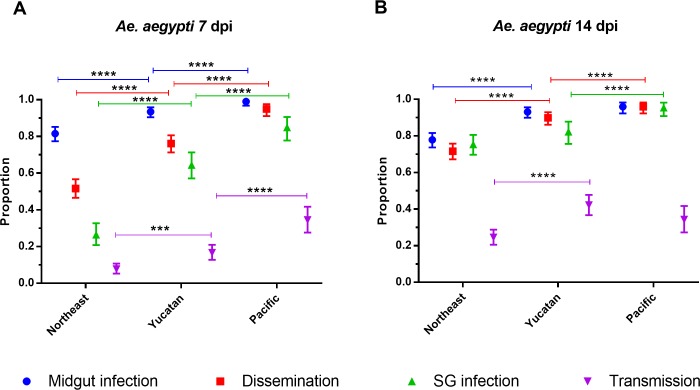
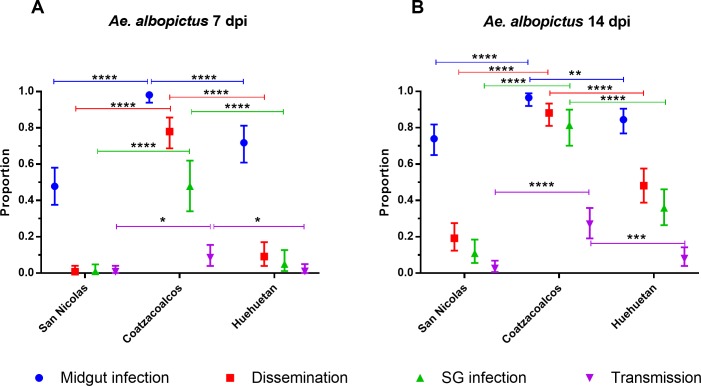
METHODOLOGY/PRINCIPAL FINDINGS: Ten Aedes aegypti (L) and three Ae. albopictus (Skuse) collections made in 2016 from throughout Mexico were analyzed for ZIKV (PRVABC59-Asian lineage) VC. Mexican Ae. aegypti had high rates of midgut infection (MIR), dissemination (DIR) and salivary gland infection (SGIR) but low to moderate transmission rates (TR). It is unclear whether this low TR was due to heritable salivary gland escape barriers or to underestimating the amount of virus in saliva due to the loss of virus during filtering and random losses on surfaces when working with small volumes. VC varied among collections, geographic regions and whether the collection was made north or south of the Neovolcanic axis (NVA). The four rates were consistently lower in northeastern Mexico, highest in collections along the Pacific coast and intermediate in the Yucatan. All rates were lowest north of the NVA. It was difficult to assess VC in Ae. albopictus because rates varied depending upon the number of generations in the laboratory.
CONCLUSIONS/SIGNIFICANCE: Mexican Ae. aegypti and Ae. albopictus are competent vectors of ZIKV. There is however large variance in vector competence among geographic sites and regions. At 14 days post infection, TR varied from 8-51% in Ae. aegypti and from 2-26% in Ae. albopictus.
ZIKV 是新出现的新世界循环虫媒病毒,自 2015 年引入以来,已报告超过 100 万例病例。越来越多的研究报告了来自世界多个地区的 Aedes 蚊子对 ZIKV 传播的媒介效能 (VC)。一些研究使用了来自不同地区的新世界蚊子,并得出结论,这些蚊子对 ZIKV 的亚洲谱系具有可变但相对较低的效能。
方法/主要发现:2016 年从墨西哥各地采集的 10 只埃及伊蚊 (L) 和 3 只白纹伊蚊 (Skuse) 进行了 ZIKV (PRVABC59-亚洲谱系) VC 分析。墨西哥埃及伊蚊的中肠感染率 (MIR)、传播率 (DIR) 和唾液腺感染率 (SGIR) 较高,但传播率 (TR) 较低到中等。尚不清楚这种低 TR 是由于唾液腺遗传逃逸屏障,还是由于在过滤过程中病毒丢失以及在处理小体积时表面随机丢失而低估了唾液中的病毒量所致。VC 在收集物、地理区域以及收集是在新火山轴 (NVA) 以北还是以南方面存在差异。在墨西哥东北部,四个率一直较低,在太平洋沿岸的收集物中最高,在尤卡坦半岛的收集物中中等。所有的比率都在 NVA 以北最低。由于实验室中几代人的不同,很难评估白纹伊蚊的 VC。
结论/意义:墨西哥埃及伊蚊和白纹伊蚊是 ZIKV 的有效媒介。然而,地理地点和地区之间的媒介效能存在很大差异。在感染后 14 天,TR 在埃及伊蚊中变化范围为 8-51%,在白纹伊蚊中变化范围为 2-26%。